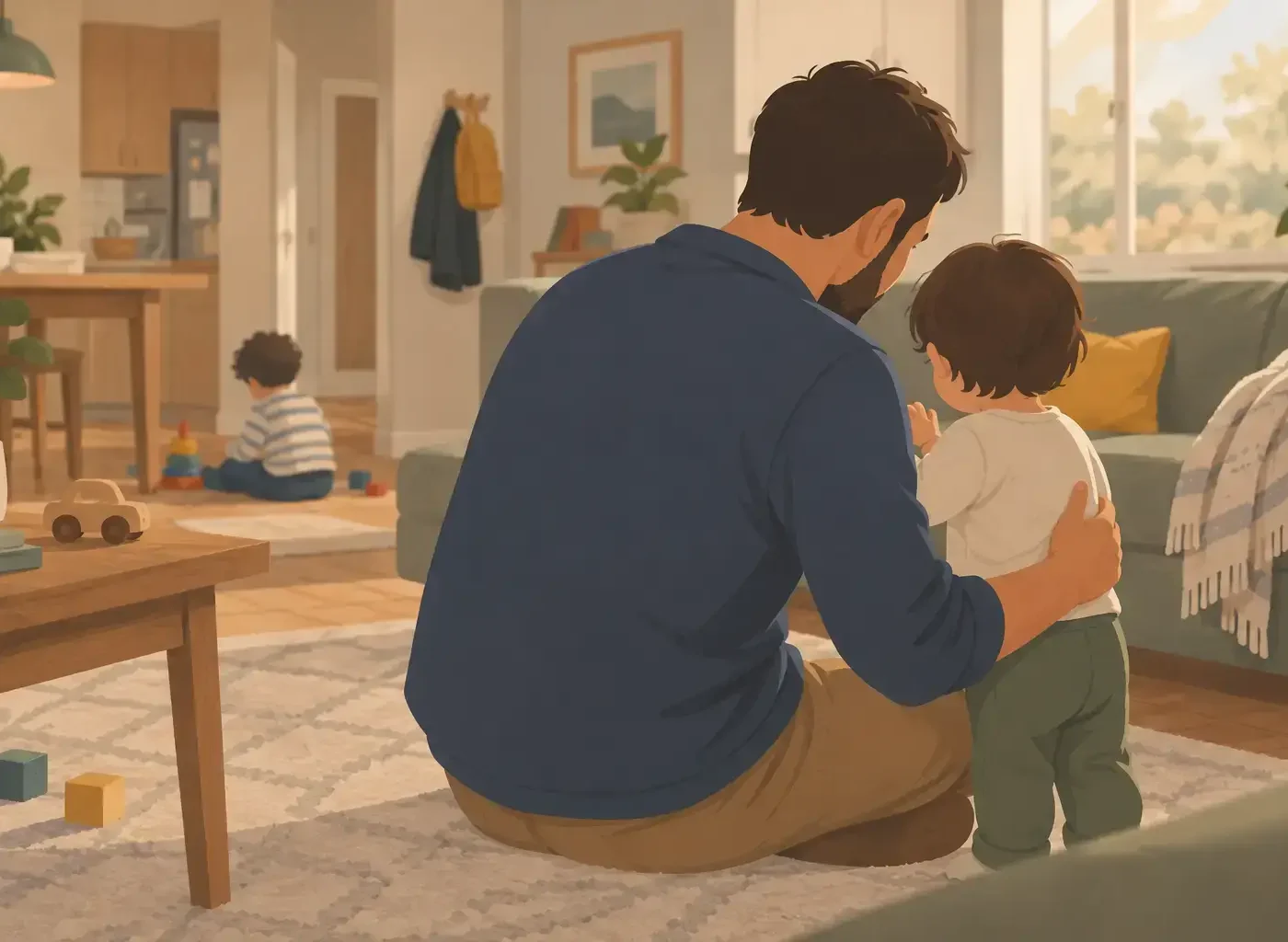
A bite can happen in less than a second: your toddler leans in at the playground, your older child yelps, and every adult nearby seems to look your way. Toddler biting is upsetting, especially when you are already tired and trying to get everyone through the day. It does not mean your child is mean, aggressive by nature, or headed for a bigger problem. It means they need your help learning a safer way to handle a hard moment.
Table of Contents
What to do right after toddler biting
Move in calmly and separate the children. Use your body to create space, then give the bitten child your attention first. Keep your words short: “I see you. That hurt. I am going to help you.”
Then turn to your toddler and say, “I won’t let you bite. Biting hurts.” You do not need a long explanation while they are upset, and you do not need to force an apology on the spot. A toddler who is crying, angry, or overloaded cannot absorb a lecture about kindness.
Your job in that moment is safety, not a perfect teaching moment.
If the skin is broken, wash the area with soap and water and follow the guidance your child’s health care provider has given you for injuries. If another child was bitten at daycare or a playdate, keep your response simple and direct with the other adult. “I am sorry that happened. I stepped in right away, and we are working on safer ways to communicate.” You do not need to defend your child or make promises you cannot keep.
Avoid calling your child a biter. Labels have a way of sticking, both in a family and in a child’s own mind. Zero to Three, the early childhood organization, makes the same point: labeling a child as a biter can lead them to take on that identity and bite more, not less. Describe the behavior instead: “You bit when you wanted the truck.” That gives you something clear to work with.
How to reduce bites before they happen
Most repeat biting happens in predictable pressure points: a toy is grabbed, someone gets too close, a transition drags on, or a hungry, tired child has run out of room to cope. You cannot prevent every bite, but you can begin to notice the few situations that show up again and again.
Prevention works best when it makes the hard moment smaller for your child.
For a week, quietly notice what comes before the biting. Is it usually with one sibling? During crowded play? When your toddler wants a turn and does not have the words ready? You are not collecting evidence against your child. You are looking for the pattern that helps you step in earlier.
If toy conflicts are common, stay close during the parts of play that tend to go sideways. Put simple words in your toddler’s mouth before the grab: “My turn next,” “Help please,” or “I am still using that.” At first, you may say the words for them dozens of times. That is normal. Learning to use words instead of teeth takes practice, especially when the feeling arrives faster than language does.
Give them a physical alternative too. “Hands down,” “Move back,” or “Come squeeze my hand” can be easier to manage than asking for a full sentence. One thing that worked for us was practicing “back up” during calm play, with a little step backward and open hands. It felt silly, but it gave my child something familiar to do when another child was suddenly too close.
At home, make shared play easier where you can. Two similar cars are often better than one prized car. A snack or a change of activity before a long errand can help if that is a usual rough spot. This is not giving in to every preference. It is setting your child up with a little more room to succeed.
Teach the replacement skill when everyone is calm
Later, when your toddler is settled and you have a quiet minute, return to what happened. Keep it brief. “You wanted the red truck. You bit Noah. Next time, say, ‘My turn,’ or come get me.”
The lesson lands better after the storm has passed.
Role-play can help, as long as it stays light. Use stuffed animals or take turns holding a toy. Let one animal reach for it, then have the other say, “No, I am using it,” or “Help, Dad.” Your toddler may not repeat the words right away. The point is familiarity, not a polished performance.
Teach repair without turning it into humiliation. Once the bitten child is okay and your toddler is calm, you might say, “We hurt Sam. Let’s help.” Your child could bring a washcloth, help find an ice pack, or say sorry if they are ready. A forced apology often becomes a way to end adult discomfort. A small, real act of care teaches more.
If your toddler bites you, use the same steady response. “I won’t let you bite me. I am moving back.” Then create a little space. It is tempting to react sharply because being bitten hurts and can feel personal. Still, a predictable response teaches more than a big reaction. Your child does not need you to pretend it did not hurt. They need you to show them that hurt can be handled without more hurt.
Why toddlers bite in the first place
Biting is often a fast, physical message from a child with limited tools in that moment. They may be protecting a toy, asking for space, reacting to frustration, copying something they have seen, or seeking a strong sensory experience. Sometimes there is an obvious trigger. Sometimes you will look back and think, “That came out of nowhere.”
A reason for biting is not an excuse for it, but it tells you what to teach next.
A child who bites to keep a toy needs help with turn-taking language and adult support during play. A child who bites when crowded may need you to notice their personal space sooner. A child who bites during high-energy games may need those games slowed down or more closely supervised for a while.
This is where parents can get pulled into blame. Maybe you think you were distracted. Maybe your partner thinks the child needs a firmer response. Usually, neither thought helps much at 6 p.m. The useful question is: “What was hard here, and what can we do earlier next time?” If you and your partner use the same few words, your toddler gets a clearer message, and it is worth a short talk about handling discipline differences calmly before the next bite rather than during it.
When the biting feels constant
A brief phase of biting can feel enormous when it happens in public or involves siblings who are already tired of it. The hard version is when you are watching closely, using the same words, and it keeps happening anyway. That is not a failure. It may simply mean your child needs more support in the situations that are currently too difficult.
You do not have to solve every bite alone or all at once.
Talk with your child’s daycare provider or preschool teacher in a collaborative way. Ask what they notice right before incidents and share the language you are using at home. Consistency can help, but do not expect identical routines in every setting. Group care has more noise, more waiting, and more competition for attention than your kitchen table.
If biting is frequent, severe, or leaving you worried about your child’s safety or the safety of others, bring it up with your child’s health care provider. You are not asking for a label. You are asking for practical guidance that fits your child and your family.
If you want the whole framework, from toddlers to teens, read positive parenting: the complete guide by age.
Frequently Asked Questions About Toddler Biting
At what age does toddler biting usually stop?
Most children grow out of biting somewhere between ages 2 and 3, as their language catches up with their feelings. Once a child can say “Stop” or “My turn” quickly enough, teeth become less useful. A child who is still biting often past age 3 may need extra support, so mention it to their pediatrician.
Should I bite my toddler back so they know how it feels?
No. Biting back teaches that hurting someone is an acceptable way to make a point, which is the opposite of the lesson you want. It also tends to scare a toddler rather than teach them. A calm “I won’t let you bite” and some physical space works better and keeps your child feeling safe with you.
What should I say when my toddler bites another child at daycare?
Keep it short and cooperative. Something like “I am sorry that happened, we are working on it at home” is enough. Then ask the staff what tends to happen right before the bites. That one question often turns a tense pickup into a shared plan, and it shows the other family you are taking it seriously.
Is toddler biting a sign of a behavior problem?
In most cases, no. Biting is one of the most common behaviors in children under three, and it usually reflects frustration, crowding, or limited words rather than a deeper issue. It becomes worth a closer look if it is frequent, intense, or still going strong as your child’s language develops.
Why does my toddler only bite me and not other people?
Children often save their biggest feelings for the person they feel safest with. That does not make it acceptable, but it can make it less personal. Watch for the moments it happens, often when your toddler is tired, overexcited, or wants your attention back, and step in a little earlier with words or a hug.
Final Thoughts
Toddler biting feels huge in the moment, especially with other parents watching. But it is usually a short chapter, and the way you respond now shapes how quickly it ends.
For tonight, start smaller. Choose one phrase you will use every time, such as “I won’t let you bite,” and one alternative you will practice, such as “Help, please.” The next bite may not disappear instantly, but your child will begin to learn that you can hold the boundary and help them find another way through.
And if the hardest part has been feeling like you and your partner are handling it two different ways, you are not alone in that either. Most toddler phases are easier when the adults are on the same page.
The Family Blueprint Trilogy brings together three practical guides for being a steadier dad, a closer partner, and a team at home, written by a mom of two who has handled her share of bitten siblings and tense playground moments.