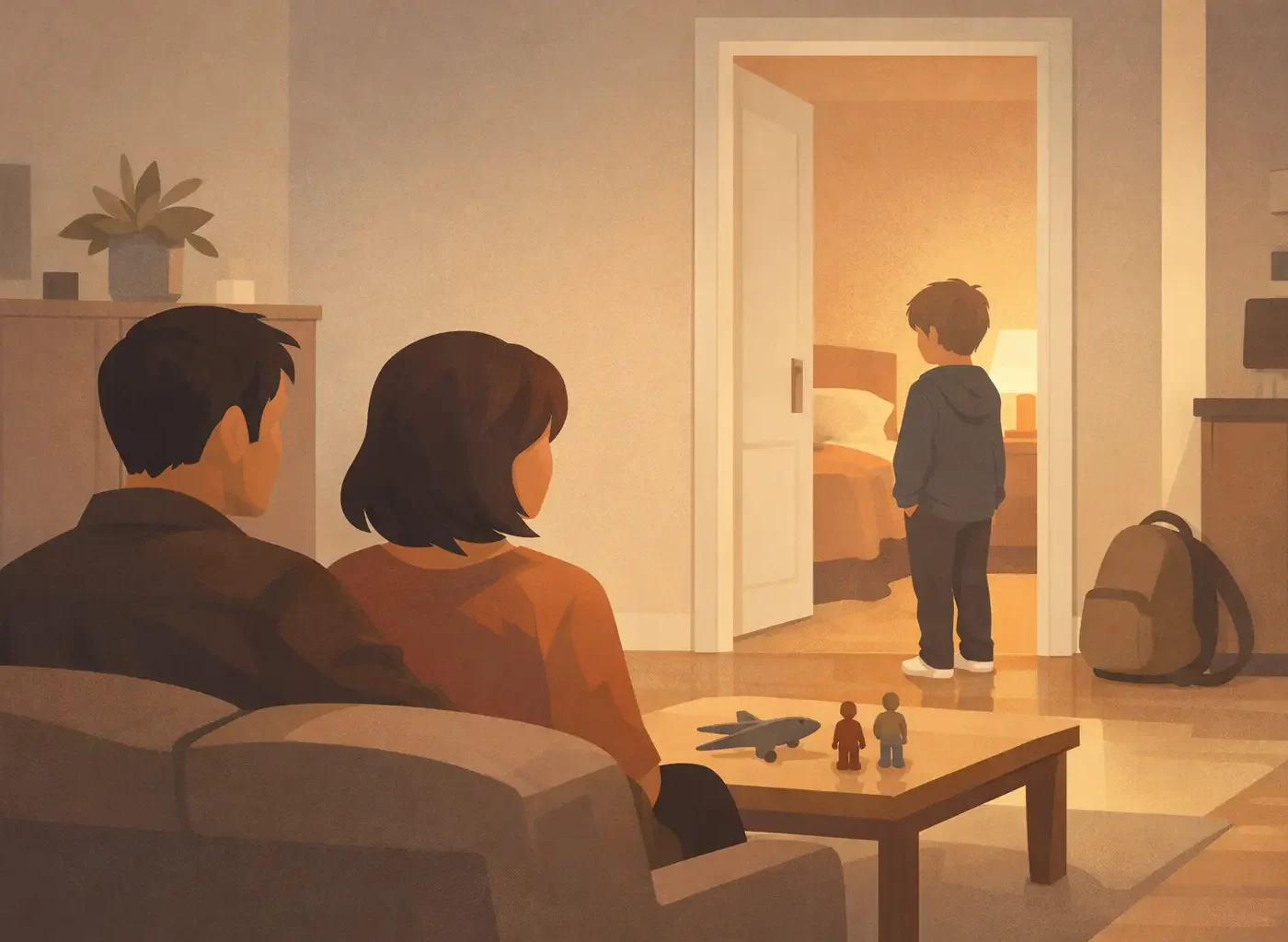
The broken toy is tucked behind the couch. The homework page is still blank, though your child said it was done. You ask once, get an answer you know is not true, and suddenly the room feels much bigger than the moment. When your child lies to you, it can land as disrespect, manipulation, or a sign that you have somehow lost their trust.
It is usually none of those things by itself. Children lie for ordinary, messy reasons: they want to avoid your disappointment, protect something they want, get out of a difficult moment, or buy a little time before the truth catches up. You can take honesty seriously without making your child feel like a bad kid.
When Your Child Lies to You, Start With Calm
Your first job is not to force a confession. It is to make honesty possible.
If you already know what happened, avoid setting a trap with a question. Asking, “Did you eat the cookies?” while holding the wrapper can make your child feel cornered. A cornered child often doubles down, especially if they are young or already embarrassed.
Try naming the facts in a plain voice instead. “I found the wrapper behind the couch. The rule was to ask first.” Then pause. Your child may deny it again, look away, cry, or say nothing. You do not need to fill that silence with a lecture.
Calm does not mean pretending the lie is fine. It means keeping the moment small enough that your child can come back to the truth. If your voice is rising, take a minute before you continue. A child who expects an explosion has a strong reason to hide.
One thing that worked for us was saying, “You are not in trouble for telling me the truth. We still need to fix what happened.” It gave our child two clear messages: honesty matters, and the truth would not turn into a character trial.
For a younger child, use fewer words. “The marker got on the wall. Tell me what happened.” For an older child, you can be more direct: “I can see this assignment was not turned in. I need an honest version so we can decide what happens next.”
Deal With the Lie Before the Lesson
A repair teaches more than a long speech delivered while everyone is upset.
Once your child tells the truth, acknowledge it before moving on. “Thank you for telling me.” This is not a reward for the original choice. It is a signal that coming clean was the better next step.
Then deal with the actual problem. If they made a mess, they help clean it. If they said homework was done when it was not, they complete the work during a reasonable part of the evening. If they blamed a sibling for something they did, they help set the record straight.
Keep the repair connected to what happened. A huge punishment for a small lie can accidentally teach the wrong lesson: hiding better is safer than telling the truth. It also puts you in the hard position of having to enforce a punishment you chose in anger, when it is already 7:30 p.m. and everyone is running on fumes.
You can say, “The bigger issue now is that I need to know I can trust your words. For the next few days, I will check in with you before playtime about your homework.” This is not about control. It is a temporary bit of support while your child practices being reliable again.
If your child confesses without being caught, make room for that. They may still need to repair the problem, but lead with, “I am glad you told me.” That response builds the habit you want for the harder mistakes that will come later.
Why Children Lie in the First Place
A lie is usually a clue about what felt too hard in that moment, not a fixed trait in your child.
A preschooler may say they did not spill the juice because they wish it had not happened. Their line between imagination, hope, and fact is still developing. They need calm correction more than suspicion.
A school-age child often lies to avoid a predictable reaction. Maybe they forgot their library book, broke a rule at a friend’s house, or did not finish work they found frustrating. That does not mean your expectations are wrong. It may mean they need a more manageable way to tell you bad news.
Older children may lie because privacy matters more to them than it did before. They also test independence, worry about social embarrassment, and sometimes try to avoid a conversation they expect will go on too long. You can respect a growing need for privacy while still holding clear family expectations around safety, school, money, and how they treat others.
Pay attention to the pattern rather than treating every untrue statement as equally serious. There is a difference between a child claiming they brushed their teeth when they did not and a child repeatedly hiding something that affects another person’s safety or property. Your response can be firmer when the impact is greater, while still staying respectful.
Make Honesty Easier at Home
Children are more likely to tell the truth when they know mistakes lead to repair, not humiliation.
This starts in small, ordinary moments. If your child spills cereal, loses a permission slip, or forgets an item at school, try to separate your frustration from the information they are giving you. You can be inconvenienced and still respond in a way that makes honesty worth trying next time.
It also helps to avoid labels. Saying, “You are lying again,” can quickly become “You are a liar” in a child’s ears. Name the behavior instead: “That is not what happened,” or, “You told me something that was not true.” Then move toward the repair.
Your child watches what adults do with mistakes, too. If you promised to play a game after dinner but got pulled into cleanup and forgot, say so. “I told you I would play, and I did not follow through. I am sorry. Let’s choose another time tomorrow.” You are showing that honesty includes owning errors, not just admitting rule-breaking.
If you and your partner handle lying differently, a quick private conversation can help. You do not need matching scripts. You do need a shared floor: no public shaming, no piling on, and no turning a small mistake into evidence that your child cannot be trusted with anything.
For the parent carrying the school emails, missing items, and constant reminders, this can feel especially hard. A lie may seem like one more task handed back to you. It is fair to say, “I need you to tell me sooner, because surprises make this harder to solve.” Clear honesty can be part of how the family works together, not another burden you silently absorb.
When the Lying Keeps Happening
Repeated lying calls for more connection to the pattern, not bigger reactions.
Choose a quiet time, not the minute you discover another lie. Describe what you have noticed: “This week, you told me your homework was finished twice when it was not. I am wondering what makes it hard to tell me the truth about it.” Then listen for the answer, even if it is incomplete or uncomfortable.
Your child might say they were worried you would be mad. They might say the work felt confusing, they wanted more time to play, or they did not know how to begin. None of those answers erase the need for honesty. They do give you something useful to work with.
Make a simple plan together. Perhaps they show you the assignment before free time for a while, or they tell you, “I need help getting started,” instead of saying it is done. The plan should reduce the pressure point without making your child feel watched every second.
If lies involve significant damage, taking things that do not belong to them, or repeated problems outside home, bring in another trusted adult who knows your child well. Keep the conversation focused on support and next steps, not on building a case against them.
Tonight, you do not need the perfect words. You only need to show your child that truth has a place in your home, especially when the truth is inconvenient. That is where trust gets built, one ordinary repair at a time.