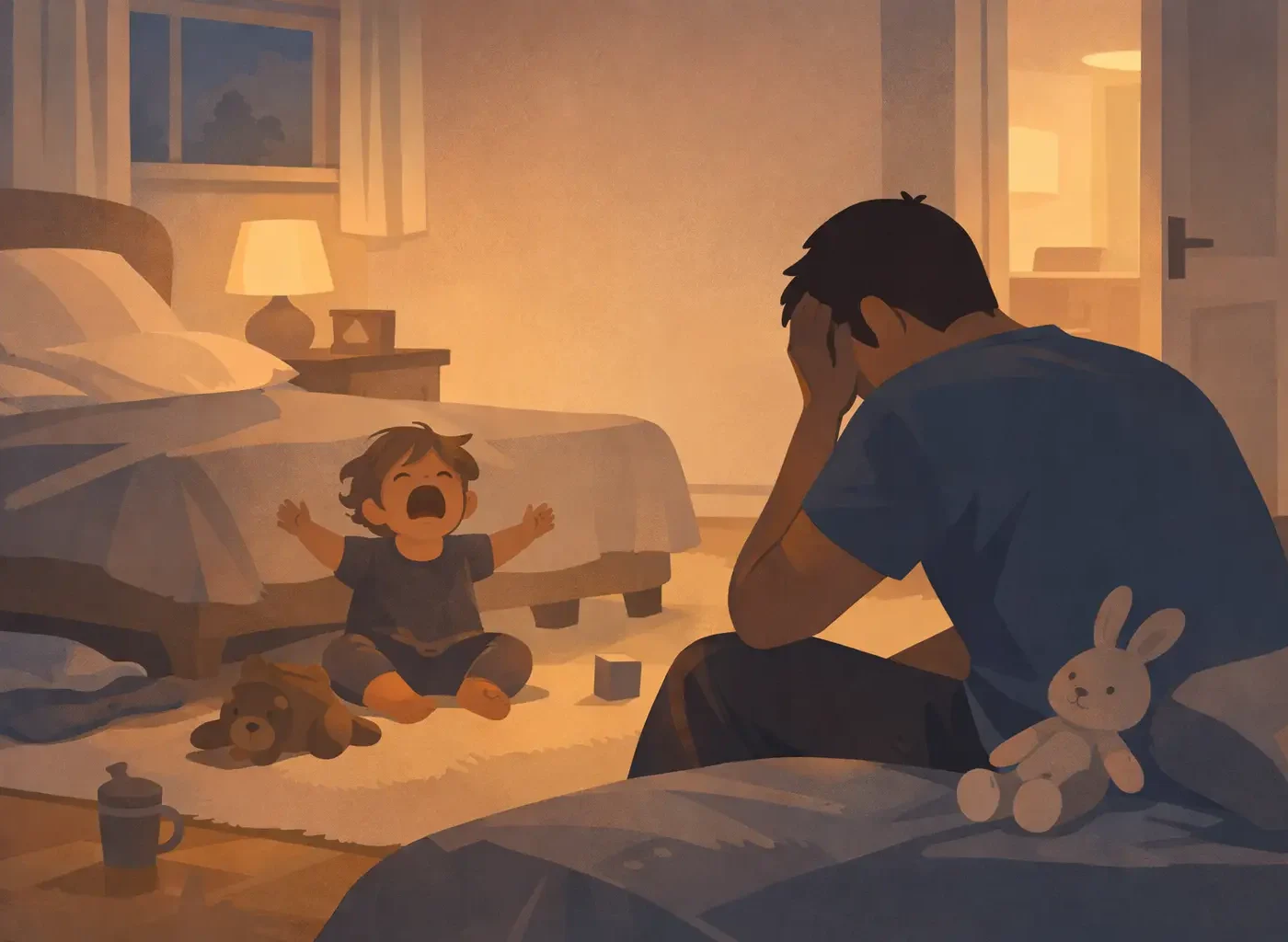
The screaming starts because the blue cup is in the dishwasher, or because you picked your child up from the floor when they wanted to keep running. You can feel every set of eyes in the store, or hear the clock ticking toward dinner. Handling toddler tantrums gently is not about making these moments look graceful. It is about having a few steady moves when neither of you is having your best moment.
A toddler’s tantrum can make a capable adult feel helpless fast. If you have raised your voice, left the room for a minute to collect yourself, or simply wished the floor would open beneath you, you are in very familiar territory. You do not need perfect composure to give your child a safer response.
Handling Toddler Tantrums Gently in the Moment
Start by making the moment physically safe. Move breakable objects, block hitting or throwing without grabbing harder than necessary, and carry your child away from a busy area if you need to. A firm boundary can sound calm: “I won’t let you hit me. I am moving back.”
Then use fewer words than you think you need. Your child is not available for an explanation about fairness, schedules, or why the answer is no. Try one short sentence, repeated quietly: “You wanted the red cup. It is hard that it is not available.” Or, “You are mad that we are leaving. I am here.”
Your job during a tantrum is to hold the boundary and lend steadiness, not to make the feeling disappear.
This does not mean you have to offer a hug. Some toddlers want closeness, while others push it away. Stay nearby if it is safe, and let your child know the option is there: “I will sit right here. You can come close when you want to.” If they reach for you, hold them. If they do not, your quiet presence still counts.
Gentle does not mean changing your answer to stop the noise. If the cookie is not happening before dinner, it can stay a no. You can be kind about that no, and you can tolerate your child’s disappointment, even when it is loud.
When the Tantrum Happens in Public
Public tantrums add a layer of pressure that is hard to explain until you are standing in a checkout line with a wailing toddler under your arm. The instinct is to end it quickly, partly for your child and partly because you feel watched. Most strangers will forget the scene quickly. Your child will feel the way you handled it longer.
If you can leave the cart safely and step outside, do that. Keep your words simple: “You are upset. We are taking a break outside.” If leaving is not possible, turn your body slightly to create space, focus on safety, and stop trying to perform for the room.
A public tantrum is still a parenting moment, not a test of whether you are in control.
You do not have to negotiate with a child who is screaming for a toy by the register. You can say, “We are not buying that today,” then repeat it once if needed. Long explanations often turn into an accidental conversation about whether the limit is movable.
It also helps to release the plan when the plan is no longer realistic. Maybe you leave the groceries and go home. Maybe you skip one errand. That is inconvenient, and it can be especially frustrating when you have arranged your whole afternoon around childcare, work, and a narrow window of time. Still, choosing the smaller loss can prevent everyone from being pushed further past their limit.
Use Words That Name the Feeling Without Fixing It
Toddlers often need you to put a little language around what is happening, but they do not need a speech. Naming the feeling tells your child you see the struggle. It does not require you to agree with the behavior or give them what they want.
You might say, “You really wanted to stay at the park,” or, “You are disappointed that the cracker broke.” Keep the sentence close to the actual problem. Saying “You are having big feelings” can work too, but a specific observation often lands better.
Being understood can soften a tantrum, but it is not a bargain that guarantees it will end quickly.
Avoid questions in the peak of the storm. “Why are you doing this?” asks for insight your toddler probably cannot offer right then. “Do you want to use nice words?” may be a useful skill to practice later, but it can feel impossible in the middle of sobbing and flailing.
If your child says something rude or throws an insult they have clearly heard somewhere, do not make it the main event. Keep the limit brief: “I hear you are angry. I will not stay close while you call me names.” Then give space or remain nearby, depending on what is safest. You can return to the words later, once both of you have recovered.
After the Storm, Reconnect Before You Teach
When your child is quiet again, there is no need to make them relive the whole event. A sip of water, sitting together, or returning to the ordinary business of the day can be enough. Some children want to talk. Others need a little time before they can accept closeness.
If there was hitting, throwing, or damage, address it after connection. “You were very mad, and you threw the truck. Trucks are not for throwing at people. Next time, I will help you move away or stomp your feet.” Keep it short and concrete.
The repair after a tantrum teaches more than a perfect response ever could.
This applies to you, too. If you yelled, repair without making your child carry your guilt: “I was overwhelmed and I yelled. That was scary. I am sorry. I will work on using a quieter voice.” You are not excusing the behavior. You are showing your child that adults take responsibility and come back together.
One thing that worked for us was treating the first peaceful minute afterward as a fresh start. Not because the hard part did not matter, but because carrying it into the next hour usually made everyone more brittle.
Make the Hard Moments a Little Less Likely
You cannot prevent every tantrum. Toddlers melt down over real disappointment, tired bodies, and limits that are completely reasonable. But patterns can give you a place to start.
Notice whether the difficult moments cluster around transitions, errands that run too long, or the stretch before dinner when everyone is hungry and you are trying to get several things done. You do not need a detailed chart. A mental note is enough. If a predictable struggle is coming, offer a simple preview: “We will choose apples, pay, then get in the car. You can hold the list.”
Preparation is not about controlling your child, it is about giving both of you fewer surprises.
Small choices can help when the main decision is not optional. Your child may not choose whether to leave, but they can choose to hop to the car or be carried, wear the green shoes or the gray ones, hold your hand or hold the cart. Do not offer choices you cannot honor. A choice that disappears when they select it will make the next limit harder.
There are days when planning ahead is simply not available. You are late, your other child needs something, dinner is burning, and your own patience is thin. On those days, lower the standard. Safe, brief, and kind enough is plenty.
Share the Load When You Can Feel Yourself Tensing
Tantrums are harder when one adult is doing the soothing, the planning, the cleaning, and the emotional forecasting all at once. If your partner is nearby, use plain language before you are at the edge: “I need you to take over for five minutes,” or, “Can you handle the bags while I sit with them?”
A partner does not need to use identical words or have the same soothing style to be helpful. The useful goal is consistency on the limit and respect for the child, not a perfectly matched script. Talk later about what helped and what made the moment worse, when nobody is still flooded.
Getting support in a tantrum is not handing off the hard part, it is protecting your ability to respond well.
There will be tantrums you handle gently and tantrums you only get through. Both belong in real family life. The next hard moment does not require you to be a different kind of parent. It only asks for one small steady choice: get safe, stay close if you can, and let the feeling pass without making your child feel alone in it.