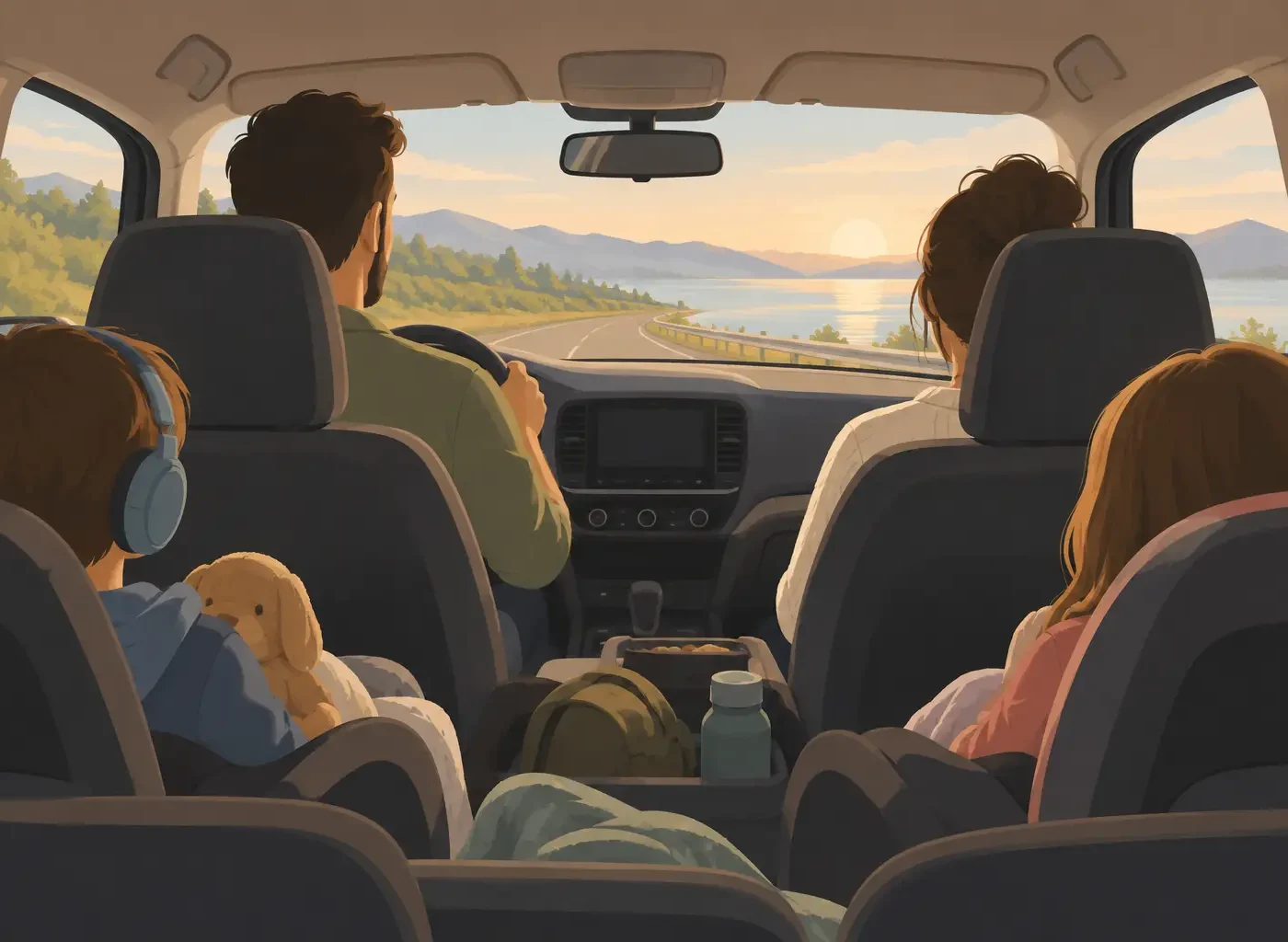
The first hard moment of a road trip often comes before you leave the driveway. Someone cannot find their shoes. Someone needs the bathroom after being buckled. The driver is watching the clock, and the parent in the passenger seat is already reaching into three different bags.
Long car rides with kids are demanding because they ask children to do something they are not built to do for hours: stay contained, wait, share space, and cope with plans they did not choose. A little preparation helps, but you do not need a color-coded car or a perfect attitude to get there.
Start Long Car Rides With Kids Before the Engine Starts
The most useful plan is a simple one your child can understand. Tell them where you are going, roughly how long the drive will take, and what will happen along the way. For a younger child, that might be, “We’ll drive, stop for lunch, drive again, then get to Grandma’s house.” Older kids can handle a little more detail, especially if the trip includes a hotel, a ferry, or a late arrival.
The goal is not a quiet car for every mile. It is a car where everyone knows what happens next.
If possible, avoid making the departure a surprise. Mention the trip the day before and walk through the first few steps that morning. This does not erase complaints, but it gives your child something solid to hold onto when the day feels unfamiliar.
Give each child a small amount of choice before you go. They can choose two books, a comfort item, a hoodie, or the first music pick. Keep the choices narrow. “Which two things do you want by your seat?” works better than asking them to pack their whole entertainment bag.
One thing that worked for us was keeping the first hour deliberately boring in a good way. We saved new activities and special snacks for later, when the novelty of leaving had worn off and the car started feeling very small.
Put the essentials where an adult can reach them
Do not bury the practical items beneath suitcases. Keep wipes, tissues, a small trash bag, water, easy snacks, spare clothes, and any comfort item your child regularly needs within reach. The point is not to pack for every possible problem. It is to avoid turning a minor spill or missing sock into a roadside excavation.
If you are traveling with a partner, decide who is handling the driving, the directions, the food bag, and the first response when a child calls out. That two-minute conversation can spare both of you the frustration of assuming the other person knows where the wipes are.
Use Stops, Food, and Activities on Purpose
A long drive goes better when you treat stops as part of the trip, not proof that the plan has fallen apart. Young children usually need a chance to use the bathroom, stretch, and move their bodies before they are desperate. Older children may say they are fine right up until they are suddenly not.
A slightly longer trip with calmer bodies is usually easier than a faster trip full of strain.
You do not have to stop at every rest area. Aim for predictable breaks and adjust when the car starts getting tense. A stop does not need to be elaborate. Ten minutes to walk, use the bathroom, and drink water can change the next stretch of the drive.
Food helps most when it is steady rather than constantly available. Offer something familiar at planned points in the drive, then put it away. Endless grazing can create more wrappers, more arguments, and more requests without actually making anyone feel better. If a child is hungry sooner than you expected, feed them. The plan serves your family, not the other way around.
Rotate what your child does, rather than filling every minute
A screen, an audiobook, music, a sticker book, a simple card game, or looking out the window can all have a place. You do not need to ban screens to make a road trip meaningful, and you do not need to keep entertainment going every second to prove you planned well.
Try rotating the type of activity. A child who has been watching something may do better with an audiobook next. After an hour of coloring, they may need music they can sing along with. Variety works because the car itself does not change much.
Save a few options for the hard middle of the trip. This is often when a child has had enough sitting, the adults are tired, and arrival still feels far away. A small surprise does not need to be expensive. It might be a new pad of paper, a family trivia game, or choosing the next song.
Respond to Complaints Without Turning Them Into a Fight
At some point, you will probably hear, “Are we there yet?” many times. You may hear whining, bickering, refusal, or a child insisting that the seat belt is suddenly unbearable. This is ordinary road-trip behavior, not evidence that you planned badly.
Your child can dislike the drive and still be capable of getting through it.
Start by naming the truth without trying to talk them out of it. “You are tired of being in the car. We have about 40 minutes until our stop.” That response gives them information and lets them feel seen. “Stop complaining” may be understandable when you are worn out, but it tends to make the whole car louder.
Then offer a small next step. They can listen to a story, hold a comfort item, play a game with you, or wait until the next stop to stretch. Keep your voice plain. Long explanations from the front seat can make a tired child feel more cornered.
If siblings are getting on each other’s nerves, separate their access where you can. Headphones, different activities, a jacket placed between seats, or a clear rule about keeping hands and belongings on your own side can be enough. You do not need to solve every disagreement perfectly while driving. You need to keep everyone safe and reduce the pressure.
For a child who is truly having a hard time, a stop may be the answer. For a child who is protesting because the trip is boring, warmth and a firm limit can sit together: “I know you want out. We are staying buckled until we stop.”
Make Room for the Adults in the Car Too
Road trips can make small differences between adults feel bigger. One person may be trying to focus on traffic while the other is passing snacks backward, answering questions, tracking bathroom needs, and noticing when a child is getting upset. Neither job is easy.
A calmer car often begins with adults treating each other like teammates, not competing emergency responders.
Before you leave, agree on a few defaults. Decide whether the driver gets quiet during tricky traffic, who handles requests from the back seat, and when you will stop even if it costs time. These are small decisions, but they reduce the sharp exchanges that children pick up on immediately.
If you are the non-driving adult, it is okay to say plainly that you need ten minutes without being touched or asked questions at the next stop. If you are driving, notice the work happening beside and behind you. A simple, “I see you handling a lot back there,” can soften a long day.
The hard version is when everyone is tired, traffic is bad, and the destination is still hours away. In those moments, lower the standard. You do not need meaningful conversation, beautiful scenery, or cheerful children. Safe driving, enough food, and getting to the next stop is plenty.
Let Arrival Be Gentle
Children often hold themselves together during the drive and then fall apart when you arrive. They may be silly, clingy, loud, or upset over something very small. After hours of sitting and waiting, their bodies may need time to catch up.
Getting out of the car is a transition, not the finish line.
Build in a little space before you expect your child to greet relatives, carry bags, pose for photos, or behave like a perfect guest. Let them use the bathroom, have a drink, move around, and reconnect with you first. If you have arrived late, keep the next steps as simple as possible.
You may not look back on the drive as fun. Some long car rides with kids are simply something a family gets through with snacks, patience, and a few imperfect stops. But when you plan for real children and tired adults, the trip does not have to take more from your family than it gives.