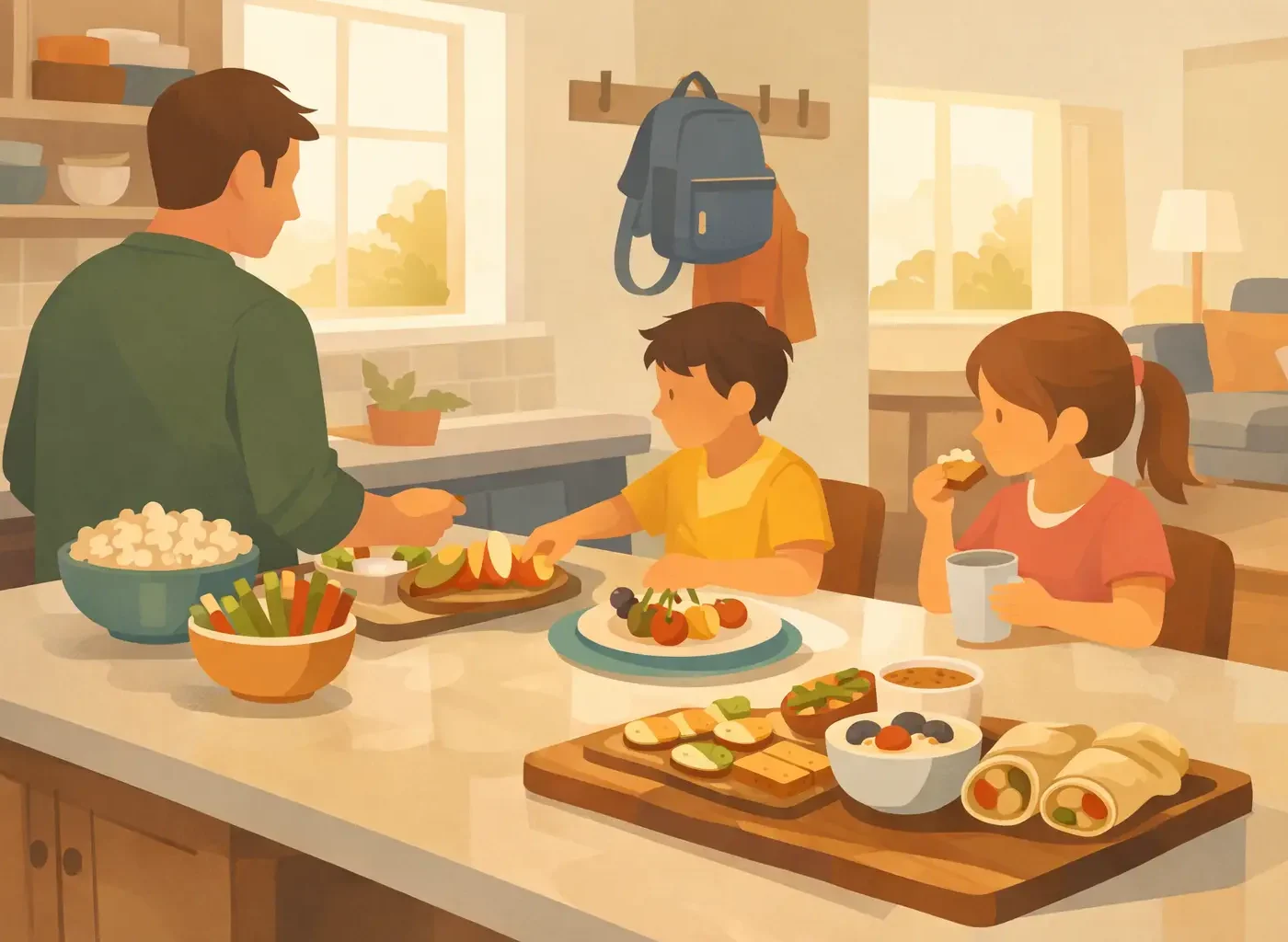
The backpack lands by the door, shoes are kicked off somewhere inconvenient, and suddenly your child is asking for food with the urgency of someone who has not eaten in days. After school snack ideas for kids do not need to be clever or camera-ready. They need to be filling enough to take the edge off, easy enough for a tired adult to manage, and flexible enough for the child who changes their mind halfway through.
A snack can also buy your household a calmer stretch of afternoon. Not because food solves every hard moment, but because a child who has gone from lunch to the end of the school day often needs something more substantial than a handful of crackers while everyone gets settled.
Start With a Two-Part Snack
A good snack does not have to be perfectly balanced to be genuinely helpful.
The simplest approach is to pair something that gives quick energy with something that lasts a little longer. Think fruit with cheese, crackers with a spread, yogurt with cereal, or toast with an egg. This combination tends to keep a child from returning five minutes later, still hungry and now disappointed that the kitchen is not a restaurant.
You can keep the portions small at first. Some children are ready for a mini-meal after school, especially if dinner is later. Others want just enough to hold them over. Serving a modest amount and offering more if they are still hungry is often easier than trying to predict exactly what they need.
This is also a good place to lower the pressure on yourself. A packaged snack beside a piece of fruit counts. Leftover pasta counts. A sandwich cut in half counts. The point is not to create a new daily task that one parent has to remember, shop for, and prepare without fail.
15 After School Snack Ideas for Kids
The best snack is usually the one you can make again on a busy Tuesday.
Here are fifteen options that use familiar foods and leave room for your child’s preferences.
- Apple slices with cheese cubes. The sweet and savory combination feels more interesting than either item on its own.
- Toast with peanut butter and banana. If peanut butter is not part of your family’s usual foods, use another spread your child already enjoys.
- Plain yogurt topped with berries and a little cereal. Let your child add the topping if they like having a job.
- A quesadilla cut into wedges. Cheese alone works, or you can use leftover chicken or beans if those are already on hand.
- Crackers, sliced turkey, and cucumber rounds. Put them on one plate and let your child build little stacks.
- A hard-boiled egg with toast fingers and fruit. This is especially useful when dinner will not happen for a while.
- Mini pita pockets with hummus and shredded carrots. Some kids prefer everything separated, and that is fine too.
- Leftover rice with peas and a little cheese. Warm it if you have time, but cold leftovers are allowed.
- A banana and a small bowl of cereal with milk. It is ordinary, quick, and often more filling than it looks.
- A muffin with yogurt or a glass of milk. Homemade is nice when it happens, but store-bought is still a snack.
- Trail mix made from foods your child already likes, such as cereal squares, pretzels, raisins, and seeds. Keep it simple rather than trying to make it look like a specialty-store blend.
- Avocado on toast with a pinch of salt. Add sliced tomato if your child likes it, but there is no need to turn it into a project.
- Cottage cheese with pineapple or peaches. This works well for children who enjoy creamy foods but are tired of yogurt.
- A small bean and cheese burrito. Make a few at once if that suits your week, or use it as a five-minute meal when everyone is running late.
- Popcorn with a cheese stick and grapes. It has the feel of a treat while still being enough to bridge the gap to dinner.
One thing that worked for us was keeping a short mental list of five snacks everyone would reliably eat. I did not need fifteen choices every day. I just needed enough options that we did not default to the same snack until someone got tired of it.
Make the Snack Easy to Find and Serve
The less thinking a snack requires at the end of the day, the more likely it is to happen without stress.
Put a few ready-to-serve foods where your child can see them. That might mean a low shelf in the fridge with yogurt, cheese, washed fruit, and leftovers in clear containers. In the pantry, it could be crackers, cereal, pita bread, and shelf-stable fruit cups.
You do not need to prepare a week of snack boxes. In fact, that kind of preparation can become another job that quietly belongs to whoever notices the food is running low. A better system may be a simple shared agreement: one adult restocks the fruit and fridge basics, while the other handles the snacks that need assembling when they are home.
If your child is old enough to make a basic choice, offer two options instead of asking an open-ended question. “Would you like toast and fruit, or yogurt and cereal?” gives them some say without turning the moment into a long negotiation.
For younger children, you can simply set out the snack. They do not have to choose every time. Too many choices can make an already tired part of the day harder for everyone.
When Your Child Rejects What You Made
A rejected snack is frustrating, but it is not proof that you chose wrong.
Children can come home ravenous and still say no to the food in front of them. They may want something familiar, something crunchy, something cold, or simply the exact food they saw another child eat. You do not have to meet every new request, but it helps to stay steady rather than treating the refusal as defiance.
Try a calm limit such as, “This is the snack available right now. You can eat it, or wait until dinner.” If you know your child truly dislikes the item, you can offer one familiar alternative without opening the whole kitchen. The goal is not to force a food or make them grateful for it. It is to avoid an exhausting cycle where each snack becomes a custom order.
It depends on the child, of course. A child who is cautious around unfamiliar foods may do better with one dependable item beside one less-familiar item. A child who is simply tired of a usual snack may need a little more variety. Neither situation calls for panic or a speech about being picky.
Let the Snack Fit Your Evening, Not Compete With It
Snacks work best when they support dinner rather than creating another battle around food.
If dinner is in an hour, a smaller snack may be enough. If your family eats later because of work, sports, or commuting, something more substantial makes sense. There is no universal right amount, and trying to keep a hungry child hungry for dinner often makes the late afternoon feel longer than it needs to.
You can also use snack time to reduce pressure at the dinner table. When a child has had enough food earlier, they may be less likely to arrive at dinner desperate for the fastest, most familiar item. That does not mean dinner will always be easy. It just means hunger is less likely to be adding fuel to the problem.
If a snack regularly spoils dinner, adjust the timing or make it a little smaller before deciding that snacks are the issue. Children grow, school days vary, and appetite is not always predictable.
Share the Handoff at Home
The snack is small, but being the person who always notices it can feel surprisingly heavy.
For dads reading this, a practical way to help is to take ownership of one piece of the afternoon food plan without waiting to be asked. You might keep track of the dependable staples, prepare the snack on the days you are home, or make sure leftovers are stored in portions that are easy to serve.
For the parent who usually handles it, it can help to say what would actually make the difference. “Could you make the snack while I start dinner?” is clearer than hoping your partner notices the hungry child, the empty fruit bowl, and the clock at the same time.
Your child does not need an impressive snack board when they walk through the door. They need food they can eat, an adult who is not stressed by the request, and a home where ordinary hunger is treated as an ordinary problem with a manageable answer.