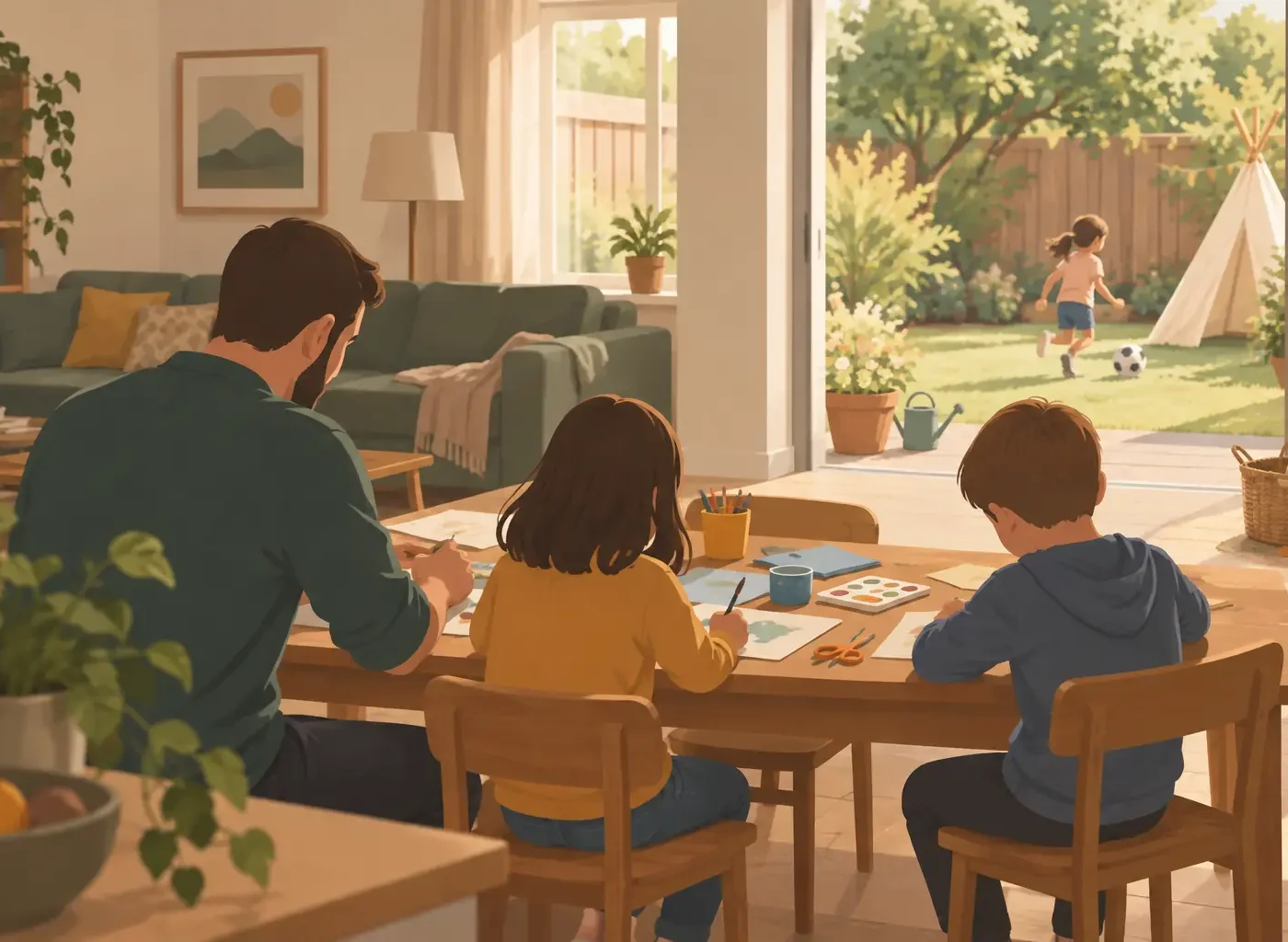
By 9:15 on the first Monday of break, the snacks are already out, someone is complaining that there is “nothing to do,” and you may be wondering how many hours are left until dinner. Keeping kids busy over school holidays without screens can sound like a cheerful parenting goal. In a real house, with laundry, work emails, younger children, and your own limited energy, it can feel like an impossible shift.
You do not need to become a camp counselor. A good school break has room for noise, mess, boredom, and a little rest for you too.
Table of Contents
Keeping kids busy over school holidays without screens starts small
Start by deciding what kind of day you are trying to create. Not every hour needs an activity, and not every activity needs to teach a skill. Most children do better with a few clear moments to look forward to than with a full schedule that falls apart before lunch.
Your job is not to entertain your child all day, it is to make the day feel possible.
Choose one main thing for the morning and one for later in the day. The main thing can be very ordinary: a walk to the playground, baking muffins, washing bikes, building a blanket fort, visiting the library, or taking cardboard boxes outside with markers and tape.
Say it out loud early: “This morning we are making the fort. After lunch, we are going to the park. The time in between is yours to figure out.” Younger children may need you nearby to get started. Older children may need a clear expectation that they can be bored without handing that problem back to you.
This approach also helps when siblings want entirely different things. You do not have to find one magical activity that delights everyone. One child can draw at the table while another uses blocks on the floor. Together does not always mean doing the same thing.
A simple rhythm makes screen-free school holidays easier
A loose rhythm gives children something solid without turning you into an activities director. Think in broad parts of the day: get moving, make or do something, eat and rest, then get outside or handle one useful task together.
Predictability can lower the number of decisions everyone has to make.
For a child under five, the movement might be dancing in the kitchen, carrying pillows to a fort, or helping spray water on outdoor plants. For an older child, it could be shooting hoops, walking the dog, or setting up an obstacle course for a younger sibling.
The making part does not need to be a craft you found online. Put out paper, tape, recycled containers, crayons, and a pair of child-safe scissors. Then give a small prompt: make a map of the backyard, design a restaurant menu, build a home for a toy animal, or create signs for a pretend store.
Keep the rhythm flexible enough for the hard version of the day. Rain may trap everyone inside. A younger child may be clingy. You may need to make a work call or simply sit down with coffee while it is still warm. On those days, the plan can become music, a bath with cups and toys, and an indoor picnic on a towel. It still counts.
Set up one place where kids can begin without you
The biggest drain is often not the activity itself. It is the repeated request for you to find materials, explain the rules, fix a problem, and decide what happens next.
A small amount of setup can protect a surprising amount of your energy later.
Choose one shelf, basket, or low cabinet for open-ended supplies. It does not need to look organized enough for a photo. It just needs to hold things your child can use without asking every time: paper, washable markers, blocks, play figures, puzzles, costume pieces, tape, or a notebook.
Rotate only a few things if you can. Too many choices can make a child drift from one item to the next while still saying they are bored. Bringing out a toy that has been tucked away for a couple of weeks can work better than buying something new.
For older kids, the same idea can be a project box. Include paper, a notebook, building materials, card games, or a book of simple magic tricks. Give them permission to use the supplies for their own ideas, not just the activity you imagined.
Give children work that has a real purpose
Children often want to be close to you when you are trying to get things done. That can be frustrating, especially when the kitchen is a mess and everyone is hungry. But bringing them into a real task can be easier than trying to keep them happily occupied somewhere else.
Being useful often feels better to a child than being kept busy.
A preschooler can match clean socks, wipe a low table, carry napkins outside, or help rinse toys. An elementary-age child can sort recycling, wash outdoor chairs, help make a grocery list, or choose music while you cook. Older kids can plan a simple lunch, organize a game for younger children, or take responsibility for one part of an outing.
Call it help because it is help. Avoid turning every task into a competition or offering a reward for basic family participation. The point is not perfect results. It is letting your child see that ordinary life is something the family handles together.
If your partner is home, agree on who is taking the lead for the next block of time. A clear handoff like, “You have the kids outside for 45 minutes while I make lunch,” prevents both adults from quietly assuming the other person is managing the noise.
Plan for the hour that usually goes sideways
Most school-break days have a predictable rough patch. It may be late afternoon, when children are tired and hungry and you have run out of ideas. It may be the stretch before dinner, when a child follows you from room to room asking for a device.
The difficult hour is easier when you treat it as expected, not as proof the day went wrong.
Save one low-effort option for that time. It could be a bath with a few containers, audiobooks while children color, a snack plate on the porch, a family card game, or helping prepare dinner. This is not about making the moment magical. It is about giving everyone a landing place before small frustrations turn into a much bigger evening.
It also helps to lower your own standard here. If the living room is covered in cushions after a fort, leave it until tomorrow. If dinner is simpler than you planned, that is fine. School breaks can make the house feel used, because it is being used.
Let boredom have a place in the day
When children say they are bored, it is tempting to rush in with three suggestions. Sometimes that is kind. Sometimes it creates a pattern where your child waits for you to supply the next idea.
Boredom is uncomfortable, but it does not always need to be fixed immediately.
The Child Mind Institute points out that boredom can actually help kids develop skills, creativity, and self-esteem, even if younger children often need a little help getting started with unstructured time.
Stay warm without taking over. You might say, “I know, it can feel hard when there is nothing planned right now. You can choose something from the basket, go outside, or make up an idea.” If they reject each option, you do not need to keep negotiating.
For younger children, sit nearby for the first few minutes. Start stacking two blocks or draw the first line on the page, then step back. For older children, give a time boundary: “Try something for ten minutes. If it truly is not working, come tell me what you tried.” That teaches problem-solving without making them feel dismissed.
When you need to work, rest, or get through the day
There will be days when you cannot be fully available. You may be working from home, caring for another child, cleaning up after a busy morning, or simply depleted. The goal shifts from a memorable activity to a manageable day.
A lower-key day is still a valid school-break day.
Be honest about the limit in simple language: “I need 30 quiet minutes to finish this task. You can draw beside me, listen to an audiobook, or work on your project.” Set children up before you begin rather than trying to announce the boundary after they are already restless.
If it does not work perfectly, adjust instead of abandoning the whole idea. Shorten the quiet time. Sit in the same room. Offer a snack first. Tomorrow can look different.
This is one part of the daily rhythm we cover in family routines that actually work.
Frequently Asked Questions About Keeping Kids Busy Without Screens
How do I keep kids busy over school holidays without screens?
Plan one anchor activity in the morning and one later in the day, then leave the time in between open. Keep a basket of open-ended supplies they can use without you, and give them real jobs around the house. You do not need a full schedule, just a loose rhythm and permission to be bored.
Is it okay for kids to be bored during school break?
Yes, and it is often good for them. Boredom pushes children to invent their own games and projects. It feels uncomfortable at first, so expect complaints. Offer two or three starting points, then step back. Picture a seven-year-old who grumbles for ten minutes, then builds a cardboard city for an hour.
What are easy screen-free activities for kids at home?
Blanket forts, cardboard box building, baking, scavenger hunts, card games, audiobooks with coloring, obstacle courses, and water play in the bath or yard all work well. Simple materials like tape, paper, and recycled containers go a long way. The best activities are the ones kids can start without you.
How do I work from home with kids on school break?
Set them up before you start, with a snack, a project, and a clear time boundary like “30 quiet minutes.” Keep them in the same room if that helps, and plan your hardest focus time for when they are most settled. Accept that some days will be lower-key, and that is okay.
Should screens be banned completely during school holidays?
Not necessarily. Many families do better with clear screen times rather than a total ban, so screens do not become the default when the day gets hard. Putting active and creative play first, and screens later in the day, often works better than an all-or-nothing rule.
Final Thoughts
Keeping kids busy over school holidays without screens is less about filling every hour and more about building a loose rhythm that leaves room for boredom, mess, and real family life.
By the end of the break, your child may not remember every craft or outing. They may remember the cardboard city that took over the floor, the afternoon you let them help make dinner, or the fact that home had room for them to be loud, bored, inventive, and close to you. That is more than enough.
If you are the parent who usually disappears into work during school breaks, taking one 45-minute block outside with the kids is a small change that both they and your partner will feel.
How to Be a Better Dad is a practical guide to being present on the ordinary days, school breaks included, written by a mom of two who has survived a lot of very long Mondays.