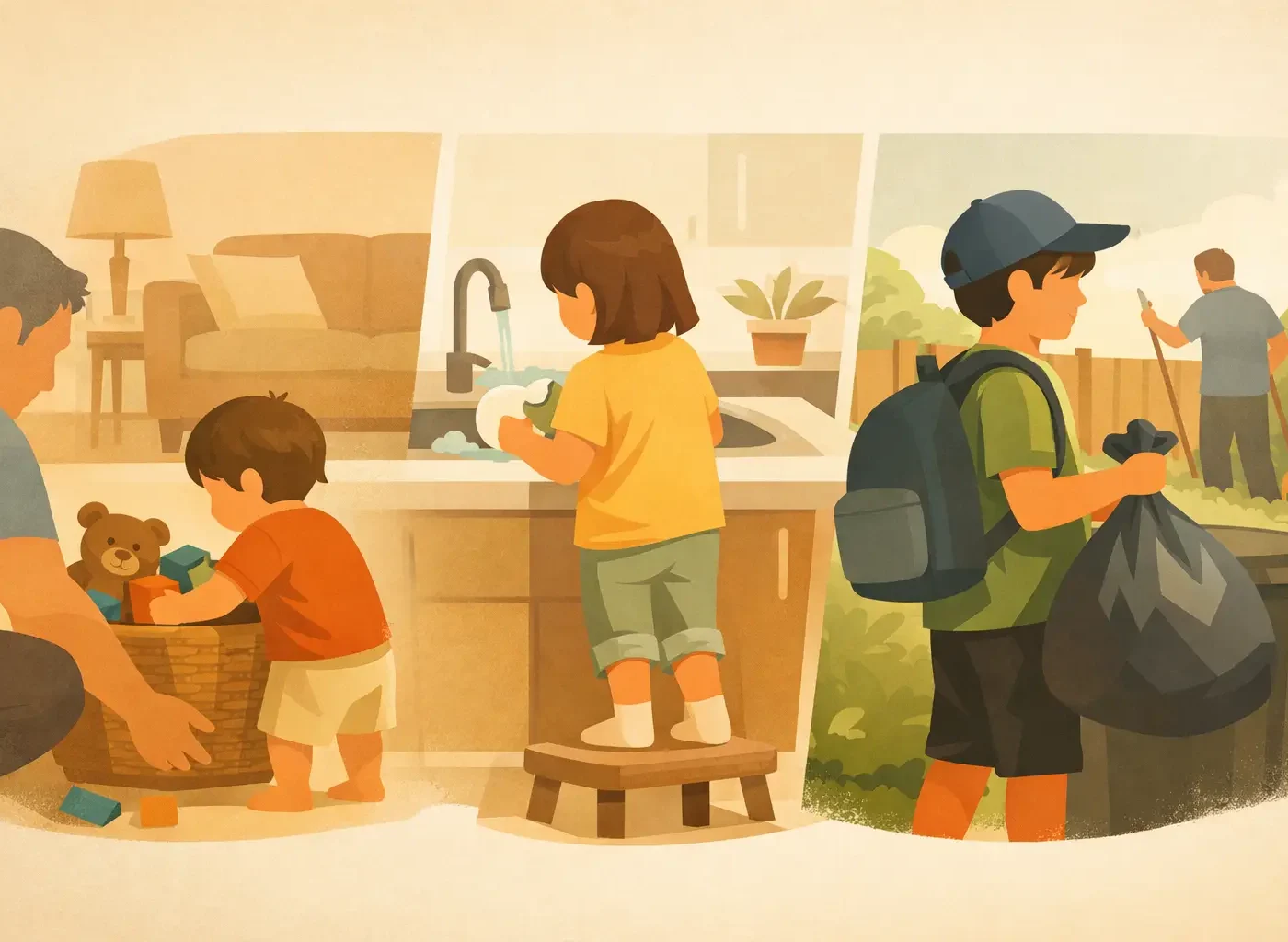
The cereal bowl is still on the table, someone cannot find a shoe, and your child suddenly has very strong feelings about putting away three blocks. If that sounds familiar, you are in ordinary family life, not failing at teaching responsibility. Age appropriate chores for kids work best when they fit the child in front of you and the actual pace of your home.
The goal is not a perfectly helpful child or a spotless kitchen. It is a child who slowly learns, “I belong here, and I can contribute.” That takes repetition, patience, and a willingness to let a job look a little imperfect at first.
Start with one job your child can truly do
A chore should be small enough that your child has a real chance of finishing it, even on a tired day. “Clean your room” is too broad for most young children. “Put the stuffed animals in this basket” gives them a clear finish line.
A successful chore is less about the size of the job and more about whether your child can own one useful piece of it.
Choose one recurring task that already happens in your household. Maybe it is carrying napkins to the table, putting dirty clothes in the hamper, or feeding a pet with your help. Show your child how to do it beside you a few times, then step back a little.
Expect teaching to take longer than doing it yourself. At 5:30 p.m., when dinner needs to happen and everyone is hungry, that can feel deeply inconvenient. Save new chores for a lower-pressure moment when possible. Once the skill is familiar, it can become part of the day without creating another battle.
It also helps to be honest about what “done” means. If your 4-year-old puts plates on the table but the forks are sideways, the job is done. If your 10-year-old loads the dishwasher but misses a cup, point it out calmly and have them fix that one thing. You are teaching care, not looking for a tiny adult housekeeper.
Age appropriate chores for kids from toddlers to teens
Children develop at different speeds, so use these ages as a starting point rather than a test. A child who is cautious with new tasks may need you nearby longer. A child who loves practical work may be ready for more. The best fit depends on coordination, attention, confidence, and what is already familiar at home.
Your child does not need more chores every year, they need tasks that grow gently with their skills.
Ages 2 to 3: Join in and copy
At this age, chores are mostly about joining you. Your child can put toys into a bin, carry a diaper to the trash, place a washcloth in a laundry basket, or wipe a low table with a small cloth. They may also help put books on a shelf or hand you items while you sort laundry.
Keep your language concrete: “Blocks in the basket,” rather than “Can you tidy up?” Stay close, make it brief, and do not expect consistency yet. Some days they will be delighted to help. Other days, they will walk away halfway through. That is normal practice, not defiance.
Ages 4 to 5: Small jobs with a clear result
Preschoolers can put away most toys, match socks, set napkins on the table, water plants with a small container, and help put groceries in low cupboards. They can also carry their plate to the counter after eating, though you may still handle anything breakable.
Give one direction at a time. “Put your shoes by the door” is easier to follow than a chain of four requests. A picture label on a toy bin or drawer can reduce how often you have to repeat yourself, especially if your child cannot read yet.
Ages 6 to 8: Practice responsibility without overloading
Children in this range can make their bed with reasonable help, clear their place after meals, sort laundry by color, fold simple items, sweep a small area, and pack their school bag using a short visual checklist. They can help with pet care when an adult is still keeping track of the bigger needs.
This is also a good age to introduce the difference between helping and being reminded ten times. Give the request, offer a calm prompt if needed, and stay matter-of-fact. If it does not happen right away, avoid turning it into a speech about gratitude or character. Bring the focus back to the specific job.
Ages 9 to 11: Useful work that affects the family
Older elementary-aged children can empty the dishwasher, take out trash, vacuum a room, change bed sheets, prepare a simple snack, and help make part of a meal with you nearby. They can keep track of a regular responsibility, such as bringing the recycling bin in or feeding a pet each morning.
Jobs that matter to everyone are especially valuable here. A child who clears the table is not “helping Mom” or “helping Dad.” They are doing their part in a home where everyone eats. That wording matters because it makes contribution feel like belonging, not a favor.
Ages 12 to 14: Build toward independence
Teens and young teens can do laundry from start to finish, clean a bathroom, make a basic dinner, mow a lawn where that is safe and appropriate, and take responsibility for their own school materials. They can also help care for younger siblings in limited, supervised ways, but they should not become the backup parent.
Give them more say in when a task gets done, while keeping the expectation clear. For example, “The bathroom needs to be cleaned by Sunday evening. Do you want to do it Saturday or Sunday?” This respects their growing independence without leaving the job vague.
Make chores part of family life, not a daily argument
If chores appear only when an adult is already frustrated, children understandably start to hear them as punishment. Try attaching a job to something that already happens. Plates get cleared after dinner. Shoes go in the basket when everyone comes inside. Laundry gets sorted when the basket is full.
Predictability lowers the amount of energy you and your child spend negotiating the same task.
A simple family expectation is often enough: everyone helps care for the spaces and things they use. You do not need a complicated chart for that to work. Some families love a visible list, especially with several children. Others do better with two or three regular jobs each and a verbal reminder. Use the system that you can maintain when you are tired.
One thing that worked for us was separating everyday contributions from occasional paid jobs. Putting away your own belongings and clearing your plate were simply part of living together. Washing the car or tackling an extra outdoor project could sometimes earn money. That kept allowance from becoming the only reason to contribute.
When your child refuses a chore
Refusal does not always mean your child is lazy or disrespectful. They may be hungry, absorbed in play, unsure where to begin, or testing whether the expectation is real. You can stay calm without dropping the request.
Start by making the task smaller: “Put five cars in the bin, then I will help with the rest.” If the transition is the hard part, give a brief heads-up before asking. If they are capable but stalling, stay nearby and keep your words plain: “The plates need to be cleared before we move on. You can start with yours.”
Calm follow-through teaches more than a louder voice usually does.
Avoid redoing the job in front of them with a sigh or a lecture. If they missed a spot, show them and let them finish. If you take over because time has run out, say so without making it personal: “I am finishing this because we need to leave. We will try again tomorrow.”
There will be days when you decide it is not worth pushing. A sick child, a family emergency, or a particularly rough afternoon calls for flexibility. Letting a chore go once does not erase the expectation. It means you are responding to the day you are actually having.
Let contribution be enough
Children notice whether the adults around them share work, too. Let them see you wipe the counter, sort the mail, take out the trash, and ask each other for practical help. If your partner usually handles a task, naming it out loud can make family work more visible: “Dad is loading the dishwasher while I get the towels folded.”
Chores are not mainly a lesson in obedience, they are practice in being part of a family.
Start smaller than you think you need to. Pick one job your child can manage this week, teach it without rushing, and accept the slightly crooked version of done. Over time, those small contributions can take a little weight off your shoulders and give your child a steady, useful place in the life you share.