The camera is ready, everyone is dressed, and your child suddenly wants nothing to do with it. They run behind a tree, pull off a shoe, or insist on being carried right when you hoped for one nice picture. Family photos with young kids: what actually works is usually far less polished than the images you had in mind, and much more forgiving.
You are not failing because your child cannot hold a smile for twenty minutes. Young kids are being asked to pause their bodies, follow unfamiliar directions, and look toward an adult they may not know, often while wearing clothes that feel different from their usual ones. The goal is not to make them cooperate perfectly. It is to set up a short window where connection has a chance to show.
Table of Contents
Family photos with young kids: what actually works first
Start by lowering the length of the job. For most young children, ten focused minutes can produce far more than an hour of repeated requests to stand still. Tell your photographer, or the family member holding the phone, that you want a few posed photos first and then plenty of movement and candid moments.
A successful photo session is one where your child feels safe enough to be themselves, not one where every face looks polished.
Choose a time when your child is usually easiest to be around, not simply the time that looks best for lighting. A beautiful field at the end of a long day may be worth it for some families. For others, it means a child who has already used up their patience before the first photo. A shaded park, backyard, front steps, or a familiar room can be more useful than a dramatic location.
Keep the plan narrow. Aim for one family group photo, a few pictures of each parent with the kids, sibling photos if they are willing, and then let the rest be flexible. When you try to capture every combination, kids feel the adults becoming more urgent. That urgency tends to show up on everyone’s face.
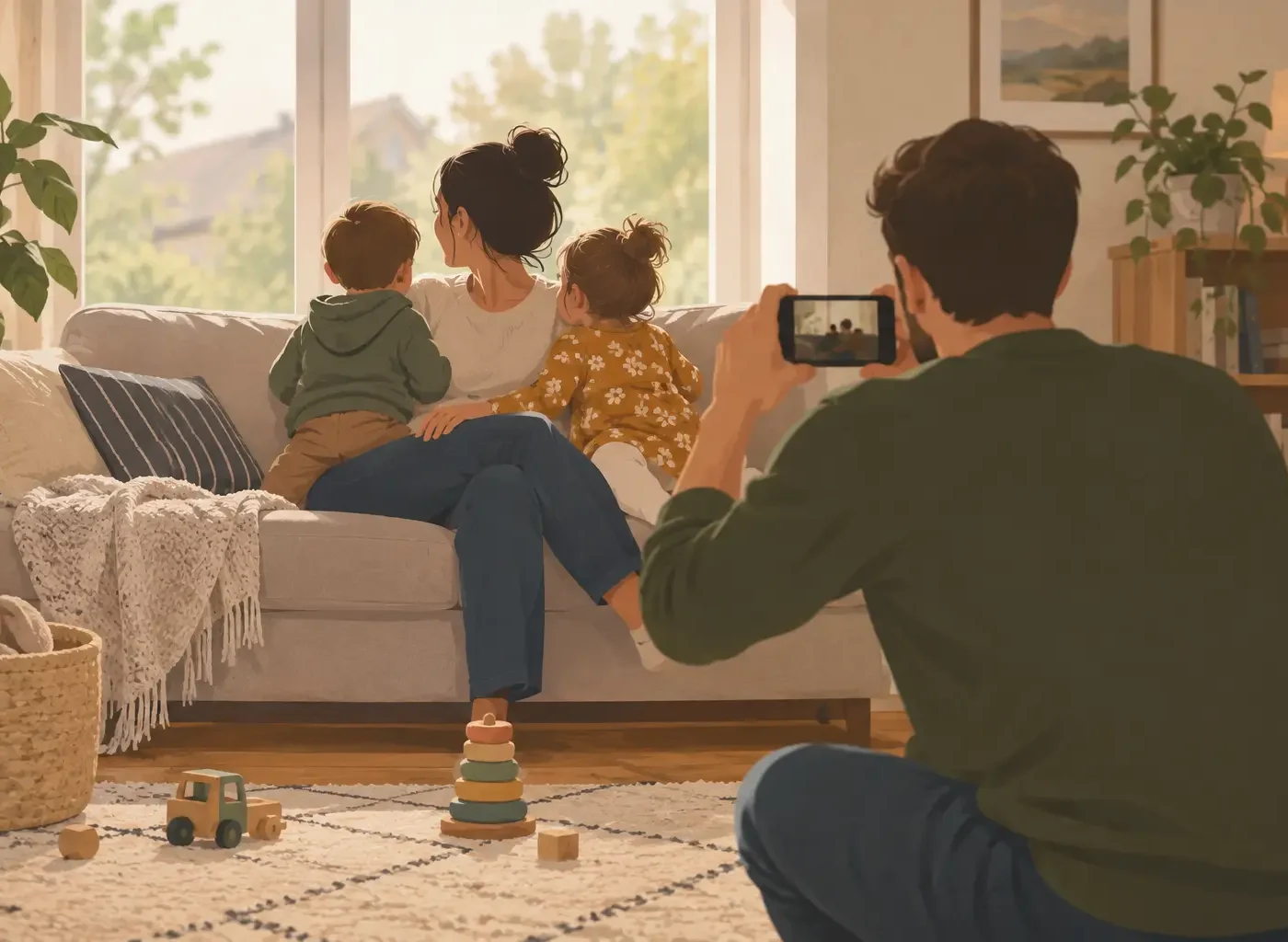
If you are taking the photos yourselves, set a timer and place the phone where it can capture some space around you. Then give yourselves something to do together. Walk toward the camera, sit close on a blanket, look at your child while they tell you something, or lift them for a second if that is comfortable. Stillness is not the only way to make a family photo.
Make the first five minutes easy
The beginning often decides the mood. Do not start with the most demanding picture, such as all children facing forward with matching expressions. Let your child arrive, look around, and move a little first. If the photographer is new to them, allow a few minutes of ordinary conversation before asking for a pose.
Bring one small familiar comfort, but do not turn it into a bargaining system. A favorite stuffed animal can sit in a picture or help a child feel settled. A simple snack can bridge a hungry stretch. The point is support, not promising a prize for every smile.
Your child does not need to perform happiness for the photo to be worth keeping.
Clothing matters more than adults sometimes expect. If a child is tugging at a scratchy collar, stiff shoes, or a new dress they did not choose, they are unlikely to care about the family portrait. Save the outfit for another occasion if it creates a fight. Comfortable clothes in colors that work together will photograph better than expensive clothes everyone resents.
It also helps to tell children what will happen in plain language. Try: “We are going to take a few pictures together. First we will stand by the tree, then we can walk and play for a bit.” Young kids do better with a small, visible plan than a vague instruction to be good. The Child Mind Institute notes that explaining what to expect at an event gives shy or sensitive kids more confidence and less anxiety going in.
Give children a role, not a stream of corrections
A child who hears “Look here,” “Stop touching that,” “Stand closer,” and “Smile” may quickly decide that photos are not for them. Instead, give them a job that fits their age. They can hold a parent’s hand, find a leaf, squeeze a sibling’s hand, show the photographer their fastest run, or whisper something silly into Dad’s ear.
Connection gives children something real to do when posing feels strange.
This is especially useful with siblings. Asking them to hug on command can feel like too much, particularly if they are already tired of sharing space. Ask them to walk together, race toward a parent, or sit with a little room between them. If a warm sibling moment happens, great. If not, separate portraits may tell a truer story of this stage of family life, and the everyday sibling rivalry tips you use at home apply here too.
Adults can help by looking at the child more than the camera. A photo of your child watching you laugh, or reaching for your hand, often becomes the image you love later. It may not be the framed holiday-card picture. It can still be the one that feels most like your family.
One thing that worked for us was making the photo session feel like a short outing rather than a test. The pictures improved when the adults stopped treating each minute as something that had to be saved.
Let one adult carry the practical details
Photo days can quietly become another event that needs organizing: clothes checked, water packed, hair fixed, directions confirmed, children moved out the door, and everyone kept reasonably calm. When one parent is holding all of that, it is hard for them to arrive relaxed enough to be in the pictures.
The person arranging the photos deserves to be in them without also managing every detail.
Talk beforehand about who owns what. One partner might handle packing the bag and getting the kids out the door, while the other makes sure everyone is dressed and knows the location. During the session, one adult can stay close to the child who needs a break while the other listens for the photographer’s next request.
This is not about keeping score. It is about making room for both parents to be present. If Dad notices Mom is still fixing cuffs, carrying the bag, and directing everyone while the photographer starts, he can step in with a clear task: take the bag, bring the kids over, and give her a minute to join. That kind of quiet sharing of the mental load goes the other way too when one parent is working hard to keep a nervous child comfortable.
When the session goes sideways, change the goal
Sometimes a child refuses the outfit, cries when put down, or spends the whole session with a serious face. Sometimes the weather changes and everyone arrives already irritated. Those are hard versions of a plan that was supposed to be simple.
You can stop chasing the ideal picture and still come home with meaningful evidence of your life together.
Take a break before the adults become sharper. Sit down, offer a drink, let your child be held, or ask the photographer to capture a few quiet moments from farther away. If the child is done, accept that they are done. Pushing for five more minutes rarely creates the photo you wanted, and it can make the experience harder to repeat next time.
There is a trade-off here. You may get fewer classic, camera-facing images. You may also get a picture of your child curled into your shoulder, laughing while being chased, or standing stubbornly with one sock missing. Years from now, those details can bring back the season more clearly than coordinated outfits ever could.
For the bigger picture, see our complete guide to family routines.
Frequently Asked Questions About Family Photos With Young Kids
How long should a family photo session with young kids last?
Plan for about thirty to forty-five minutes total, with the posed shots done in the first ten to fifteen. Most toddlers and preschoolers have a short window of cooperation. After that, switch to movement and candid moments, which often produce the photos families end up loving most.
What is the best time of day for family photos with toddlers?
Whenever your child is usually happiest, often mid-morning after breakfast or after a good nap. Golden hour light at sunset is beautiful, but not if your toddler is overtired by then. A well-rested, fed child in average light usually beats a cranky child in perfect light.
How do I get my toddler to smile for photos?
Skip “say cheese” and focus on making them laugh. Peekaboo, tickles, a silly whisper from a parent, or asking them to shout their favorite animal usually works better. Picture a three-year-old giggling because Dad pretends to sneeze. That real smile beats any forced one.
What should kids wear for family photos?
Comfortable clothes in coordinating colors, not necessarily matching outfits. Avoid anything scratchy, stiff, or brand new that your child has never worn. A child who feels good in their clothes moves and smiles more naturally. Let older kids have a say in their outfit to cut down on arguments.
What if my child has a meltdown during the photo session?
Pause, comfort them, and offer a snack or water. If they cannot recover, wrap up early instead of pushing through. Ask the photographer to capture a few quiet, held moments while your child settles. Some of the most treasured family photos come from exactly these imperfect moments.
Final Thoughts
Family photos with young kids rarely look like the inspiration board, and that is fine. The best ones capture how your family actually felt in this season, wiggles and all.
Put the photos where you will actually see them. Print one imperfect favorite. Let your children notice that they belong in the family record even when they were wiggly, serious, muddy, or unwilling to smile. That is a quiet message worth giving them, and yourselves.
If you are the parent who is usually behind the camera or managing the logistics, make sure you end up in a few frames too. Your kids will want those photos of you one day.
How to Be a Better Dad is a practical guide to being present in the ordinary moments your family will remember, written by a mom of two who owns a lot of photos of children running away from the camera.