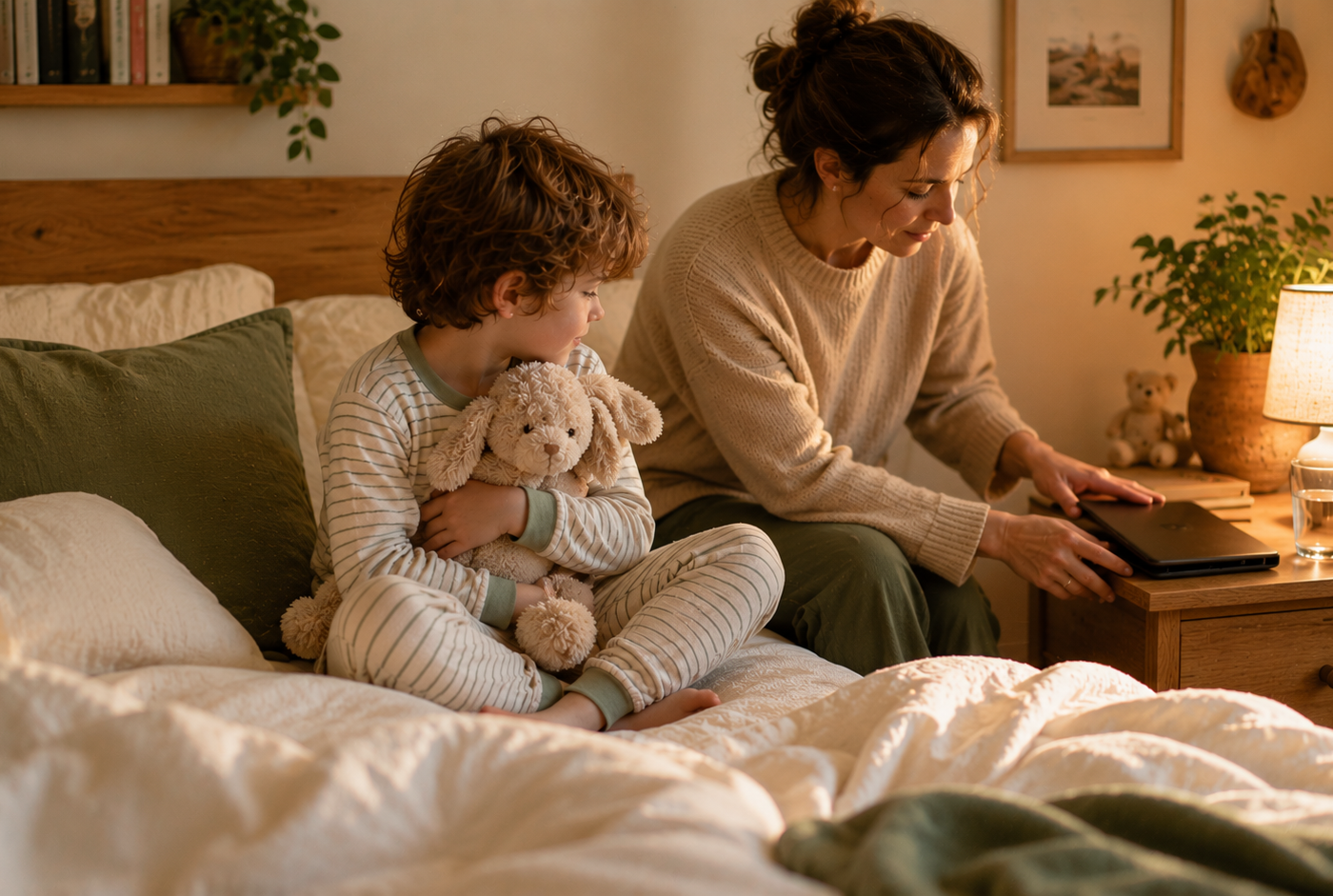
Helping Kids Sleep After Screen Time : it’s 8:30 pm. The tablet is finally off. And your kid is somehow more wired than they were at 3 in the afternoon. If kids sleep after screen time feels like a daily battle in your house, you are not imagining it. And you are definitely not alone.
The good news is this isn’t about willpower, bad habits, or screens being evil. There’s actual biology behind why kids struggle to settle after a movie or game, and once you understand it, the whole thing makes a lot more sense. It also means there are real, gentle things you can do to help.
This guide walks you through a step-by-step wind-down approach that works with your child’s nervous system instead of against it. No yelling, no power struggles, no perfect parenting required.
Why Kids Struggle to Sleep After Screen Time
Before we get into the steps, it helps to understand what’s actually going on. Screens emit blue light, which signals the brain to stay alert. That alone can delay the release of melatonin, the hormone that helps kids feel sleepy. But there’s more to it than just the light.
Fast-moving content, exciting games, or suspenseful shows activate the nervous system. The brain gets a hit of dopamine. The body is physically calm (sitting or lying down) but the mind is running a mile a minute. Transitioning straight from that state into sleep is genuinely hard, not just for kids but for adults too.
Understanding that your child isn’t being difficult, they are biologically activated, takes a lot of the frustration out of the situation. That shift in perspective makes a real difference in how you approach bedtime.
The Screen-to-Sleep Gap: Why Timing Matters
One of the most effective things you can try is building what I call a “screen-to-sleep gap.” This is simply a buffer of time between the end of screen time before bed and the moment your child gets into bed.
Even 30 to 45 minutes can make a meaningful difference in how easily your child settles. For some kids, especially older ones or those who tend to run anxious or highly sensitive, a full hour works better.
This doesn’t mean you need a rigid schedule or a perfectly planned evening. It just means screens aren’t the last thing before bed. Something calm comes after them. That’s the shift.
If evenings in your house feel chaotic and screen time tends to bleed right up to bedtime, you’re not failing. It’s worth looking at how to ease kids into a wind-down routine for kids that feels natural rather than forced, and the steps below are a starting point.
Step 1: End Screens With a Warning, Not a Battle
How screen time ends matters as much as when it ends. A sudden “right, screens off now” almost always leads to a meltdown, especially for younger kids who haven’t built up the emotional flexibility to switch gears quickly.
Giving a five-minute warning is one of those small changes that genuinely shifts the dynamic. “Five more minutes and then we’re turning it off” gives the brain time to start preparing. For kids who struggle more with transitions, a ten-minute and then a five-minute warning can help even more.
It also helps to frame the transition toward something, not just away from screens. “Five more minutes and then we’ll do your wind-down” lands softer than “five more minutes and then screens go off.” One feels like a continuation of the evening. The other feels like a loss.
If your child tends to fall apart at transitions in general, this piece on helping your child calm down without shame has some tools that translate really well to this specific moment.
Step 2: Lower the Lights and the Noise
Once screens are off, the environment does a lot of the work for you. Dim lighting signals the brain that it’s time to wind down, which is the opposite of what overhead lights or a brightly lit kitchen does.
This doesn’t need to be elaborate. Switching to a lamp instead of the main light, or using a warm-toned nightlight in the bedroom, is enough. Some families use a salt lamp or a plug-in dimmer. Whatever you already have that’s warm and low works fine.
Noise levels matter too. If the TV is still running in the background or siblings are still playing loudly nearby, the nervous system stays alert. Winding down the whole house environment, not just the child’s immediate space, tends to help. This is part of how to calm kids down at night in a way that feels effortless rather than punitive.
You don’t have to enforce silence. Soft background music, an audiobook playing quietly, or even just the sounds of a calm house are all fine. The goal is lowering the overall sensory input.
Step 3: Add a Physical Reset
After screens, kids often need something to do with their bodies before they can genuinely rest. A short physical reset helps the nervous system shift gears. This doesn’t mean exercise, which can actually make settling harder. It means slow, gentle movement.
Some things that tend to help:
A few minutes of light stretching, even just reaching up high and then curling small, can release physical tension. A warm bath or shower is one of the most effective tools here because the drop in body temperature afterward naturally triggers sleepiness. For younger kids, even washing their face and hands with warm water has a small but real calming effect.
Other kids respond well to something tactile, a weighted blanket, a familiar stuffed animal, or running their hands over something with a comforting texture. You know your child. What helps them feel physically grounded is worth leaning into.
This step is especially helpful for kids who say they “can’t stop thinking” at bedtime. The physical reset gives the mind a different place to focus.
Step 4: Do Something Quiet Together
This is the step that gets skipped most often when evenings are rushed, and it’s often the one that makes the biggest difference. Ten minutes of quiet, connected time after screens can do more for a kids bedtime routine than almost anything else.
It doesn’t have to be long. A few pages of a book read aloud. A short conversation about something low-stakes, favorite part of the day, something funny that happened, something they’re looking forward to. A simple card game. Drawing quietly side by side.
The point isn’t the activity. It’s the shift from passive screen consumption to a calm, warm interaction. It tells the brain the day is wrapping up. It also fills the connection tank, which reduces the “one more thing” requests that drag bedtime out.
For kids who genuinely struggle to wind down, this is also a good time to do a simple breathing exercise together. Breathing in for four counts, holding for two, and out for four is easy enough for kids from about age four upward and genuinely works to slow the heart rate.
Step 5: Keep the Bedroom for Sleep
Once your child is in bed, the goal is to keep the environment as sleep-associated as possible. Screens in the bedroom are the biggest disruption to kids sleep after screen time because the bedroom itself stops feeling like a sleep space.
This is one of the more contested points, especially with older kids and teens who do homework, chat with friends, and watch videos all from the same room. There’s no shame in the current setup at your house. But if sleep is a consistent struggle, this is worth experimenting with.
Even a small shift helps. Phones charging outside the room. Tablets kept in a common area. A clear “screens off and out of the bedroom” boundary from a certain time each evening.
For kids who share a room or don’t have much personal space, this gets more complicated. If that’s your situation, a visual cue, like a specific lamp that signals “sleep time” being the only light on, can help recreate some of that same association.
If independent sleep is a longer-term goal alongside all of this, this article on helping kids sleep through the night independently is a good companion read.
Step 6: Expect an Adjustment Period
If you’re shifting from a routine where screen time happened right up until bed, expect the first few nights of a new wind-down routine for kids to feel bumpy. Kids test new rhythms. Younger ones especially may ramp up before they settle down.
That resistance doesn’t mean it isn’t working. It usually means the old pattern is being disrupted and the new one hasn’t stuck yet. Most families find that after four to seven days, the new routine starts to feel normal and bedtime genuinely gets easier.
One thing that helped us was keeping the routine consistent even on weekends. Not rigidly, not stressfully, but as a general shape to the evening. The body clock responds well to predictability.
If mornings are already chaotic because bedtime runs late, it’s worth knowing that a smoother wind-down often fixes the next morning too. A rested kid is a completely different experience. If getting out the door is also a pain point, this piece on morning routines for reluctant kids has some ideas that dovetail nicely with sorting out evenings.
Final Thoughts
Helping with kids sleep after screen time isn’t about eliminating screens or being stricter. It’s about building a bridge between the stimulation of evening and the calm of sleep, one that works for your family and your kid’s particular nervous system.
Some kids need the full hour of wind-down. Some settle fine with twenty minutes and a bath. You’ll find your version of this. The steps above are a starting point, not a prescription.
The fact that you’re thinking about this at all says a lot. Bedtime doesn’t have to be the hardest part of the day. A little structure, a little warmth, and a bit of patience with the adjustment period can genuinely change your evenings.
WANT MORE EVENINGS THAT ACTUALLY END WELL?
The Family Life Lab Weekly is a no-fluff newsletter for parents who want practical ideas without the overwhelm. Real routines, gentle parenting tools, and honest takes on the hard parts of raising kids. Join us every week here.
And if you enjoy practical parenting ideas like these, feel free to follow me on X, where I regularly share simple tips on raising confident kids, creating a peaceful home, and supporting your children’s emotional growth.