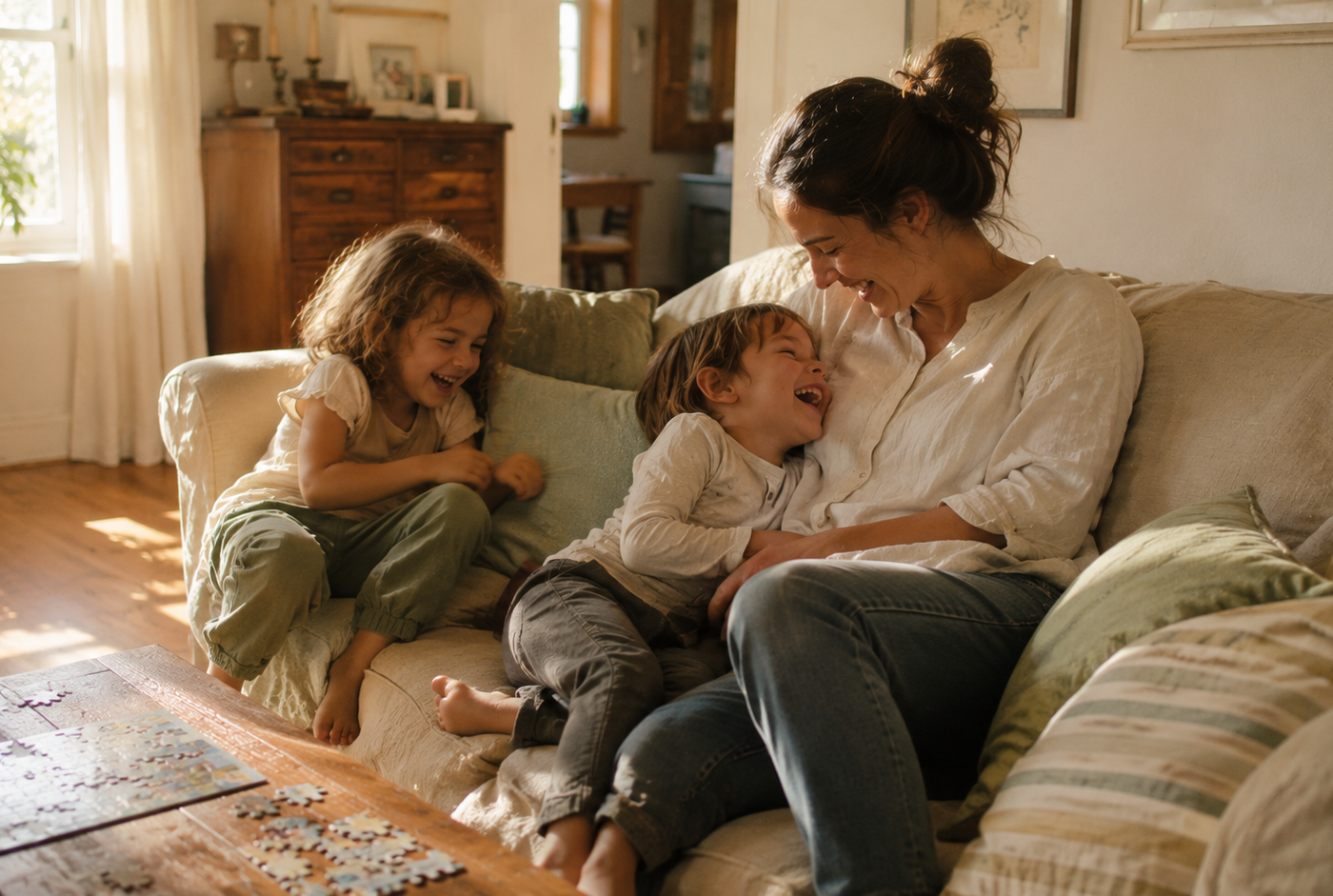
Most of us did not become parents hoping to run a tight ship. We wanted warmth. We wanted our kids to feel safe, loved, and excited to come home each day. We dreamed of creating a happier home for kids—a place where they could thrive, feel understood, and build lasting memories. But somewhere between the packed schedules, the sibling arguments, the dinner nobody wants to eat, and the bedtime that never goes smoothly, that vision of a happier home for kids can start to feel frustratingly out of reach.
You are not doing it wrong. Honestly, the fact that you are even thinking about this says a lot. Creating a home where kids genuinely thrive does not require a total overhaul of your family life. It does not demand perfection or a certain parenting philosophy. It asks for small, repeated moments of connection, safety, and warmth, and most of those are already within reach.
In this article we are going to look at simple, practical habits that make a real difference to the emotional temperature of your home. No lecture, no pressure, just a handful of things worth trying.
Table of Contents
Why the Feeling of Home Matters More Than You Think
Kids are incredibly good at reading the atmosphere around them. Long before they can name what they are feeling, they are absorbing the energy of their environment. A home that feels safe and warm gives them the emotional foundation to handle everything outside it: friendship drama, school pressure, the inevitable hard days.
A positive home environment does not mean a house where nothing goes wrong. It means a place where kids know they are loved even when things do go wrong. That distinction matters enormously. When children feel secure at home, they tend to be more resilient, more willing to try things, and more able to regulate their emotions over time.
The tone of your home is not set by one big gesture. It is built in the small moments, the ones that happen every day without you even noticing. That is actually good news, because it means you have more opportunities than you realize.
Small Daily Habits That Create a Happier Home for Kids
The families that seem to run with ease are not the ones with perfect kids or endless patience. They are usually the ones who have a few quiet habits in place that keep the connection going even on difficult days.
A happier home for kids tends to share some common threads, and most of them are refreshingly low-effort.
Greet your kids like you mean it. It sounds small. But a genuine « hey, I’m glad you’re home » when your child walks in from school lands differently than a distracted glance from a phone. Children notice the difference between being acknowledged and being truly seen. A warm greeting costs nothing and sets the tone for the whole afternoon.
Start a « two things » check-in at dinner or bedtime. Each person shares one good thing from their day and one hard thing. It keeps the conversation real without turning it into an interrogation. Kids who grow up knowing they can share the hard stuff at home are less likely to bottle things up when it really matters.
Put something predictable in every day. Kids do not need rigid schedules, but they do need to be able to predict what comes next. A rough rhythm, same rough bedtime, same rough morning sequence, gives them a sense of control in a world that mostly controls them. That calm predictability is a building block of family connection habits that last.
Reduce background noise where you can. Constant television, notifications pinging, music overlapping with conversation, all of it adds low-level stress. You do not have to live in silence. But choosing a few quiet windows in the day, even just 20 minutes, creates breathing room for everyone.
How You Handle the Hard Moments Shapes Everything
This is the one that nobody warns you about. Your kids will not remember whether the house was tidy. They will remember how you handled it when things fell apart.
When a meltdown happens, when someone is rude, when something gets broken, the way you respond is what teaches them how to handle their own emotions for the rest of their lives. That is a lot of pressure, and it is okay to name that. Nobody stays calm every single time.
What tends to help is having a plan for your own regulation before the moment arrives. Some parents find it useful to have a physical reset, step outside for 30 seconds, drink a glass of water, put both feet flat on the floor. Others use a phrase they repeat to themselves, « this is not an emergency. » Whatever works for you, the goal is buying yourself just enough space to respond rather than react.
If you find the burnout building up and your patience fraying more than you would like, this guide to staying patient when you are running on empty has some genuinely useful resets worth trying.
Raising happy children is not about never losing your cool. It is about what happens after. A repair, a genuine « I’m sorry I shouted, I was overwhelmed, » teaches your child something just as valuable as staying calm would have.
Connection Before Correction: A Simple Shift That Changes the Dynamic
One of the most effective things we can do in a calm family home is make connection the default first move, not correction.
When a child is acting out, being difficult, refusing to cooperate, the instinct is often to address the behavior first. And sometimes that is necessary. But a lot of the time, the behavior is a signal. Something is off. They are tired, scared, embarrassed, overwhelmed, or just feeling disconnected from you.
Meeting them in the feeling first tends to get further than immediately going to the consequence. A quick « you seem really frustrated right now, can you tell me what’s going on? » before anything else can completely change the trajectory of an interaction. Not always. But often enough to be worth making a habit.
This is the heart of what it means to build a positive home environment. It is not softness. It is strategy. Children who feel understood are more cooperative, not less.
For parents who want to go deeper on this, helping your child work through big emotions without shame is one of the most practical pieces we have on this site. It walks through what to actually say in those moments.
Building Family Connection Habits That Stick
The word « rituals » can feel a bit formal for what we are really talking about. Think of it more like repeated small moments your family can count on.
Family connection habits do not need to be elaborate. Some of the most powerful ones take under five minutes.
A reading-together habit at bedtime, even for older kids who can read independently, keeps a gentle point of closeness in the day. The car ride home from school, with no agenda and no interrogation, just music or quiet or whatever feels right, often becomes the place kids start talking unprompted.
Sunday pancakes. A walk after dinner. Five minutes of rough-and-tumble play before bath time. Friday night movie pick rotation. These things sound ordinary because they are. That is exactly why they work. Kids build their sense of home around what happens reliably.
The goal is not more activity. It is more moments of low-pressure togetherness where your child feels like being around you is easy and good.
Raising happy children is less about the big experiences and more about this: the everyday sense that home is where they are most themselves.
The Role Each Parent Plays in Setting the Tone
A happier home for kids is not built by one person. Both parents, or whatever the family structure looks like, shape the emotional climate every single day.
Dads, this one is especially worth sitting with. Research consistently shows that paternal engagement, not just being present in the building but being actively connected, has a profound effect on children’s confidence, emotional health, and sense of security. The way you show up in the ordinary moments matters just as much as the big ones.
That does not mean more pressure. It means more intention. Putting the phone away during dinner. Asking a real question. Choosing to be in the room and in the room. Those small acts accumulate into something significant over time.
Moms carry a lot of the invisible weight of keeping a home emotionally warm. If that resonates, give yourself credit for the work you are already doing. And where you feel stretched, saying so is not failure. It is modeling something important for your kids.
The whole family’s emotional wellbeing is connected. When the adults in the home feel seen and supported, that ripples out. A warm family connection habit between co-parents makes a noticeable difference to how kids experience the whole household.
If you want to think more about how to build emotional awareness in your kids as part of all this, this piece on teaching emotional intelligence at home is a genuinely encouraging read and very practical.
Final Thoughts
Building a happier home for kids does not start with a big change. It starts with one small decision made more consistently. A warmer greeting. A quieter evening. A moment of repair after a hard one.
The parents who create homes their kids want to come back to as adults are not the ones who got everything right. They are the ones who kept showing up with warmth, kept trying after the hard days, and kept choosing connection even when correction felt easier.
You are already on that path. This article is proof of that.
Ready to Go Deeper?
If this article made you think about the kind of dad you want to be, or the kind of home you want to build alongside your kids, The Father Blueprint was written for exactly that moment. It is a complete, practical guide to being more present and connected, in the everyday, not just the highlights.
How do I create a happier home environment for my kids?
Many parents find that small, repeated moments of connection matter far more than big gestures or perfect routines. Simple habits like greeting your child warmly when they come home and giving them a few minutes of focused attention can shift the emotional tone of your whole household. A happier home for kids grows from consistency, not perfection.
What makes kids feel safe and loved at home?
Kids feel safest when they know they are loved even on the days when things go wrong, not just when they behave well or life runs smoothly. What tends to help most is staying emotionally available during hard moments rather than only during the easy ones. That sense of security gives children the foundation they need to handle challenges outside the home too.
How can I improve the atmosphere at home for my children?
The atmosphere in your home is shaped by the small, everyday moments far more than by any single event. Many parents find that reducing rushed, reactive interactions and replacing them with even brief moments of warmth makes a noticeable difference. Things like a calm morning check-in or a low-key question at dinner can gradually build a more positive home environment for kids.
What are simple ways to make my child happier at home?
What tends to help is making your child feel genuinely seen on a daily basis, which can be as simple as remembering something they mentioned and asking about it later. Children who feel noticed and heard at home tend to be more settled, more resilient, and more willing to open up when something is bothering them. Small, warm habits repeated consistently do far more than occasional grand efforts.
Why does my child seem stressed at home even when nothing is wrong?
Kids are very sensitive to the emotional atmosphere around them and will often absorb tension or busyness even when nothing specific has happened. Many parents find that their child’s mood reflects the overall feeling of the household more than any individual incident. Building in small pockets of calm and connection throughout the day can help your child feel more settled and secure at home.
The Father Blueprint: become the dad they will always remember