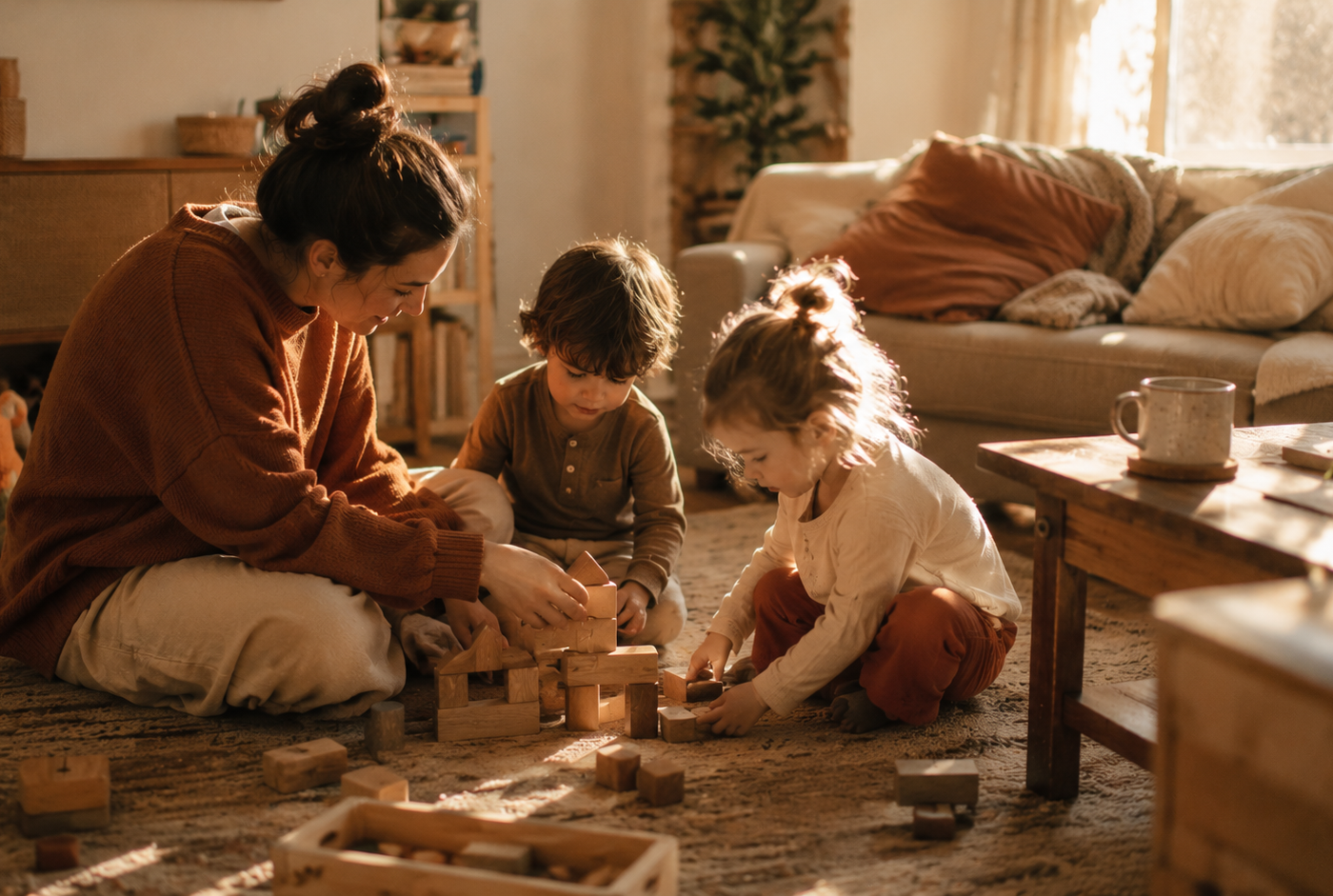
Some days, family life feels like a relay race where nobody passes the baton cleanly. You’re getting kids out the door, fielding work emails, making dinner, and suddenly it’s 9pm and you haven’t really talked to anyone. That feeling, the sense that you’re all in the same house but somehow ships passing in the night, is one of the most common things parents mention when they’re trying to figure out what’s missing. Daily family rituals are one of the most practical answers to that question.
Not big gestures. Not weekend adventures that require planning and parking. Small, repeatable moments that signal: we belong to each other. We show up for each other, even on ordinary Tuesdays.
In this article, you’ll find simple ideas for building family connection routines that actually hold up in real life, through tired evenings, picky eaters, sibling squabbles, and all the rest. Take what fits your family. Leave what doesn’t.
Table of Contents
Why Small Rituals Matter More Than You Think
We tend to overestimate what big experiences do for family bonds and underestimate what small, consistent ones do. A weekend trip is wonderful. But it’s the nightly check-in, the silly handshake before school, the way someone always saves the last cookie for the other, those are the things kids carry into adulthood.
Daily family rituals work because they’re predictable. Predictability is deeply reassuring for kids. It tells them: this is a safe place. These people are mine. Research into family dynamics consistently points to routine and ritual as building blocks for children’s emotional security, and for togetherness habits that last well beyond childhood.
For adults, it works too. We’re all managing more than we show. Having a few anchored moments in the day creates a kind of reset. A chance to remember why you’re doing all of this.
The difference between a routine and a ritual is worth naming. A routine is functional. A ritual has meaning. Brushing teeth is a routine. Brushing teeth while your five-year-old announces their « word of the day » becomes something else entirely. The activity is almost irrelevant. The intention behind it is everything.
Morning Rituals That Set the Whole Day Up
Mornings are brutal for most families. Nobody is at their best. The cereal is wrong, the shoes are missing, and someone has suddenly remembered a school project due in forty minutes. We know.
That’s exactly why a brief, low-effort daily family ritual in the morning can anchor everyone before the day pulls you in different directions. It doesn’t need to be elaborate. It just needs to be yours.
A few things that work for families we know, and that we’ve tried ourselves:
The one-word check-in. Before kids leave for school, each person says one word for how they’re feeling. Tired. Excited. Wobbly. It takes thirty seconds. It opens a door. If you’re looking for ways to weave this kind of emotional check-in into everyday life, this guide to teaching kids about feelings at home has some really gentle, practical ideas.
The goodbye ritual. A specific hug, a high five, a silly phrase you always say. My boys have had the same goodbye handshake for two years. They’d be mortified if I described it here. But they’d also be upset if we skipped it.
The breakfast question. One open-ended question at the table. « What are you most looking forward to today? » or « If you could swap jobs with anyone, what would you do? » Not every morning. But often enough that it becomes something they expect and sometimes even answer honestly.
Building family bonds doesn’t require more time. It requires intention with the time you already have.
Afternoon and After-School Connection Points
The after-school window is underrated. Kids often arrive home carrying a lot, even if they say « nothing » when you ask how their day was. That one-word answer isn’t rudeness. It’s decompression.
One thing that tends to help is creating a soft landing rather than an immediate debrief. Snack together without agenda. Sit nearby while they decompress. Let the silence exist for a little while. Then, when the energy shifts, you’ll often find they start talking on their own.
For working parents who aren’t home at that window, the connection point might come later. The important thing isn’t the exact timing. It’s that there is a moment, something reliable that says: I want to know about your day, and I’m here when you’re ready. If you’re managing this as a working parent, these ideas for staying connected with your kids despite a busy schedule offer some really grounded approaches.
A few low-key afternoon rituals worth trying:
The « roses and thorns » chat. One good thing from the day, one hard thing. Works well in the car on the way home from pickup, or while you’re both eating snacks at the kitchen counter.
The couch rule. Fifteen minutes where whoever wants to just be near each other can be. No pressure to talk. No screens. Just proximity. It sounds simple because it is. And it works.
A shared activity that isn’t goal-oriented. Building with Lego, kicking a ball around the garden, drawing side by side. Meaningful family moments often happen when nobody is trying to create one.
Dinner Table Rituals That Actually Stick
You don’t have to eat dinner together every single night for it to mean something. Life gets in the way. Activities, work schedules, toddler bedtimes that don’t align with anyone else’s hunger, we get it.
But when you do sit down together, even a few nights a week, daily family rituals at the table can shift the whole tone of the meal.
Gratitude isn’t just a wellness trend. Naming something you’re grateful for before eating is one of the oldest togetherness habits across almost every culture. With kids, you can keep it concrete: not « health and happiness » but « the funny thing that happened at lunch » or « that the dog didn’t eat my homework this time. »
The story question. « Tell me something that happened today that you didn’t expect. » Kids aged five to fifteen all respond differently to this one, and that’s what makes it interesting.
The « appreciations » round. Each person says one thing they appreciated about someone else at the table that day. This one takes a bit of practice, especially with kids who’d rather poke their sibling than compliment them. But over time it genuinely shifts how family members notice and name each other’s kindness.
For dads especially, the dinner table is one of the highest-leverage moments in the day. A few minutes of real presence there matters far more than it might seem. This look at simple ways dads can connect more deeply with their kids is worth a read if that resonates.
Togetherness habits don’t have to be serious. Ridiculous questions work just as well. « Would you rather eat only pizza for a year or only tacos? » has sparked some of the best conversations we’ve had.
Bedtime Rituals That Do Double Duty
Bedtime is one of the most emotionally loaded parts of the day for kids. They’re tired. Their guard is down. Things that felt manageable at noon suddenly feel enormous. This is actually an opportunity, not just a battleground.
A consistent bedtime ritual builds family connection routines that children genuinely look forward to. It also makes the transition to sleep smoother, which is a win for everyone.
A few that hold up well across ages:
The « high, low, buffalo » ritual. Popularized by plenty of families, this one asks each person to share the high point of their day, the low point, and something random or funny. The « buffalo » keeps it light and reminds everyone not to take the hard parts too seriously.
The gratitude whisper. Just before lights out, whisper three things you love about your child. Specific things. « I loved how you helped your brother when he dropped his drink. » It takes one minute. It lands.
Reading together. Even when kids are old enough to read independently, being read to is a different experience. It’s intimate and calm. It’s a shared world. Our house has been doing a chapter-a-night for years, and the books we’ve read together have become part of our family’s shorthand.
The check-in question. « Is there anything in your head tonight that you want to let out? » Not every child will answer. But the ones who do, on the nights when something is actually wrong, those moments are worth ten thousand unanswered ones.
Keeping Rituals Alive When Life Gets Messy
Here’s what nobody tells you about daily family rituals: they will lapse. Life will interrupt them. A phase of illness, a difficult stretch at work, a new baby, a house move. You’ll look up one day and realize the goodbye handshake hasn’t happened in three weeks.
That’s normal. That doesn’t mean the ritual is gone. It means you get to bring it back.
Rituals are resilient precisely because they’re familiar. Kids often remember them more clearly than you do. One of my boys once reminded me, unprompted, that we hadn’t done our « word of the day » in a while. He was right. We started again that evening.
A few things that help rituals stick over time:
Keep them short enough that they’re not a burden on hard days. If the ritual takes more than five minutes, it will get cut when things are stressful.
Let kids help shape them. When children have ownership over a ritual, they protect it. Ask them what they want the family goodbye to be. Let them pick the dinner question. Their investment makes the ritual more durable.
Don’t require perfection. Some nights the gratitude round devolves into giggling and someone accidentally saying they’re grateful for « the concept of cheese. » That’s still a good night. Building family bonds isn’t about executing rituals perfectly. It’s about showing up to them.
And when a ritual simply stops working, because kids grow and change and what landed at seven doesn’t land at twelve, let it evolve. Replace it with something new. The point was never the specific ritual. The point is the intention underneath it.
Final Thoughts
Daily family rituals don’t fix hard days. They don’t eliminate sibling arguments or make mornings less chaotic. What they do is create a current underneath all of it, a quiet, consistent message that says: we’re a team. We notice each other. We come back to each other, even when the day has scattered us.
You don’t need to implement everything in this article at once. Pick one moment in your day, morning, dinner, or bedtime, and try one small, repeatable thing for two weeks. See what it does to that window of time. You’ll likely find that the thing you built starts to feel like it was always there.
That’s when you know it’s become a ritual.
If this article sparked something for you, especially around wanting more real presence as a parent, that’s worth paying attention to. The Father Blueprint is a practical, honest guide written by a woman who has watched dads drift and dads come back, and it gives you a complete framework for being the dad your kids will talk about for the rest of their lives.
Frequently Asked Questions about Daily Family Rituals
What are some simple daily family rituals that actually work for busy families?
Many parents find that the most effective daily family rituals are the smallest ones, like a two-minute check-in at dinner or a silly goodbye handshake before school. What tends to help is picking one moment in the day you already have and adding a layer of intention to it rather than inventing something new.
How do I create a family connection routine when everyone is tired and stretched thin?
Starting with one low-effort anchor point, like a short question at bedtime or a shared snack after school, is what tends to work best for families who are already running on empty. The goal is consistency over perfection, so a two-minute ritual done daily builds more connection than an elaborate one that fades after a week.
What is the difference between a family routine and a family ritual?
A routine is functional and keeps the household running, while a ritual carries meaning and signals belonging. Many parents find that turning an existing routine, like the school drop-off or bedtime teeth brushing, into something with a small personal touch is the easiest way to build real family rituals without adding anything to the schedule.
What daily rituals help kids feel more secure and emotionally connected at home?
Predictable, repeatable moments are what tend to build the strongest sense of emotional security in kids, such as a consistent goodnight phrase, a regular after-school check-in, or even a family inside joke that comes up at dinner. Children draw a lot of comfort from knowing these small moments will happen, because it tells them the people around them are reliable and present.
How do I start building family togetherness habits when my kids are different ages?
Many families find it helpful to look for rituals that can flex across ages, like a question jar at dinner where everyone draws and answers, or a morning playlist that signals it’s time to get moving together. What tends to work is choosing something that gives each child a small role, since kids from toddlers to tweens engage more when they feel like a real part of the moment.
Your Attractive Heading
For more daily insights, follow me on X.