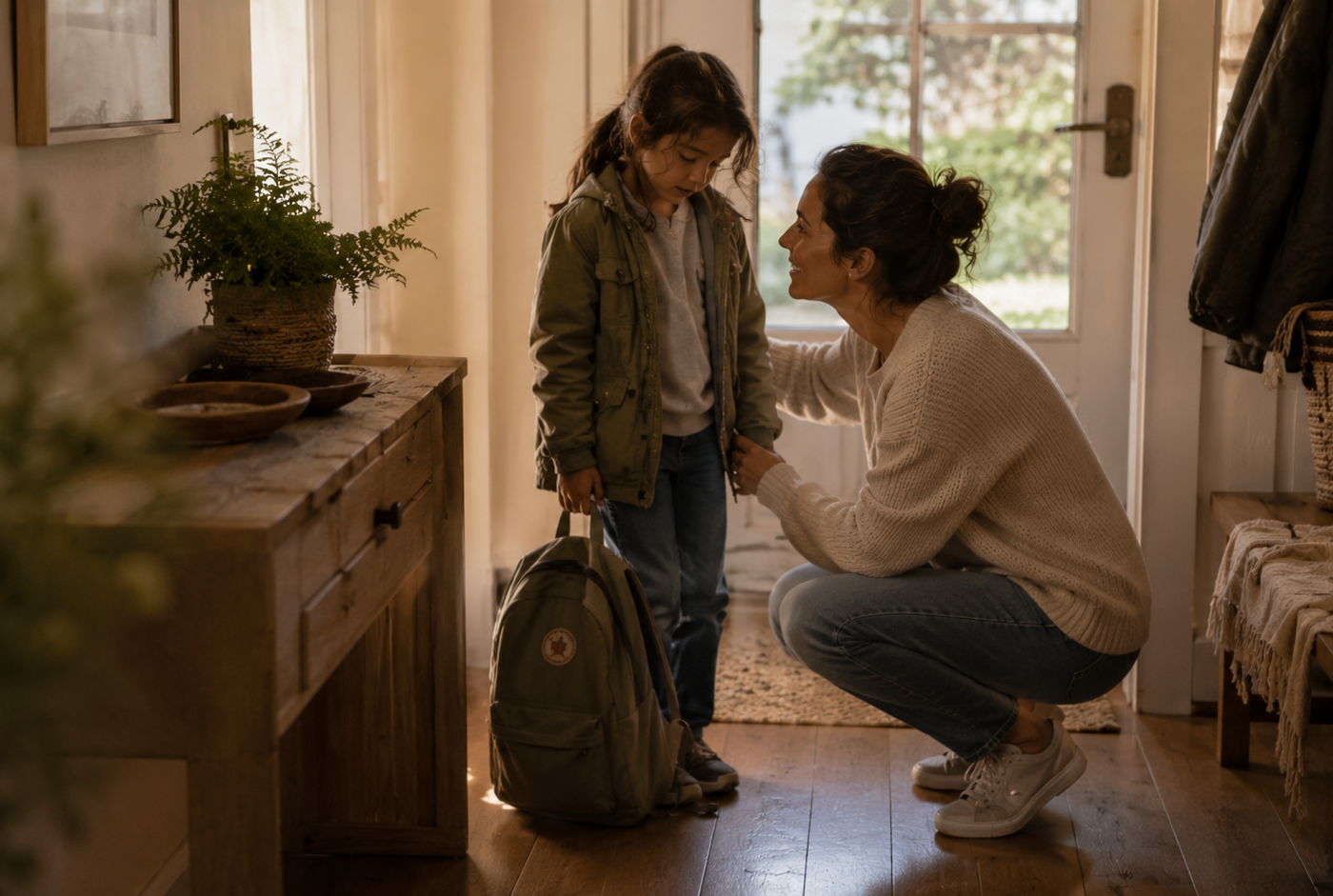
Three o’clock arrives, and so does the storm. Your child walks through the door and within ten minutes someone is crying, something is unfair, and you are standing in the kitchen wondering what just happened. If you are trying to help kids decompress after school and feeling like nothing is working, you are not doing it wrong. You are just dealing with something that catches most parents completely off guard.
School is exhausting. Even on a good day, kids spend hours holding it together, following rules, managing friendships, sitting still, and processing new information. By the time they get home, the emotional tank is empty and you are the safe person standing in the splash zone. The meltdowns, the rudeness, the total shutdown, all of it is actually a sign that your child trusts you. That does not make it easier. But it helps to know why it happens.
In this article, we are going to look at some practical, low-effort ways to ease that after-school transition. Not a rigid schedule, not a system that requires buying anything. Just a few gentle shifts that tend to make evenings feel a lot more manageable, for everyone.
Table of Contents
Why Kids Fall Apart the Moment They Get Home
There is a name for this in some parenting circles: “after-school restraint collapse.” Your child held it together all day, and now they are finally somewhere safe enough to let it all out. It is not bad behavior. It is emotional release.
This is one of the most misunderstood moments in a parent’s day. We see the meltdown and think something went wrong at school, or that our child is being difficult. But often, they are just finally breathing out. The transition from the structured school environment to home is genuinely hard for kids, especially ones who are more sensitive, more introverted, or who are navigating something social.
After-school meltdowns tend to peak between ages five and ten, but plenty of teenagers hit a wall when they get home too. It just looks different: a slammed door instead of a tantrum, silence instead of sobbing. Same need underneath.
Understanding this changes how we respond. Instead of asking “what is wrong with you?” we can ask “what does this kid need right now?”
The First Fifteen Minutes Matter Most
This is where most parents accidentally make it harder. We ask questions. “How was school? What did you do? Did anything fun happen?” All reasonable, all well-meaning, all completely wrong for the moment.
When you are trying to help kids decompress after school, the first thing to offer is not conversation. It is space. A calm re-entry window where nothing is required of them.
What tends to help is a simple, consistent landing ritual. That might look like: shoes off, snack on the table, no questions for fifteen to twenty minutes. Some kids want to watch something. Some want to go outside. Some want to sit next to you in total silence while you drink your coffee. Let them lead.
The snack piece is not trivial. Blood sugar drops through the afternoon and a genuinely hungry kid is a kid with zero emotional bandwidth. Something easy, protein or fat alongside something sweet, makes a real difference to after-school meltdowns. A banana and peanut butter, crackers and cheese, even a smoothie. You know your child.
One thing that worked for us was putting the snack out before they walked in the door. No conversation, no homework talk, just food and a bit of quiet. Some days that fifteen minutes was the thing that saved the whole evening.
What to Say Instead of “How Was School?”
Most kids, especially after a hard day, cannot answer big open questions. “How was school?” requires them to survey their entire day, find something worth reporting, and then articulate it. When their brain is already overloaded, that question lands like a test they did not prepare for.
Smaller, lower-stakes conversation starters tend to unlock more. Try something like:
“What was the best thing you ate at lunch?” Or “Did anything weird or funny happen today?” Or just say nothing at all and let them come to you when they are ready.
Some families use a feelings check-in that does not require words. A simple “how full is your tank right now, one to five?” gives kids a way to communicate how they are doing without having to explain. It builds emotional intelligence over time too, which is one of the longer payoffs of this kind of gentle after-school routine. If you want to build more of that emotional vocabulary with your kids, this piece on teaching kids about their feelings at home walks through five simple ways to do it.
The goal in those first thirty minutes is connection without pressure. Let them know you are there, you are glad they are home, and they do not have to perform.
Low-Effort Activities That Genuinely Help Kids Unwind
Once the decompression window has passed and your child is a bit more regulated, some light activity can help shift the lingering stress. You do not need to engineer anything elaborate. The most effective calm kids after school activities are usually the most ordinary ones.
Movement is often the fastest reset. Kids who have been sitting all day need to move their bodies. A bike ride around the block, kicking a ball in the garden, jumping on a trampoline if you have one. Even five minutes outside changes the physiology. You do not need to join in if you are exhausted. Watching from the back step with a cup of tea counts.
Creative, low-pressure activities also work well for emotional release for kids. Drawing, building, playing with clay or kinetic sand, anything where there is no right answer and no audience. These give kids a way to process without having to talk about it.
Reading, especially rereading old favorites, is surprisingly calming. There is something about familiar stories that helps an overwhelmed nervous system settle. If your child will let you sit and read with them, even better.
What to mostly avoid in that first hour: homework, screens with high stimulation like fast-paced games or YouTube rabbit holes, and any conversation that requires problem-solving or decision-making. Their prefrontal cortex is genuinely tapped out.
How to Handle After-School Meltdowns Without Losing Your Own Calm
This is the part nobody talks about enough. Because it is not just the kids who are depleted at three o’clock. You have probably been in work mode, or home mode, or some combination of the two all day. Your own reserves are running low.
When an after-school meltdown hits, your calm is the most useful tool you have. Not the thing you say. Not the consequence you give. Your regulated nervous system is literally what helps their nervous system regulate. That sounds like a lot of pressure. It is not meant to be.
It just means: slow down, lower your voice, get physically close if they will let you, and resist the urge to fix it immediately. You do not have to have the right words. Sometimes “I can see that was a really hard day” is enough.
For the moments when you are genuinely running on empty yourself, this article on staying patient when you are burned out is worth a read. Because helping your child regulate is much easier when you have a few strategies for keeping yourself steady first.
And if the meltdowns are escalating or feel out of proportion regularly, this gentle approach to helping kids calm down without shame has some really practical tools for those moments.
Building a Simple After-School Routine That Actually Sticks
You do not need a color-coded schedule or a printed chart. What kids benefit from is predictability, a rough sense of what comes next so their brain is not also managing uncertainty.
A simple after-school routine might have just three beats: decompress, connection, transition to the rest of the evening. That could be snack and quiet time, followed by fifteen minutes together doing something low-key, followed by homework or dinner prep. That is it.
The key is keeping it flexible enough that it bends without breaking. On hard days, the decompress phase might need to be longer. On easy days, your child might be chatty and ready to connect the moment they walk in. The routine is a rough container, not a rigid script.
Involving your child in designing it tends to help. Ask them what they need when they get home. Younger kids might surprise you with how clearly they know: “I just want to sit on the couch.” Older kids might ask for more space before being asked anything. Both are useful information for building a calm kids after school rhythm that actually works for your family.
One more thing: try not to use after-school time as the catch-up window for everything that needs doing. Homework conversations, activity scheduling, tricky conversations about behavior, all of these land better after everyone has had a chance to come down from the day.
Final Thoughts
The after-school hours do not have to feel like a nightly ambush. When we understand what is actually happening for our kids at that transition point, everything gets a little easier to navigate. They are not being difficult. They are being human, a small human who spent all day managing themselves and is finally home.
The goal when you try to help kids decompress after school is not a perfectly smooth transition every time. Some days will still be hard. What you are building over time is a sense of safety, a feeling your child carries that home is where they can exhale.
That is worth far more than any routine.
Why does my child fall apart as soon as they get home from school?
This is called after-school restraint collapse, and it happens because kids spend the whole day holding it together in a structured environment. When they finally get home to someone they trust, the emotional release comes out all at once. It is actually a sign that your child feels safe with you, even when it does not feel that way in the moment.
How can I help my kid decompress after school without a big routine?
Many parents find that small, low-effort shifts work better than a formal system, things like offering a snack quietly, letting your child have fifteen minutes of unstructured time, or just being present without asking questions right away. The goal is to lower the pressure of the transition, not add more steps to it. What tends to help most is consistency in the feeling of coming home, not a rigid schedule.
What should I say to my child after school to help them feel calm?
What tends to help is keeping it simple and low-key in those first few minutes, something like a warm greeting without a list of questions. Many parents find that saying very little and just offering a snack or a hug does more than asking how the day went. When kids feel less pressure to perform or explain, they often open up on their own a little later.
How do I handle after-school meltdowns without making them worse?
Many parents find it helps to treat the meltdown as emotional release rather than bad behavior, which shifts the response from frustration to curiosity about what the child needs. Staying calm, reducing stimulation, and not pushing conversation in those first fifteen minutes can stop a meltdown from escalating. What tends to work is giving kids time and space to decompress before expecting connection or homework focus.
At what age do kids struggle most with the after-school transition?
After-school meltdowns and shutdowns are most common between ages five and ten, but many parents find that teenagers hit a wall after school too, it just looks different with silence or withdrawal instead of tears. The underlying need to decompress after a long day of holding it together is present across all school ages. Adjusting your approach to match how your child expresses that exhaustion tends to make the after-school transition smoother at any age.
The after-school hours put everything on display: how present you can be when you are tired, how steady you can stay when things are loud, how connected your family feels at the end of a long day. If you want to show up for those moments in a way you feel good about, The Father Blueprint was written for exactly that. It is a complete, practical framework for dads who want to be the dad their kids remember.
The Father Blueprint: become the dad they will always talk about