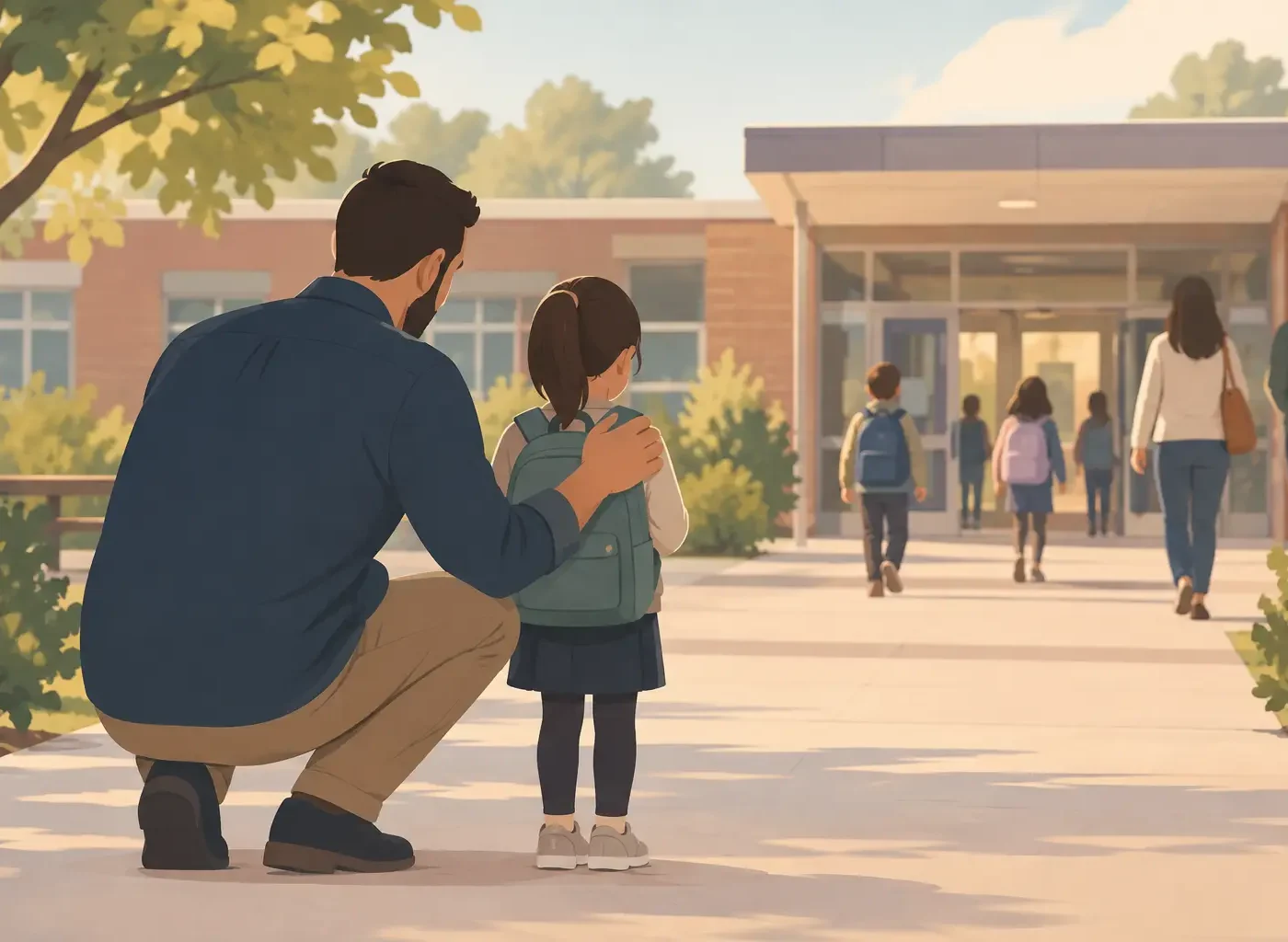
A quiet child at school can pull hard on a parent’s worry. You may picture them sitting alone at lunch, holding back an answer they know, or watching other kids join in while they stay near the edge. When your child is shy at school, what helps is rarely a big pep talk or a demand to be more outgoing. It is usually a series of small, safe experiences that let them feel capable without feeling put on the spot.
Your child is not failing because school feels socially demanding. And you are not failing because you cannot make that feeling disappear before the morning bell.
When your child is shy at school, what helps first
Start by taking pressure off the word “shy.” Your child may be slow to warm up, quiet in groups, cautious around unfamiliar adults, or comfortable with one friend at a time. Those are behaviors to support, not a fixed identity to announce in front of them.
Your goal is not to make your child more outgoing, but to help school feel manageable enough for them to take the next small step.
At home, describe what you notice in plain language. You might say, “It looked hard to walk into the classroom today,” or, “You stayed close to your teacher until you felt ready.” This shows your child that you see the effort underneath the quietness.
Try not to speak for them automatically when another adult asks a simple question. Instead, give them a few calm seconds. You can gently bridge the gap by saying, “Maya is thinking,” rather than, “She’s shy.” If the moment becomes too uncomfortable, answer briefly and move on. The point is not to turn every greeting into practice.
It also helps to make drop-off predictable. A short goodbye phrase, the same hand squeeze, and a clear plan for what happens next can reduce the social and emotional load of arriving. Lingering may soothe you in the moment, but it can make the separation stretch longer for some children. This depends on your child and the school routine, so notice what leaves them steadier rather than guessing.
Make school participation feel smaller
A child who will not raise their hand in a whole-class discussion may still be able to tell an answer to a partner. A child who cannot walk into a birthday party alone may be able to arrive with one familiar classmate. Small steps count because they give your child real evidence that they can handle more than they thought.
Confidence usually grows after a manageable action, not before it.
Talk with your child about one tiny school moment that feels possible this week. It could be saying “hi” to one child, showing a teacher a completed worksheet, or asking to join a game they already understand. Keep the goal specific and light. “Make a friend” is too big to be useful. “Ask Ben if he wants to build with blocks” gives your child something they can actually try.
Be careful with rewards that make social behavior feel like a performance. A sticker for saying hello can be fine for some kids, but a large prize for speaking in class can add another layer of pressure. Your child may start to feel that being quiet disappoints you.
Instead, notice the effort afterward without interrogating them. “You walked in even though you felt nervous” lands better than a long string of questions about who they talked to. If they did not take the step, stay steady. You can say, “That was still hard today. We can think about a smaller step tomorrow.”
Work with the teacher before the problem gets bigger
Your child’s teacher sees a part of their day you do not see, and a short, practical conversation can make a real difference. You do not need to ask the teacher to fix your child’s personality. Let them know what helps your child warm up and what situations seem hardest.
A good school partnership gives your child support without making them feel singled out.
You might explain that your child is more likely to talk after they have watched for a while, or that they do better when they know what is coming. Ask whether the teacher has noticed times when your child seems relaxed, engaged, or connected. Those moments tell you more than a general label ever could.
Then discuss one or two low-key supports. The teacher might greet your child by name at the door, pair them with a kind familiar classmate, give them a job that has a clear purpose, or let them share an answer privately before inviting them to share with a group. The right support should feel ordinary, not like a spotlight.
If lunch or recess seems hard, ask about the structure of those times. Some children do better with a planned activity or a familiar peer nearby. Others need room to observe before joining. Your teacher may have useful ideas, but your child knows their own comfort best, so keep checking in without making every afternoon a report card.
Practice at home without turning home into rehearsal
Home can be a place to try out small social scripts, as long as it stays playful and optional. During a drive or while putting away laundry, you can casually practice a few words your child could use: “Can I play?” “Do you want to sit together?” “I don’t understand the directions.”
Practicing a phrase is helpful when it gives your child a tool, not when it tells them they must perform.
Role-play can work well with younger children, especially if you take the awkward role first. Be the child who wants to join a game, then let your child be the welcoming classmate. Keep it short and a little silly. If they lose interest, let it go.
For older children, a direct conversation may fit better. They may want help thinking through where to sit, how to enter a group conversation, or what to do when they have no partner for an activity. Listen before offering a solution. Sometimes they need a parent who can sit with the hard feeling for a minute, not someone who rushes in with a plan.
One thing that worked for us was practicing the first ten seconds of a difficult moment, not the whole event. A child does not need a polished speech to get through school. They may only need a way to begin.
When shyness is getting in the way at school
Some children are quiet and content. Others are quiet but carrying a lot of strain around school. The difference matters because the response should match what your child is experiencing, not what adults expect from them.
Being reserved is not a problem to solve, but repeated difficulty taking part deserves gentle attention.
If your child regularly cannot join ordinary school activities they want to join, seems distressed about attending, or feels stuck in the same hard moments week after week, bring the school team in early. Start with the teacher, and ask for a conversation focused on daily supports and specific situations. You are not looking for a label. You are gathering a clearer picture and making a practical plan.
Keep your child out of adult worry as much as possible. They do not need to hear repeated discussions about how concerned everyone is. They need to know that the adults around them are paying attention, working together, and expecting things to get easier in small pieces.
Give it time without leaving your child alone with it
It can be tempting to push harder when you see other children speaking easily, joining teams, or walking into class without a backward glance. Comparison makes ordinary childhood differences feel urgent. Your child may need more time, and they may also need your quiet support while they use that time.
Gentle support means staying nearby emotionally while allowing your child to do the part that belongs to them.
Notice growth that is easy to miss: a wave instead of looking away, sitting beside a classmate, answering when called on, or coming home with one small story about their day. These are not tiny things to your child.
School asks a lot of children before they have much control over the setting, the people, or the pace. Your steady message can be simple: “You do not have to be the loudest person in the room. You can take your time, and we will keep finding the next step together.”