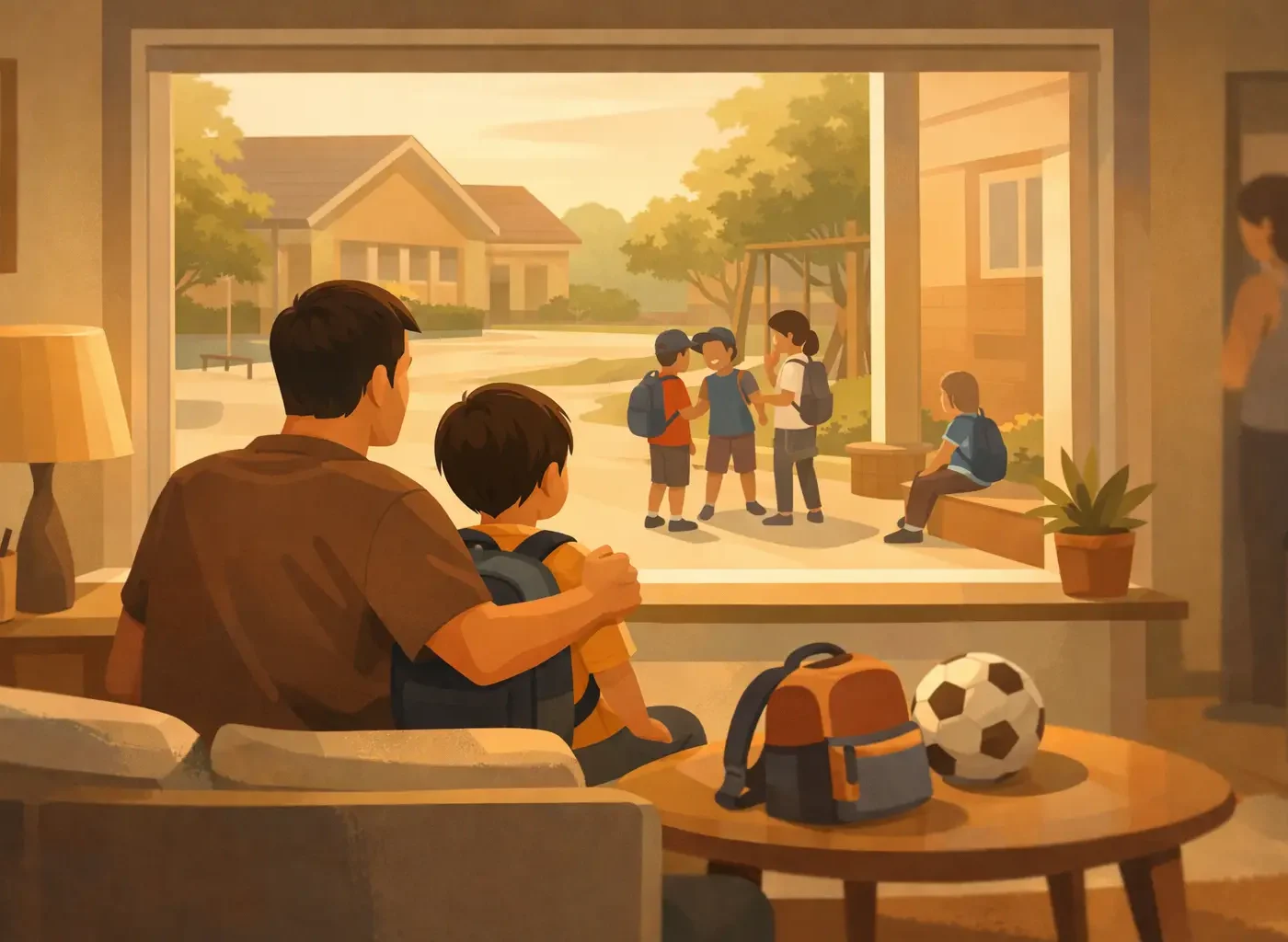
The hard part is often not the school drop-off. It is hearing, halfway through a busy evening, that your child sat alone at lunch or did not know who to play with at recess. If you are wondering how to help your child make friends at school, you are not failing them. Friendship takes practice, timing, and a little support from adults, especially during a new school year or a big classroom change.
Start with one small social bridge
You do not need to arrange a whole new social life for your child. Start by helping them identify one child they feel fairly comfortable around. It might be someone who sits nearby, shares an interest, rides the same bus, or has been kind once or twice.
Your child does not need a crowd. They need one workable place to begin.
Ask concrete questions during a quiet moment, not at the school gate when everyone is tired. “Who did you sit near today?” or “Who likes the same game you like?” is easier to answer than “Did you make friends?” Younger children may tell you what happened through a story about playground rules or a class project. Older kids may offer very little at first. Leave room for that.
Once there is a name, make the next step small. Your child could ask, “Can I play too?” at recess, sit beside that child during a class activity if seats are flexible, or mention a shared interest. The goal is not a perfect conversation. It is a familiar moment that can happen again.
For some children, an invitation outside school helps turn a classroom acquaintance into a friend. Keep it short and low-pressure: an hour at a park, shooting hoops in the driveway, or working on a simple craft at the kitchen table. One thing that worked for us was inviting just one classmate, with a clear start and end time. It gave both kids enough room to warm up without anyone getting worn out.
Help your child practice before the school day
Social skills can sound natural when adults use them, but children often need the actual words. Practice them at home in a casual way, perhaps while packing a bag or driving somewhere. You are not drilling your child. You are making the first sentence easier to reach when they feel nervous.
Practice gives your child something steady to lean on when confidence disappears in the moment.
Keep the scripts simple. A younger child might try, “Can I be on your team?” An elementary-age child could say, “I like your drawing. What are you making?” An older child may do better with a comment than a direct request: “That game looks hard,” or “I heard you like that show too.”
Take turns being the child who joins in and the child already playing. Let your child hear a few possible answers, including a less-than-warm one. If someone says, “Not right now,” they can try another group, another activity, or another day. This is not about teaching them to accept being excluded. It is about helping them see that one awkward moment does not decide their place at school.
Be careful not to turn every car ride into a review of their social performance. A child who feels watched may start to feel that friendship is another test they have to pass. A brief check-in, then a shift to the rest of the day, is often kinder and more useful.
How to help your child make friends at school without taking over
It is tempting to solve this quickly. You may want to text another parent, ask the teacher to pair your child with someone, or suggest exactly what they should say every morning. Sometimes those steps are helpful. But when adults do all the approaching, children can come to believe they cannot manage the next step themselves.
Your job is to build the runway, not to fly the plane for them.
Offer choices rather than directions. “Would it feel easier to ask Sam about soccer, or to ask if you can join the game?” lets your child keep some ownership. If they reject both ideas, stay calm. You can say, “Okay. We can think of a different way later.”
This matters even more with older children, who may be deeply uncomfortable with a parent stepping into their social world. You can still be involved without becoming visible at school. Offer rides when a group is meeting, keep your home welcoming when it works for your family, and listen without rushing to fix the story.
If your child asks you to arrange a get-together, you can do that without making it a major event. A simple message to the other parent is enough. Avoid framing it as a rescue mission or sharing private details about your child’s struggles. Keep the invitation warm and ordinary.
Make room for the child who needs time
Some children walk into a room and begin talking. Others watch first, stay close to an adult, or need several shared experiences before they speak much. Neither style means something is wrong. A quiet child may form a close friendship slowly, while a very outgoing child may still struggle to keep connections going.
Slow friendship is still friendship.
Try to separate your own worry from your child’s pace. If they seem content with one friend, or enjoy solitary play at times, they may not need a bigger social circle. School can be noisy and demanding. Wanting some space does not automatically mean they are lonely.
The harder version is when your child does want friends and keeps coming home disappointed. In that case, validate the feeling before moving to strategy. “That sounds really lonely. I can see why you wanted to be included.” Then ask whether they want help thinking of a next step or simply want you to listen. That small question can stop support from feeling like pressure.
Avoid labeling your child as shy in front of them or around other adults. Even a gentle label can become a role they feel expected to play. You can describe the moment instead: “It takes them a little while to feel comfortable in a new group.”
Work with the school in a simple, specific way
Teachers see parts of the day you cannot see: partner work, recess, lunch, group projects, and the small patterns that form around a classroom. If your child has been struggling for more than a few weeks, a brief, specific message to the teacher can be useful.
Asking the school for a little support is teamwork, not overreacting.
You might say that your child is hoping to connect with classmates and ask whether there is a kind peer or a structured activity where they might have an easier opening. A teacher may be able to place them with a welcoming partner, notice a recess pattern, or suggest an existing lunch club or school activity.
Try not to ask a teacher to make a particular child become your child’s friend. Friendships cannot be assigned, and that can put pressure on both children. Ask instead for opportunities for your child to participate and be noticed in a positive way.
If there have been repeated unkind interactions, share the facts your child has told you: where it happened, what was said or done, and how often it seems to occur. Keep the focus on getting a clear picture and helping your child feel safe and included at school.
Know when to ease off and when to ask for help
Friendship problems rarely improve on a neat timeline. A child may have a good week, then feel left out again when games change or groups shift. That back-and-forth can be discouraging, especially when you are already carrying a lot at home.
Progress may look like trying again, not suddenly becoming socially fearless.
Ease off when your child is making small connections, seems generally settled, and does not want constant discussion about friends. Keep offering ordinary chances to be around peers, but let their social life belong to them.
Speak with the teacher or school counselor when your child is regularly isolated, repeatedly excluded, or dreading school because of peer problems. You do not need to have every detail sorted before you reach out. A calm conversation can help you understand what the school is seeing and decide on one practical next step together.
Tonight, you do not have to solve your child’s whole school life. Sit beside them, listen for one name or one moment, and help them choose one small opening for tomorrow. For a child who feels unsure, knowing you are in their corner can make that first sentence feel possible.