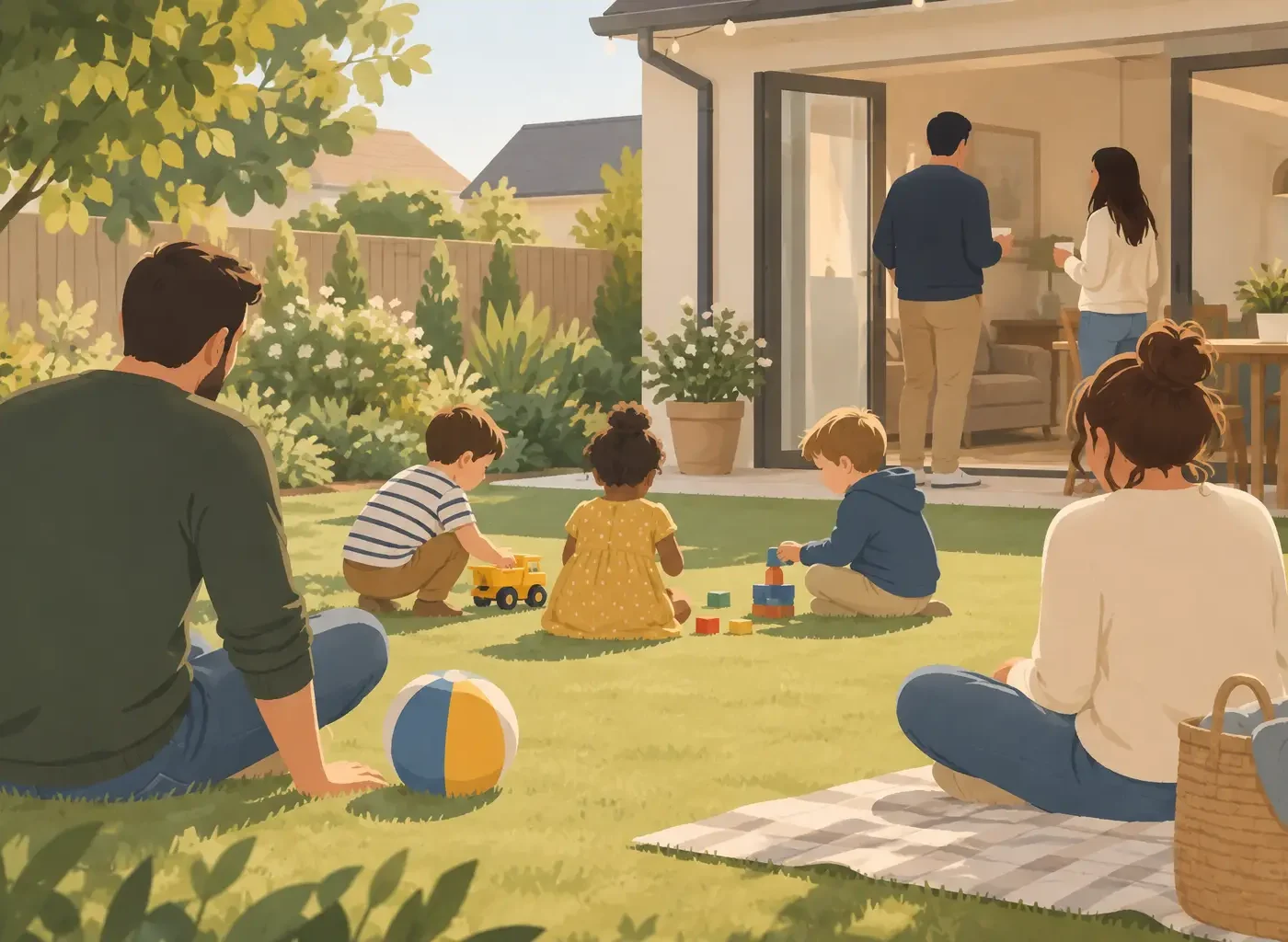
The shoes are by the door, your child is asking when their friend will arrive for the fourth time, and suddenly a simple afternoon together feels like an event you need to manage perfectly. Learning how to host a playdate that actually goes well is less about having the right crafts or the cleanest house. It is about making the visit small enough, clear enough, and flexible enough that nobody has to hold it together for too long.
Start Smaller Than You Think You Need To
A successful playdate is usually a short, ordinary visit, not a mini birthday party.
If your child is young, new to playing with this particular friend, or easily overwhelmed by changes, invite one child for 60 to 90 minutes. For older kids who already spend time together easily, two hours may be fine. You can always extend a calm visit another day. It is much harder to recover an afternoon once everyone is tired and irritated.
Choose a time when your child is generally at their best. That might be a weekend morning or an early afternoon, depending on your family. You do not need to arrange your whole day around it, but avoiding the hour when you are usually trying to get dinner started can save you a lot of strain.
Be clear with the other parent from the start. A simple message such as, “We’d love to have Sam over from 2:00 to 3:30 on Saturday. We’ll mostly be home playing in the yard and having a snack,” gives everyone a shared plan. It also makes pickup less awkward later.
If this is your first time hosting, it is okay to stay home rather than adding a park, a movie, or an outing. Public plans can be lovely, but they bring transitions, bathroom logistics, weather, and the pressure of keeping everyone close. Your living room may not look like a play space from a catalog. It is still often the easier place to begin.
Set Up the Space for Easy Play
Your job is to make a few good options available, not to entertain two children every minute.
Before the child arrives, put away the things your child guards closely or that regularly cause arguments. This is not about teaching children to share every possession on demand. A treasured stuffed animal, a special building set, or a favorite game can take a break in your bedroom for an afternoon.
Then leave out a small number of activities that work without much adult instruction. Blocks, magnetic tiles, dolls, toy animals, a ball outside, paper and markers, or a simple board game can do the job. Too many choices can create more switching, more mess, and more chances for one child to feel left out.
One thing that worked for us was setting up one active option and one quieter option before the doorbell rang. The kids might race in the yard for ten minutes, then come inside and build something. That natural back-and-forth gave them a reset without anyone having to announce one.
You do not need a themed craft or a planned schedule. In fact, a craft that requires your constant help can leave you stuck at the table while the children lose interest halfway through. Save the complicated projects for a day when you genuinely want to do them with your own child.
Tell Your Child What Hosting Looks Like
Being welcoming does not mean your child has to give up control of their own home.
A few minutes before the visit, offer a simple preview. You might say, “Eli is coming to play. You can show him two things you want to share, and if you need a break, come tell me instead of yelling or grabbing.”
This is especially useful for children who like their routines or their belongings handled a certain way. They may be excited and still feel unsettled when someone else opens a drawer, sits in their usual spot, or changes the rules of a game. Those reactions do not mean your child is unkind or incapable of friendship. Home is where they expect things to feel familiar.
You can also prepare for the moment when the visiting child wants something unavailable. Try, “That one is not for guests today. You can choose the train set or the sidewalk chalk.” Calm, plain language works better than a long explanation. The other child does not need to agree with the boundary for it to stand.
If your child is older, include them in deciding what will be available and what will stay put away. That small bit of ownership often reduces the feeling that a guest has taken over their space.
Stay Close Without Directing Every Minute
You are there to steady the atmosphere, not to referee every disagreement before it happens.
For the first 10 or 15 minutes, stay nearby. Help with the initial hello, point out the available activities, and let the children find a rhythm. After that, step back a little if they are managing well. Constant suggestions can make kids feel watched, especially older elementary-aged children who just want time with a friend.
Still, keep an ear on the room. A playdate can shift quickly when children are competing for the same role, making up complicated rules, or getting physically too wild. You do not have to wait until someone is crying to move things along.
Use short, neutral phrases. “That game is getting too rough. Let’s switch to outside, or choose something else.” Or, “It sounds like you both want to be in charge. You can take turns choosing the next round, or find separate activities for a while.”
Try not to force an immediate apology or a perfect resolution. Sometimes two children simply need space from each other for five minutes. Offering water, changing rooms, or bringing out a different activity can be enough to lower the temperature.
Have a Simple Plan for Snacks and Downtime
Food and quiet breaks are part of the rhythm of the afternoon, not another test of your hosting skills.
Keep snacks simple and familiar. You do not need to prepare a special spread, and you do not need to persuade a visiting child to eat. Ask the other parent ahead of time if there is anything you need to know, then offer what you planned without making it a big moment.
A snack can be useful halfway through a visit because it gives children something to do side by side when play is starting to fray. Sitting at the table for ten minutes may also show you whether the energy is settling or whether it is time to pivot.
Some kids will not want a break. Others may hover near you, become silly, or start asking when their friend is leaving. Those are often signs that the social effort is taking more out of them than they expected. You can gently shift the plan without making either child feel blamed.
Try, “Let’s do something quieter for a few minutes,” or, “You two can each pick a book or activity while I get things ready for pickup.” Keeping your voice matter-of-fact helps the break feel normal.
End Before Everyone Is Done
Ending while the children are still mostly okay is kinder than stretching the visit until it falls apart.
Give a warning about 10 minutes before pickup. A child who is deeply absorbed may need a clear next step: finish the tower, put shoes on, then choose one thing to show their parent. This is easier than announcing that play is over and expecting an instant cheerful response.
When the other parent arrives, you do not need to deliver a report card on how the afternoon went. A warm, honest line is enough: “They had fun with the blocks and spent a lot of time outside.” If there was a difficult moment that truly needs to be shared, mention it quietly and without labeling either child. “They both wanted the same toy, so we put it away and changed activities.”
Your child may be extra tired, clingy, or cranky after their friend leaves, even if the playdate went well. Social time takes effort. Give them a little space and avoid pressing for a detailed review right away.
If the Playdate Felt Hard, Adjust the Next One
A rough playdate is information, not proof that your child is bad at friendships or that you hosted badly.
Maybe the visit was too long. Maybe the children needed more outdoor movement, fewer toys, or a different pairing. Maybe your child did better with a parent staying for the first few visits. These are useful adjustments, not failures.
It also depends on the children. Some pairs thrive with free play, while others do better with one shared activity and a clear endpoint. Some kids connect beautifully at school but find having a peer in their home surprisingly intense. That is a normal difference between friendship in a group setting and friendship in personal space.
After the house is quiet, keep your own review brief. Notice one thing that made the afternoon easier and one thing you would change. Then let it be done. Your child does not need a perfect host. They need a home where friendship can be practiced in small, forgiving ways.