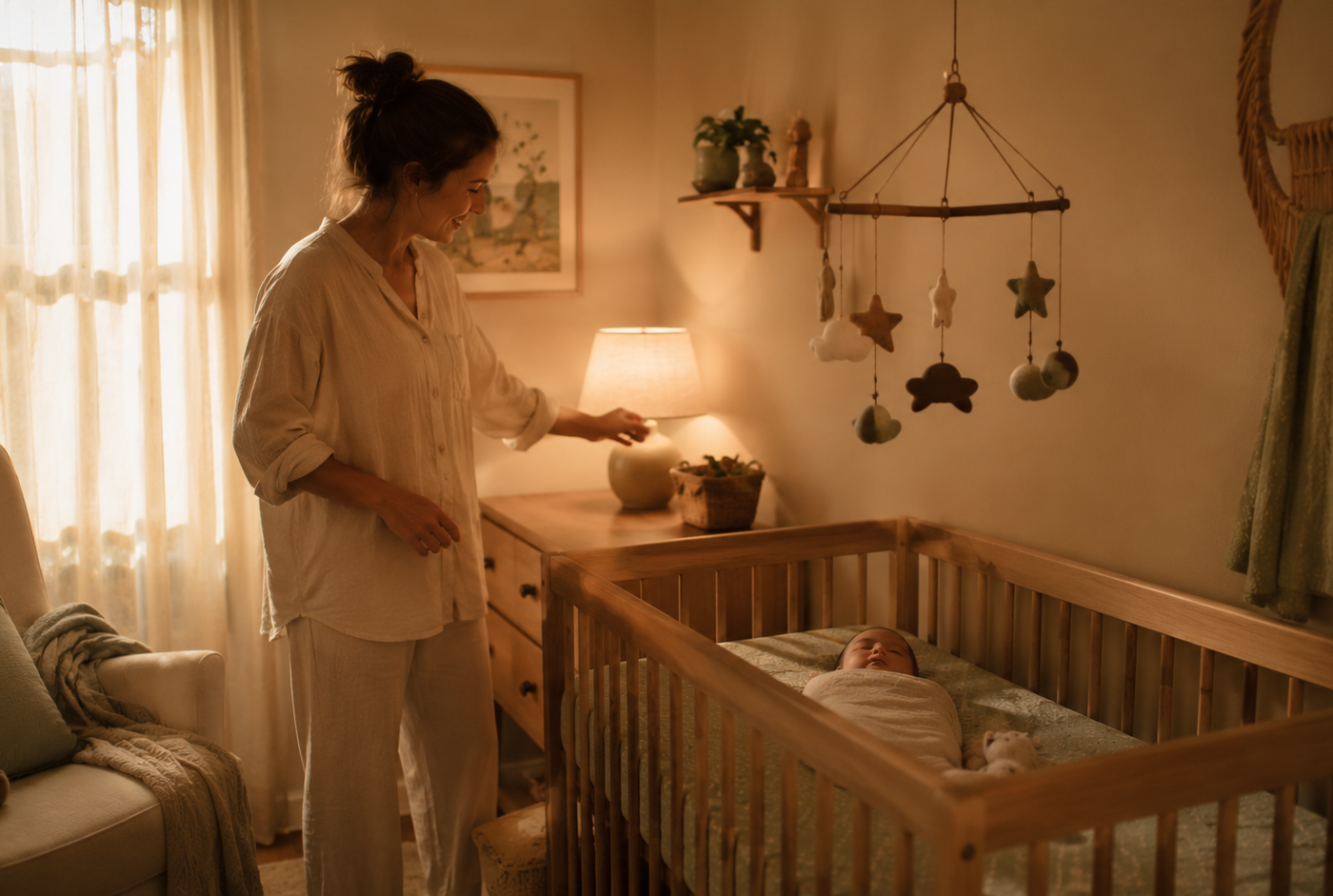
Getting kids to sleep is one of those things that sounds simple until you are actually living it. Whether you have a newborn who won’t settle, a toddler who keeps climbing out of bed, or a seven-year-old who suddenly « can’t sleep, » building a calm sleep environment is often the piece of the puzzle that parents overlook. We spend a lot of energy on routines and rules, but the physical space where sleep happens matters more than we often realize.
The good news is that you don’t need a beautifully curated nursery or a complete bedroom makeover. Small, intentional changes to light, sound, temperature, and comfort can make a real difference, even in an ordinary room on an ordinary budget.
In this article, we’ll walk through what tends to help at each age stage, from babies through to older kids, so you can figure out which tweaks might actually move the needle for your family.
Table of Contents
Why the Sleep Space Matters More Than You Think
Sleep doesn’t just happen when a child’s body is tired. The brain needs to feel safe, regulated, and free from stimulation before it can fully let go. That’s true for adults too, but kids, especially babies and toddlers, are far more sensitive to environmental cues.
A calm sleep environment signals to your child’s nervous system that it’s safe to rest. Light tells the body what time it is. Sound affects how deeply we stay asleep. Temperature influences how quickly we drop off. Smell and texture can either soothe or agitate. These aren’t small details. They are the conditions under which sleep either happens easily or fights you every single night.
And here’s something worth remembering: no routine, however consistent, will carry a child into good sleep if the environment is working against them. The space sets the stage. The routine is the story you tell inside it.
Setting Up a Baby Sleep Setup That Actually Supports Rest
Babies are new to the world, and everything is sensory input. A baby sleep setup that works tends to do one main thing well: reduce unnecessary stimulation while keeping conditions comfortable and consistent.
Darkness is your biggest tool. Newborns don’t have a fully developed circadian rhythm yet, but from around six to eight weeks, light exposure starts shaping their internal clock. Blackout curtains or a simple blackout blind can make a significant difference to both naptime and early morning wake-ups. You don’t need an expensive solution. Temporary blackout liners that stick to the window cost very little and work well.
White noise is another tool many families find helpful. A consistent, low-level background sound, like a fan or a white noise machine, can muffle household noise and create a familiar cue for sleep. What tends to work best is keeping the volume around 50 to 60 decibels (roughly the level of a gentle shower) and placing the device at least two meters from the crib.
Room temperature is worth paying attention to too. For babies, most pediatric guidance points to a room temperature between 16 and 20 degrees Celsius (61 to 68 Fahrenheit). A room that’s too warm is uncomfortable and, for very young babies, a safe sleep concern. If you’re unsure what’s right for your baby, your pediatrician is the best person to ask.
One thing that helped in our house was keeping the crib area visually simple. A mobile above a crib looks sweet, but it can become a stimulation source rather than a calming one. Saving the interesting visuals for daytime play and keeping the sleep space simple and consistent helped our youngest settle faster.
Building a Toddler Bedtime Routine Into the Environment
Toddler sleep is its own adventure. Most toddlers have figured out that bedtime means separation, and they will find creative ways to delay it. What tends to help is making the environment itself part of the winding-down signal, so the room starts doing some of the work for you.
Dimming the lights about 30 to 45 minutes before bed is one of the simplest wins for a toddler bedtime routine. Bright overhead lights keep the body alert. Switching to a lamp or a nightlight in the early evening sends a biological cue that the day is winding down. Some families use a smart bulb set to shift warmer and dimmer at a set time, which removes the battle over turning lights off completely.
A toddler’s bedroom for sleep benefits from being relatively tidy at bedtime, not because mess is morally wrong, but because visual clutter can keep little minds busy. You don’t need perfection. A five-minute wind-down tidy as part of the bedtime routine can help shift the room from « play space » to « sleep space » in your toddler’s mind.
The transition between playtime and sleep time can be the hardest moment. If your evenings feel like a battle of wills, this guide to helping your child calm down without punishment has some approaches that work really well in that tricky pre-bedtime window.
A soft nightlight in a warm amber tone (rather than blue or white) gives toddlers enough light to feel safe without disrupting melatonin production. Let your toddler choose the nightlight if you can. That small bit of ownership over their space can reduce resistance at bedtime more than you’d expect.
Creating a Kids Bedroom for Sleep as They Get Older
Once kids hit school age, the sleep environment challenge shifts. The room that used to be a simple sleep space now holds books, toys, screens, homework, and a whole interior world. Creating a calm sleep environment inside that kind of room takes a bit more intentionality.
The single biggest disruptor for school-age kids is screens. Tablets, phones, and handheld games emit blue light that actively suppresses melatonin and delays sleep onset. If screens are in the bedroom, keeping them face-down or in another room from around an hour before bed is worth trying. It doesn’t have to be a battle. Framing it as a charger rule rather than a screen ban often goes over much better.
For children who struggle with racing thoughts at bedtime, what tends to help is giving them a legitimate quiet activity. Reading a physical book, drawing, or listening to an audiobook or calm music can bridge the gap between waking alertness and sleep. The key is keeping the lighting low and the activity genuinely calm rather than stimulating.
Temperature still matters at this age. A cooler room, around 18 degrees Celsius (65 Fahrenheit), supports deeper sleep. A light duvet or blanket that can be adjusted is better than one heavy blanket, because kids often kick covers off and then wake up cold.
One thing we noticed with our older one was that his room felt too « on » at night. The curtains didn’t block the streetlight. There were too many things with little LED lights. Fixing those small details made a bigger difference than any new rule we tried to introduce.
Children Sleep Tips for the Hardest Cases
Some kids are genuinely harder to settle than others. Sensitive temperaments, big emotions, anxiety, or just a very active mind can make even the most beautiful sleep environment feel irrelevant. That’s real, and if you’re in that camp, you are not doing anything wrong.
For children who feel anxious at bedtime, the environment is about felt safety as much as physical comfort. That might mean a weighted blanket, a specific stuffed animal, a comfort smell like a familiar pillow or a parent’s worn t-shirt, or simply a consistent leave-taking routine, the same words, the same hug, every single night. Predictability is calming.
If your child frequently wakes at night or struggles to settle independently, it’s worth reading more about the bigger picture. This article on helping your child sleep through the night independently goes into more depth on the independence side of sleep, which pairs well with getting the environment right.
For children with sensory sensitivities, the « standard » advice sometimes doesn’t fit. Some kids find white noise agitating rather than calming. Some need more light, not less. Some are more comfortable with the door open. Following your child’s lead on what feels safe to them tends to work better than applying a formula.
These are also situations where persistent sleep difficulties might be worth discussing with your pediatrician, especially if they’re affecting your child’s mood, learning, or behavior during the day.
Taking Care of Yourself Through the Sleep Struggle
It would be incomplete to talk about kids’ sleep without acknowledging what the sleep struggle costs you. Broken nights, bedtime battles, and repeated waking are genuinely exhausting. They affect your patience, your mood, and your ability to show up the next day.
The calm sleep environment you’re trying to build for your child is a form of care for yourself too. When the room is doing more of the work, the routine gets easier, and eventually the nights get better. But in the meantime, you’re allowed to find it hard.
One of the things that helped me most during the really rough sleep phases wasn’t a new strategy. It was giving myself permission to ask for help, whether that meant my partner taking one night, a grandparent doing an afternoon nap shift, or just being honest with a friend about how tired I actually was.
If the exhaustion is affecting your ability to stay patient and regulated during the day, this piece on staying patient with your kids when you’re burned out is one of the most-read articles on this site for a reason. You’ll find yourself in it.
You can build a great sleep environment, nail the routine, and still have hard nights. That’s not failure. That’s parenting.
How do I create a calm sleep environment for my child?
What tends to help most is focusing on four key areas: light, sound, temperature, and comfort. Blackout curtains, a consistent white noise level, and a cool room temperature are small changes that many parents find make a noticeable difference without needing a full bedroom overhaul.
What is the best baby sleep setup for helping newborns settle?
A good baby sleep setup reduces unnecessary stimulation while keeping conditions comfortable and consistent. Many parents find that adding blackout blinds and a gentle white noise source covers the two biggest environmental factors that interfere with newborn sleep.
Why won’t my child sleep even when they have a bedtime routine?
A solid routine helps, but if the sleep environment itself is working against your child, even the most consistent routine will feel like an uphill battle. What tends to help is checking whether light, noise, or temperature in the room might be keeping your child’s nervous system too stimulated to settle.
What temperature should a child’s bedroom be for better sleep?
Many sleep experts suggest that a slightly cool room, generally somewhere between 65 and 70 degrees Fahrenheit, supports faster sleep onset for children. A room that feels comfortable to an awake adult often feels too warm for a child who is trying to drop off.
How can I help my toddler sleep better at night without buying a lot of new products?
Many parents find that simple, low-cost changes to the kids sleep environment make the biggest impact, such as using a fitted blackout blind, lowering the room temperature slightly, and adding soft white noise from a free app or basic machine. Starting with just one change at a time helps you figure out what actually moves the needle for your specific child.
Final Thoughts
Building a calm sleep environment isn’t a one-time project. It shifts as your child grows, as seasons change, as new siblings arrive, as bedrooms get shared or rearranged. The principles stay the same: reduce stimulation, support the body’s natural signals, create consistency, and make the space feel safe.
You don’t have to get every detail right. Start with the thing most likely to make a difference for your specific child at this specific stage. Darkness for a baby who wakes at dawn. A nightlight change for a toddler who fears the dark. Screens out of the room for a school-age kid who can’t wind down. One thing at a time tends to work better than overhauling everything at once.
And on the nights when nothing works anyway, remember: this is a season. Kids’ sleep changes. What feels permanent usually isn’t. You’re doing the work, and that matters even when the results are slow to show.
Sleep is just one piece of the parenting puzzle, and often the piece that reveals how much the whole family is running on empty. If you’re a dad who wants to be more present and intentional, not just at bedtime but all through the day, The Father Blueprint was written with you in mind. It’s a complete framework for the kind of dad your kids will still be talking about when they’re grown.