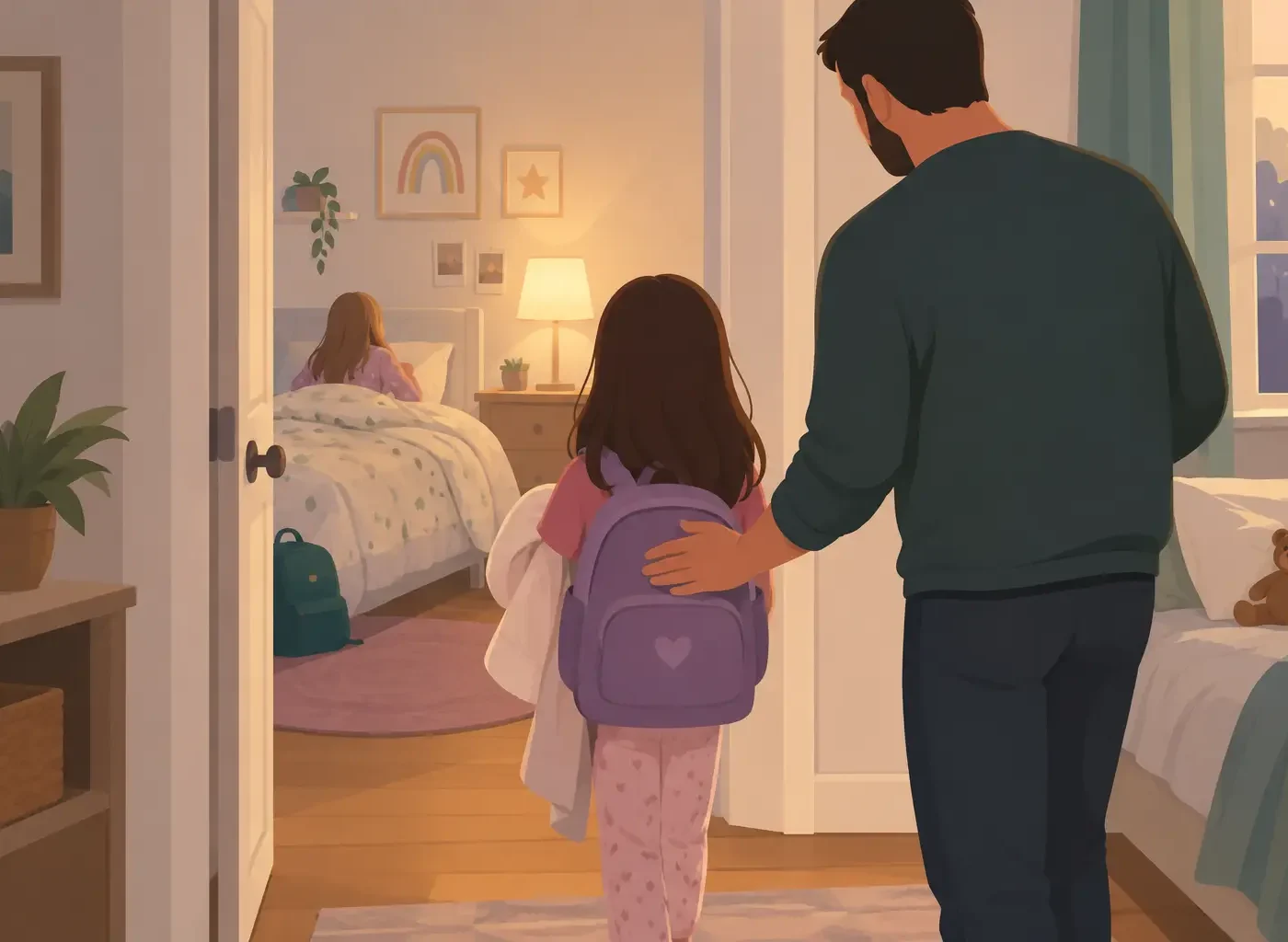
A sleepover invitation can land like a tiny parenting test. Your child is excited, the other family seems lovely, and you are still trying to work out when is a child old enough for sleepovers without making the whole thing feel bigger than it needs to be.
There is no prize for saying yes early, and no problem with waiting. A sleepover is simply time away from home in someone else’s care. The best timing comes down to your child, the host family, and whether you have a plan for the parts that can get wobbly after dark.
When is a child old enough for sleepovers?
For many children, a first sleepover works best sometime between ages 6 and 9. That is a broad range, not a rule. Some 6-year-olds are comfortable spending an evening at a close friend’s house and happy to stay the night. Some 10-year-olds still prefer their own room and their usual people nearby.
Readiness matters more than the number on your child’s birthday cake.
A child may be ready if they genuinely want to go, know the family hosting, can ask an adult for help, and understand that you will come get them if they change their mind. They do not need to be fearless or perfectly independent. Most children feel a little nervous before a first overnight away.
The practical piece matters too. If the host is a family you know well, there will be enough adults present, and you can get there easily if needed, the first attempt is usually simpler. A sleepover across town with an unfamiliar family and a packed house of older kids is a different decision.
Look for comfort, not pressure
Children sometimes ask for a sleepover because everyone in their class seems to be doing it. That does not automatically mean they are ready, but it does mean they want to belong. You can take that wish seriously without rushing the decision.
Your child does not have to prove independence by staying all night.
Listen to how they talk about the plan. A child who says, “I want to go, but can you pick me up if I miss home?” is giving you useful information. A calm answer might be, “Yes. You can call, and I will come get you. You will not be in trouble.”
Notice whether they can handle a few smaller separations first, such as an evening at a grandparent’s house or a late playdate with the same friend. These are not hoops to jump through. They are low-pressure chances for your child to learn what being away feels like, and for you to see what support helps.
It can also help to separate your child’s feelings from your own. You may feel uneasy because you have never met the adults well enough, because your child seems suddenly grown, or because nighttime is when you finally know where everyone is. Those feelings are normal. They are also a reason to slow down and get clearer information, rather than a reason to push yourself into a yes.
Make the first sleepover smaller
The first overnight does not need to be a big group event. A familiar friend, a home you have visited, and a plan that ends the next morning can be enough. One thing that worked for us was treating the first sleepover as an experiment, not a milestone that had to go perfectly.
A small first sleepover gives your child a real chance of success.
You might start with dinner, a movie, and pajamas at a close friend’s home, then decide together whether your child stays. Or arrange a “practice sleepover” at a grandparent’s or cousin’s house where the adults already know your child well.
Keep the preparation simple. Let your child pack pajamas, a toothbrush, underwear, and any comfort item they want. A favorite stuffed animal is not babyish. It is familiar, and familiar can make an unfamiliar room feel manageable.
Avoid building the event up for days. The more it becomes a huge occasion, the harder it can be for a child to say, “Actually, I want to come home.” A matter-of-fact tone gives them room to be excited and uncertain at the same time.
Talk with the host before you say yes
A quick conversation with the hosting parent is not overprotective. It is the ordinary adult work that lets children relax and have fun. You are not interviewing them. You are making sure you understand the plan.
Clear adult communication is part of making a sleepover feel safe for everyone.
Ask who will be home, whether older siblings or other guests will be around, and what time the children will settle down. You can also ask about plans for the evening, whether children will have access to phones or games, and how they handle it if a child wants to call home.
You do not need to apologize for asking. A simple, “This is her first sleepover, so I just want to make sure I understand the plan,” is enough. Most parents recognize the feeling immediately.
Share what the host needs to know, too. Let them know the best number to reach you and whether your child may need a little encouragement to call if they are upset. Keep it brief and practical. Your child deserves privacy, but the adults need enough information to care for them well.
Give your child a no-drama exit plan
The most helpful thing you can offer is permission to come home. Not after they have tried harder. Not after they have stopped crying. Any time.
Coming home early means the plan changed, not that your child failed.
Before you leave, agree on how your child can reach you. If they have their own phone, make sure it is charged. If they do not, tell them exactly which adult they can ask to call you. You can even give them a plain sentence to use: “I want to call my dad,” or “I think I want to go home.”
Some children worry they will disappoint the host, their friend, or you. Say the quiet part out loud: “Your friend might be disappointed, but adults can handle that. My job is to come get you if you need me.” This takes a burden off your child that was never theirs to carry.
If you are parenting as a team, agree on the pickup plan before the evening starts. The parent on call should know the address, have their phone nearby, and be ready to leave without a debate about whether the child should stay. A tired child at 11 p.m. needs reassurance more than a lesson.
If your child comes home, keep it boring and kind
Sometimes a child has a wonderful evening, then suddenly wants their own bed. Sometimes they realize after lights-out that the house sounds different, the room feels strange, or they simply miss home. This can happen even when they seemed completely ready.
A hard first sleepover gives you information, not a verdict on your child.
Pick them up calmly. Save the questions for the next day, when everyone has had some rest. That night, a simple “I’m glad you called” is plenty.
The next day, ask what part felt good and what part was hard. Maybe they enjoyed the games but did not like sleeping in a group. Maybe they wanted to stay but worried they would keep everyone awake. Their answer can shape the next attempt: a smaller group, an earlier pickup, or more time before trying again.
Do not rush to label them as anxious, clingy, or not ready for anything. Children change quickly when they feel trusted. A child who comes home at 10 p.m. this month may happily stay until breakfast later on.
Let sleepovers be optional for your family
Some families enjoy frequent sleepovers. Others keep them occasional, wait until later childhood, or prefer late playdates with everyone sleeping at home. Each choice can work well.
Your family’s comfort level belongs in the decision alongside your child’s excitement.
If the answer is not yet, try to give your child a clear path forward. You might say, “I know you want to go. We are going to start with a late playdate, and then we can talk about trying an overnight another time.” That feels different from a vague no that leaves them wondering what they need to do.
A sleepover is not a test of whether your child is growing up correctly. It is one ordinary childhood experience, and it can wait until the adults feel comfortable and your child has a plan that makes coming home easy. The goal is not to get through the night. It is to help your child learn that new independence can happen with a safe way back to you.