The wrapping paper is already appearing in closets, school notices are asking for donations, and your child has a wish list that seems to grow every time they see an ad. Teaching kids about giving at Christmas can feel like one more meaningful thing you are supposed to get right during a month that is already very full.
It does not need to become a big lesson, a perfect volunteer day, or a carefully staged photo. Children learn generosity most clearly when they get a small, real part in something their family is already doing.
Table of Contents
Start with one giving choice your child can make
Giving means more to children when they have some say in it.
Pick one simple decision and let your child help make it. They might choose a toy for a child their age, select a grocery item to donate, help decide which winter coats no longer fit, or make a card for a neighbor who may be spending the holidays alone. The Child Mind Institute notes that choosing something special for a child their own age helps kids feel more connected to the person on the other end.
Keep the choice narrow. “What do you want to give?” can be too big for a young child, especially when they are surrounded by messages about getting. Try, “We are choosing one book to share. Would you rather pick a funny story or an animal story?” Your child still has ownership, but you have made the decision manageable.
For an older child, you can give a little more room. Set the amount or the task first, then invite them into the plan: “We have $15 for this. Let’s look for something useful and fun.” This is not about testing whether they choose perfectly. It is about letting them practice noticing another person while staying within your family’s real limits.
If your child wants to keep everything for themselves, stay calm. That response is ordinary. You can say, “I get why you like that one. We are buying this item to give away, and you can add that one to your own list.” You do not have to talk them out of wanting things in order to teach giving.
Let them see the ordinary work of generosity
Children learn from what generosity looks like in your home, not just from what it is called.
The most useful examples are often quiet ones. Your child sees you add an extra item to the grocery cart for a local drive. They see you carry a meal to a family going through a hard week. They hear you ask a relative, “Would it help if we brought dessert?” These moments show that giving is part of how people take care of each other.
Say the simple reason out loud. “We have enough soup for two dinners, so we are bringing one over.” “That family asked for warm gloves, so we are including them in our shopping.” Children do not need a long explanation about hardship. In fact, too much detail can make another person’s difficult situation feel like a lesson or a spectacle.
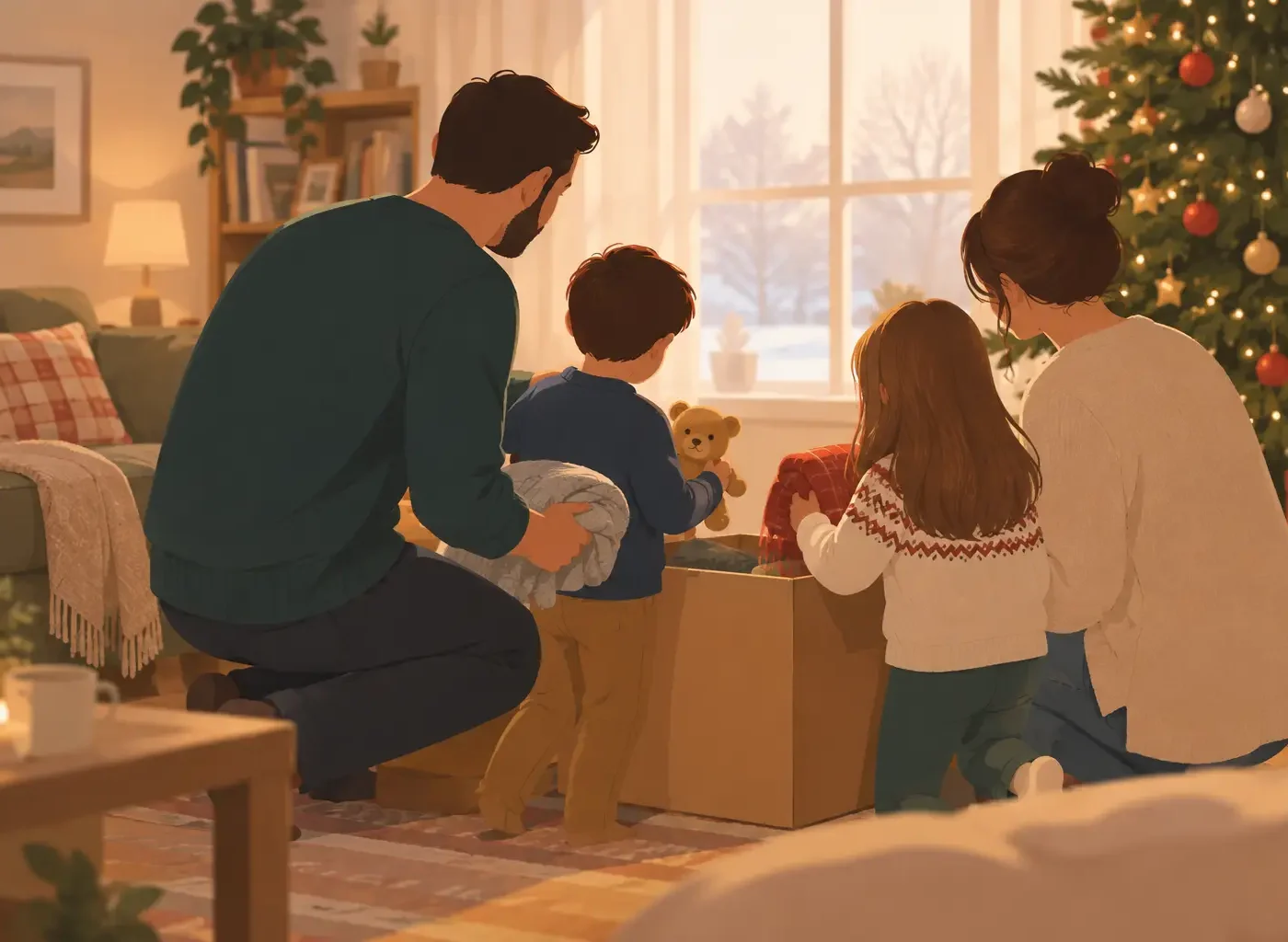
One thing that worked for us was letting the kids help with the unglamorous part: taping the box, sorting the coats, carrying the bag to the car. They were not always thrilled. But over time, those small jobs helped giving feel like something our family did, rather than an event adults arranged around them.
If you are stretched thin, choose the version that fits. Ordering an item for a donation drive, sending a small contribution, or helping your child write a kind note still counts. Christmas generosity does not have to require a free Saturday, extra money, or a house full of craft supplies.
Talk about giving without making your child feel guilty
The goal is empathy and participation, not shame about having good things.
Parents sometimes worry that Christmas presents will make children selfish. Usually, children are simply being children. They are excited, they are still learning perspective, and the season is designed to pull their attention toward what they want.
You can make room for both receiving and giving. Try language like, “It is fun to look forward to presents. We also make space to share with other people at Christmas.” This is more helpful than telling a child they should be grateful because others have less. Gratitude becomes harder to hear when it arrives as a warning.
Be careful about asking your child to give away beloved possessions as proof of generosity. Some children are happy to pass along outgrown toys. Others feel deeply attached to them, even if the toy has not been used in months. Pressuring them can turn a generous act into a power struggle.
Instead, separate family giving from decluttering. You might say, “We are finding items that no longer work for our family, and we are also choosing one new item for the drive.” Your child can participate in either part without being asked to prove they are a good person.
When they notice something unfair, let that moment breathe. “Yes, it is hard that some families are worried about gifts and groceries.” You can add, “We cannot fix every hard thing, but we can help in this one way.” That is honest, and it gives children a sense of agency without placing adult-sized problems on their shoulders.
Make the giving visible, but keep it private enough
A child is more likely to repeat a caring action when they can see its purpose.
A bag disappearing into the trunk may not mean much to a four-year-old. A brief, concrete connection helps: “These pajamas will go to children who need warm clothes this winter.” If you are delivering something to a neighbor, let your child hand over the card or ring the doorbell with you if that feels comfortable.
At the same time, avoid turning another person’s need into a performance. You do not need photos, public praise, or a story about how generous your child was. A quiet “You helped choose that book. I hope it brings someone a happy moment” is enough.
Older kids may question whether one item or one small gift makes any difference. You can be direct: “It will not solve everything. It does help one person have what they need, and lots of small acts add up.” This is a useful lesson because it leaves room for realism. Generosity is not magic. It is a decision to contribute where you can.
Give your child a role that can grow with them
Small repeatable actions teach more than one ambitious Christmas project.
For preschoolers, the role may be choosing between two items or putting a card in an envelope. Elementary-age children can help compare prices, organize a donation bag, or decide how to use a small portion of birthday money if they want to contribute. Teens may prefer to identify a cause they care about or help with a community effort in a more independent way.
It depends on your child. Some love being involved in every step. Some will contribute for five minutes and move on. Neither response means the lesson failed. Their attention span, temperament, and the chaos of December all matter.
You can also connect giving to family relationships. Invite your child to think about a gift that makes someone’s day easier, not just more exciting. Maybe Grandpa would value a framed drawing. Maybe a sibling would appreciate help setting up a new game. Maybe your partner would feel cared for if your child helps make breakfast while you handle the cleanup.
This kind of giving matters because it teaches children to look beyond a price tag. They begin to notice preferences, needs, effort, and time. Those are skills they will use long after Christmas morning is over.
Keep Christmas giving within your actual budget
Your child does not need a costly lesson in generosity to learn how to care.
The pressure to make Christmas meaningful can quietly turn into pressure to spend more than is comfortable. You do not need to do that. A family can give through time, attention, useful household items, a handmade card, or a modest donation. The value is in the intention and the follow-through, not the amount.
It can help to say this plainly if your child asks why you are not buying more. “We have a plan for our Christmas money. We are choosing gifts for our family and one way to give to others.” Clear limits are not a disappointment you need to apologize for. They are part of showing children how families make thoughtful choices.
If you and your partner see giving differently, aim for a plan that neither of you has to carry alone. One person may naturally remember the school drive, the teacher card, and the neighbor who recently had a baby. A short conversation early in the season can keep the mental load of the holidays from becoming a last-minute scramble for one parent.
For the bigger picture, see our complete guide to positive parenting by age.
Frequently Asked Questions About Teaching Kids About Giving at Christmas
At what age can you start teaching kids about giving at Christmas?
As early as two or three. A toddler can drop a can into a food drive box or help pick between two toys for another child. The idea will not fully land until later, but the habit of taking part starts early. By five or six, most children can make a real choice about what to give.
How do I teach my child to give without making them feel guilty?
Keep receiving and giving side by side rather than in competition. Enjoying presents is not selfish. Try “We get to open gifts, and we also choose one way to help someone else” instead of reminding them how lucky they are. Guilt tends to shut children down, while a small, concrete role draws them in.
Should I make my child donate their own toys at Christmas?
Only if they want to. Some kids happily pass on outgrown toys, others are deeply attached to things they have not touched in months. Forcing it often turns generosity into a power struggle. A gentler option is letting them choose one new item for a drive, which keeps giving separate from decluttering.
What are simple ways for kids to give back during the holidays?
Picture a six-year-old ringing a neighbor’s doorbell with a homemade card. That is giving. So is picking a grocery item for a food bank, helping bake cookies for a teacher, sorting outgrown coats, or making breakfast for a parent. The best options are small enough to actually happen in a busy December.
What if my child seems more interested in getting than giving?
That is developmentally normal, especially in a season built around wish lists. Wanting things and caring about others can live side by side. Keep giving low-pressure and repeatable, and notice out loud when your child does something kind. Generosity tends to grow over several Christmases rather than in one.
Final Thoughts
Teaching kids about giving at Christmas does not require a perfect volunteer day or a big speech about gratitude. It happens in the small, repeatable moments where your child gets to choose, carry, and hand something over.
You do not have to create a child who is endlessly selfless by December 25. Offer one real chance to notice someone else, make a small choice, and help carry it through. That is enough for this Christmas, and it gives your child something steady to build on next year.
And if you are the one who usually remembers every drive, card, and teacher gift, this is a good year to share that load. Kids notice who does the giving in a family, and it is a lovely thing for them to see both parents in it.
The Family Blueprint Trilogy brings together three practical guides for being a present dad, a closer partner, and a real team at home, written by a mom of two who has taped more donation boxes than she can count.