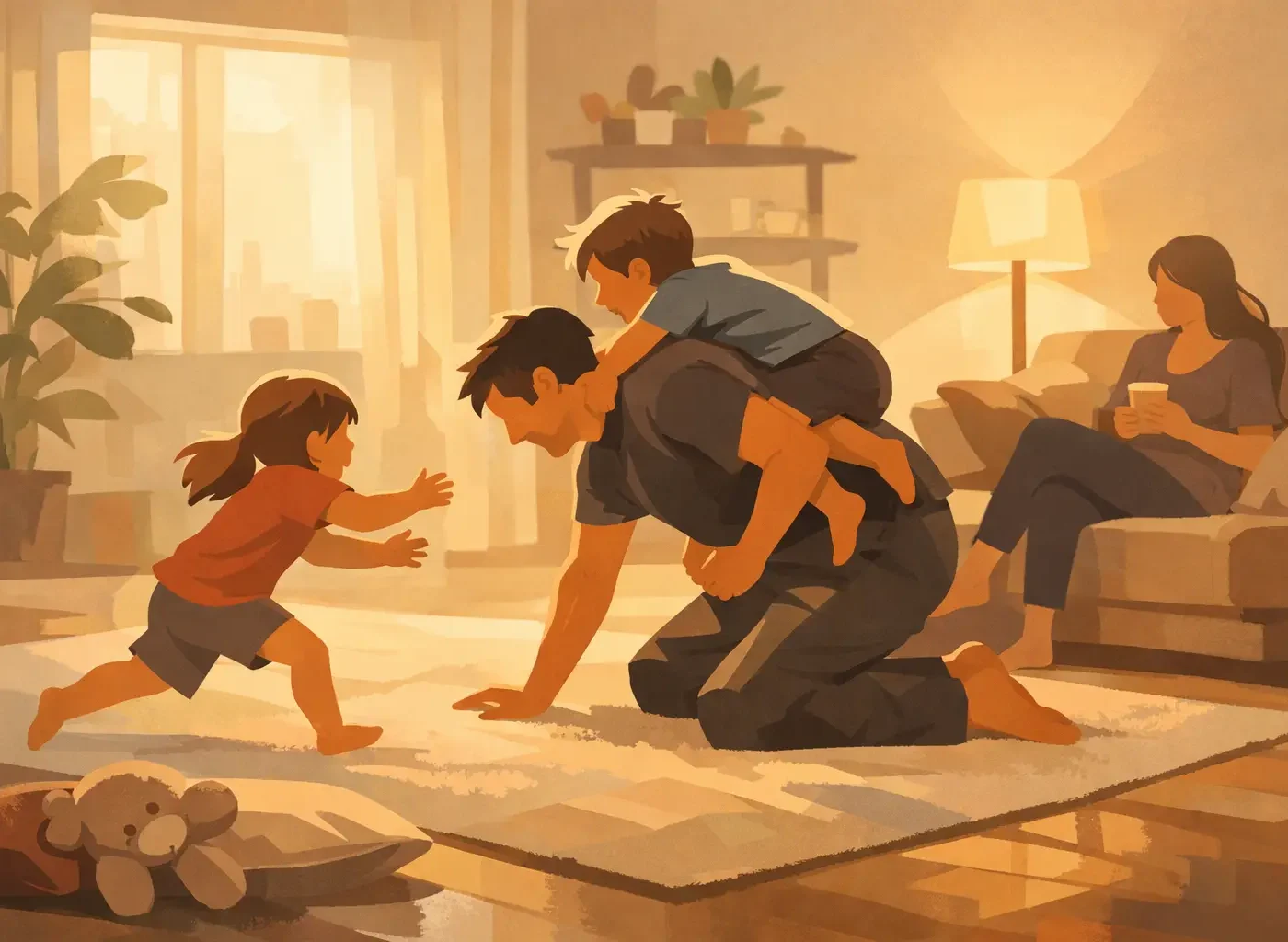
The couch cushions are already on the floor, your child is laughing so hard they can barely stand, and you are wondering whether roughhousing with kids is harmless fun or a habit you should shut down. It can be a really good part of family life. It can also go sideways fast when everyone is tired, excited, or unclear about where the line is.
You do not need to turn play into a safety seminar. A few simple rules, repeated calmly, can give your child the joy of big physical play without leaving you braced for the next crash or argument.
Start With Three Clear Rules
Rough play stays fun only when every person can stop it immediately. Before the first wrestle on the rug, say the rules out loud: no hitting faces, no grabbing or twisting body parts, and stop when anyone says “stop.” Keep the words simple enough that your child can remember them in the middle of a giggle attack.
For younger children, you may need to be the one who calls the pause. A preschooler can be having fun and still get carried away by the speed and noise. If their body starts looking wild rather than playful, slow it down before someone gets hurt. You are not ruining the game. You are teaching them what safe fun feels like.
It helps to separate rough play from anger right from the beginning. If someone is already upset after a hard moment, choose a quieter kind of connection first. Wrestling is not a useful way to work out a conflict, even when a child asks for it.
Choose the Place and Time on Purpose
The safest version of roughhousing with kids is planned enough to have boundaries, but loose enough to feel like play. Pick an open area with a rug, grass, or plenty of room away from sharp furniture. The bed can seem like an obvious choice, but it often makes falls harder to predict and can blur the line between play space and rest space.
This matters most during the parts of the day when your patience is already thin. If dinner is half-made, a baby is crying, or you need to get out the door, a body-slamming game is likely to create more work for you. Your child may be seeking connection, not necessarily a full wrestling match. Two minutes of a silly chase around the kitchen island or a round of “catch my hands” can meet the need without taking over the evening.
One thing that worked for us was having rough play happen before a transition we knew would be slow, like moving from weekend errands into being home. My kids got the laughs and movement they wanted, and I was not trying to manage it while carrying groceries and answering a question at the same time.
Let Your Child Lead, Within Your Limits
Your size and strength make you responsible for keeping the game at your child’s level. Children often want the dramatic version: the biggest toss, the fastest spin, the strongest squeeze. You do not have to deliver every version they request. A child asking for more is not proof that the play is still safe.
Keep your movements slower and lighter than you think you need to. Give your child chances to “win,” get away, and restart the game. Avoid using your full weight, pinning them down, or continuing a tickle when they are trying to pull away. Even if they laughed a moment ago, their body may be telling you the game has changed.
This can be especially tricky with older kids who seem sturdy and competitive. A nine-year-old may want to test strength against a parent or an older sibling. You can keep the spirit of the challenge without turning it into a contest nobody knows how to end. Try pushing hands together, pillow shield battles, or seeing who can gently move the other person across a marked line on the floor.
Teach the Stop Signal When Everyone Is Calm
A stop signal only works if your child sees it honored every single time. Use “stop,” “pause,” or a raised hand, and practice it during a calm moment. When your child uses it, freeze right away. Then check in with a plain question: “Do you want to be done, take a break, or play differently?”
Your child also needs to see you use the same rule. If an elbow catches you in the stomach or the game is becoming too much, say, “Pause. That was too rough for me.” This is not a lecture. It is a clear model of how people protect their own bodies without shaming someone else.
Siblings may need more help here than they do with a parent. Their sizes, skills, and temperaments can be very different, and the louder child is not always the child having the most fun. Stay close enough to notice whether both children are choosing the game. If one child keeps trying to leave, gets quiet, or looks to you for help, end the game and help them separate without assigning blame.
Know When to Call It a Different Game
Good rough play leaves everyone feeling connected, not cornered, embarrassed, or upset. That is your clearest guide when the rules feel less obvious than they did five minutes ago. A child can be laughing because play is exciting, but laughter is not a reason to ignore a request to stop.
End the game if it turns into repeated body checking, targeting one child, revenge for a previous argument, or arguments about what happened. You can say, “This game is not working safely right now. We can try something else.” Keep your tone boring and steady. The goal is not to make your child feel bad for wanting big play. It is to show them that fun has limits.
Sometimes your child will protest hard when you end it. That does not mean you made the wrong call. They may be disappointed, full of energy, or frustrated that a sibling did not want the same game. Hold the limit and offer a next step that does not require you to become a cruise director: a race to the fence, a dance break, carrying laundry baskets, or a simple game outside.
Make It Part of Connection, Not a Test of Patience
Roughhousing works best when it is one kind of closeness, not the only time your child gets your full attention. For many dads, physical play is an easy, natural way to connect after a long day. That is valuable. Your child learns that being with you can be joyful, active, and safe.
It also helps to add small moments that do not require so much energy: sitting together while they tell you about a drawing, letting them help with a task, or sharing a joke during cleanup. Then rough play does not have to carry the whole weight of connection, especially on days when your body and patience are already spent.
If your partner is usually the person who steps in after the game gets too loud, talk about the rules when nobody is irritated. Agreeing on the stop word, the play area, and the kinds of games that are off limits can spare both of you from making decisions in the middle of chaos. This is not about taking the fun out of family life. It is about making the fun easier for everyone to enjoy.
Your child does not need perfect play from you. They need to learn that excitement and care can exist together: big laughs, clear limits, and an adult who knows when to pause.