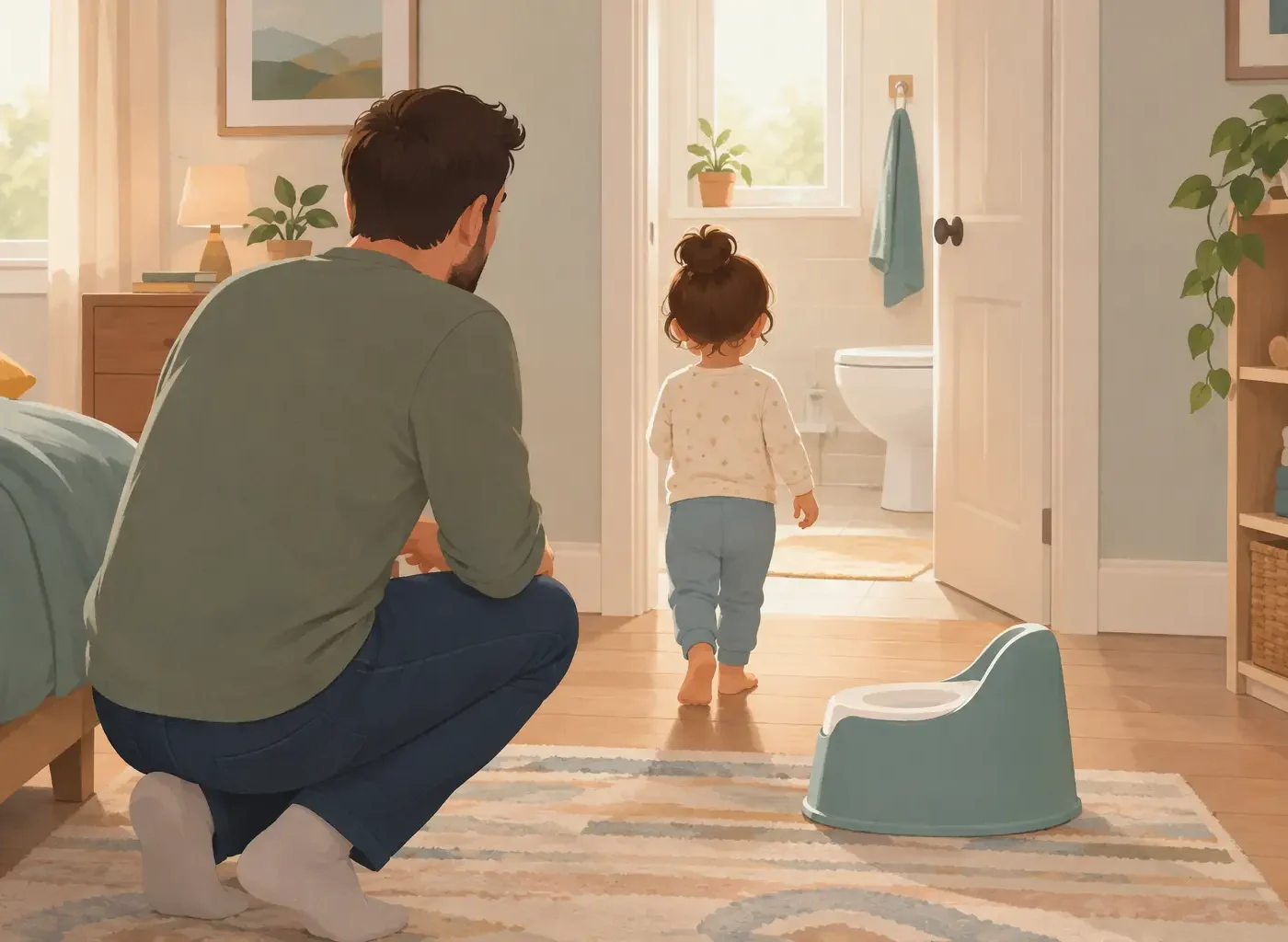
The little potty has been sitting in the bathroom for weeks. Your child is curious one day, completely opposed the next, and you are wondering whether to begin or put it away. Potty training readiness signs can bring some clarity, but they are not a pass-fail test. They are small clues that your child may be ready to learn a new skill with your help.
Potty training readiness signs usually come in clusters
A child does not need to show every possible sign before you start. Look for several signs appearing together over a couple of weeks, rather than one enthusiastic afternoon or a comment from a relative.
Readiness is less about hitting a certain age and more about your child having enough physical awareness, communication, and cooperation for the next step.
You may notice your child staying dry for a stretch of time, then using the toilet or potty shortly after. They might pause, hide, squat, or tell you in their own words or gestures that they are peeing or pooping. Some children will pull at a wet diaper because it bothers them. Others simply announce what happened after the fact. Both are useful signs of growing awareness.
Practical skills matter too. Can your child walk to the bathroom with you, sit briefly, and help push down loose pants? They do not need perfect independence. You will still be doing plenty of helping at first. But a child who can participate in those small steps is often more able to connect the feeling in their body with what happens next.
Interest can show up quietly. Your child may follow you into the bathroom, ask about the toilet, want to flush, or copy an older sibling. Curiosity alone does not mean you need to begin that day, but it gives you something to build on.
When the signs are mixed, waiting is a valid plan
If your child can identify a wet diaper but panics at sitting on the potty, or loves flushing but cannot yet pause a game to come with you, you do not need to force the issue. A calm pause protects the toilet from becoming a daily power struggle.
Putting potty training on hold is an active choice to make the next attempt gentler, not a missed opportunity.
You can keep the potty visible, use simple words for what happens in the bathroom, and let your child observe without pressure. Offer a sit only when there is time and your child seems open. If they say no, keep it brief: “Okay, we can try another time.”
This can be especially helpful during a stretch when family life is already full. A move, a new childcare arrangement, a busy work period, or a child who is fighting a cold can make a new skill feel like too much. There is no prize for choosing the hardest possible week.
If you and your partner are unsure, agree on a two-week observation period. Notice patterns without repeatedly asking your child whether they need to go. At the end, decide together whether the signals are stronger, the same, or less clear. That gives you a plan without turning every diaper change into a referendum.
The clearest signs are about awareness and participation
Your child notices what their body is doing
Some children tell you before they pee or poop. Others tell you during it, then gradually begin telling you sooner. The order matters less than the growing connection between a body feeling and the result.
You might say, “You noticed you were peeing. Pee goes in the potty or toilet.” Keep your voice matter-of-fact. There is no need for a big celebration every time your child notices. Too much attention can make a private body function feel like a performance.
Your child can follow a simple sequence with help
Potty training asks your child to stop, move to the bathroom, lower clothing, sit, pee or poop, wipe with help, and wash hands. At the beginning, you handle much of that sequence. Your child only needs to tolerate and join in with a few parts.
A child who can follow simple directions such as “Let’s go wash hands” or “Pants down” has a useful foundation. If directions regularly lead to distress or complete refusal, slow the pace and make the steps smaller.
Your child has some comfort with the bathroom
The toilet can feel loud, tall, cold, and unfamiliar. A potty chair or a secure seat insert with a footstool can make sitting feel more stable. Let your child sit clothed at first if that is what feels manageable.
Comfort comes before consistency, because a child who feels safe is more likely to practice.
One thing that worked for us was treating the first few sits as ordinary bathroom time, not a test. A short book and two quiet minutes were enough. The goal was familiarity, not results.
Readiness also depends on your family’s timing
A child can be ready in one sense and still need you to wait for a calmer window. Potty training takes attention, spare clothes, laundry, cleanup, and a little more patience than usual. If you are working late every night or managing a difficult week, choosing a later start can be the kindest option for everyone.
The best time is not the earliest possible time, but a time when you can respond calmly and consistently enough.
That does not mean you need a clear calendar or a perfectly relaxed household. Few families get that. It means choosing a few days when at least one adult can stay close to home, keep plans light, and avoid rushing your child through every bathroom trip.
If your child spends time in childcare, ask what language and setup they use. You do not need identical methods in every setting, but children usually benefit when the adults around them use similar words and react to accidents in similar ways.
Start small instead of declaring a big launch
Once you see several potty training readiness signs, begin with one predictable part of the day. A sit after waking, before bath time, or before leaving the house can be easier than asking your child to use the potty all day from the start.
Keep your wording simple: “It is potty time. You can try.” Give your child a little privacy if they want it, while staying nearby to help. If nothing happens after a minute or two, move on without disappointment.
Your job is to offer the opportunity calmly, not to make your child produce a result.
Loose, easy-to-manage clothing helps, especially at home. So does having a small cleanup plan ready: extra underwear or training pants, a towel, and a place for wet clothes. Preparation does not make accidents disappear, but it keeps you from scrambling while your child watches your reaction.
Praise the effort you want to see again. “You came to the bathroom when I asked.” “You told me you needed to go.” “You sat and tried.” This is more useful than making success sound like a huge achievement and accidents sound like a setback.
Accidents are information, not misbehavior
Even a child who seems ready will have accidents. They may get absorbed in play, miss the early feeling, or need more time to connect that feeling with getting to the bathroom. Poop often takes longer than pee, and some children are comfortable with one before the other.
A calm cleanup teaches more than a frustrated reaction ever will.
Use a short script: “Pee came out on the floor. Next time, we will try the potty.” Then clean up together in a small, age-appropriate way, such as putting clothes in a laundry basket or wiping a safe spot with you. Keep it practical, not punitive.
If your child begins resisting hard after a few days, take that seriously. Pressure, repeated reminders, or visible adult frustration can turn a manageable skill into a bigger conflict. Step back to diapers or training pants for a while, keep the bathroom familiar, and try again later with less intensity.
Make the plan shared between adults
Potty training goes more smoothly when the adults caring for your child know the plan. That does not require both of you to do every bathroom trip. It does mean agreeing on a few basics: the words you will use, when you will offer a potty sit, and how you will respond to accidents.
Consistency does not mean doing it perfectly, it means your child gets a similar calm message from the people they trust.
If one parent is handling most of the laundry, packing spare clothes, and keeping track of timing, the other can take on a concrete part of the work. That might be managing the cleanup supplies, doing a regular potty offer, or handling the bath-time attempt. Small ownership makes the plan easier to sustain.
Your child does not need a flawless start. They need adults who can notice the signs, lower the pressure, and keep trying in a steady way. Put the potty where it is easy to reach, choose one small practice moment, and let tomorrow be another chance to learn.