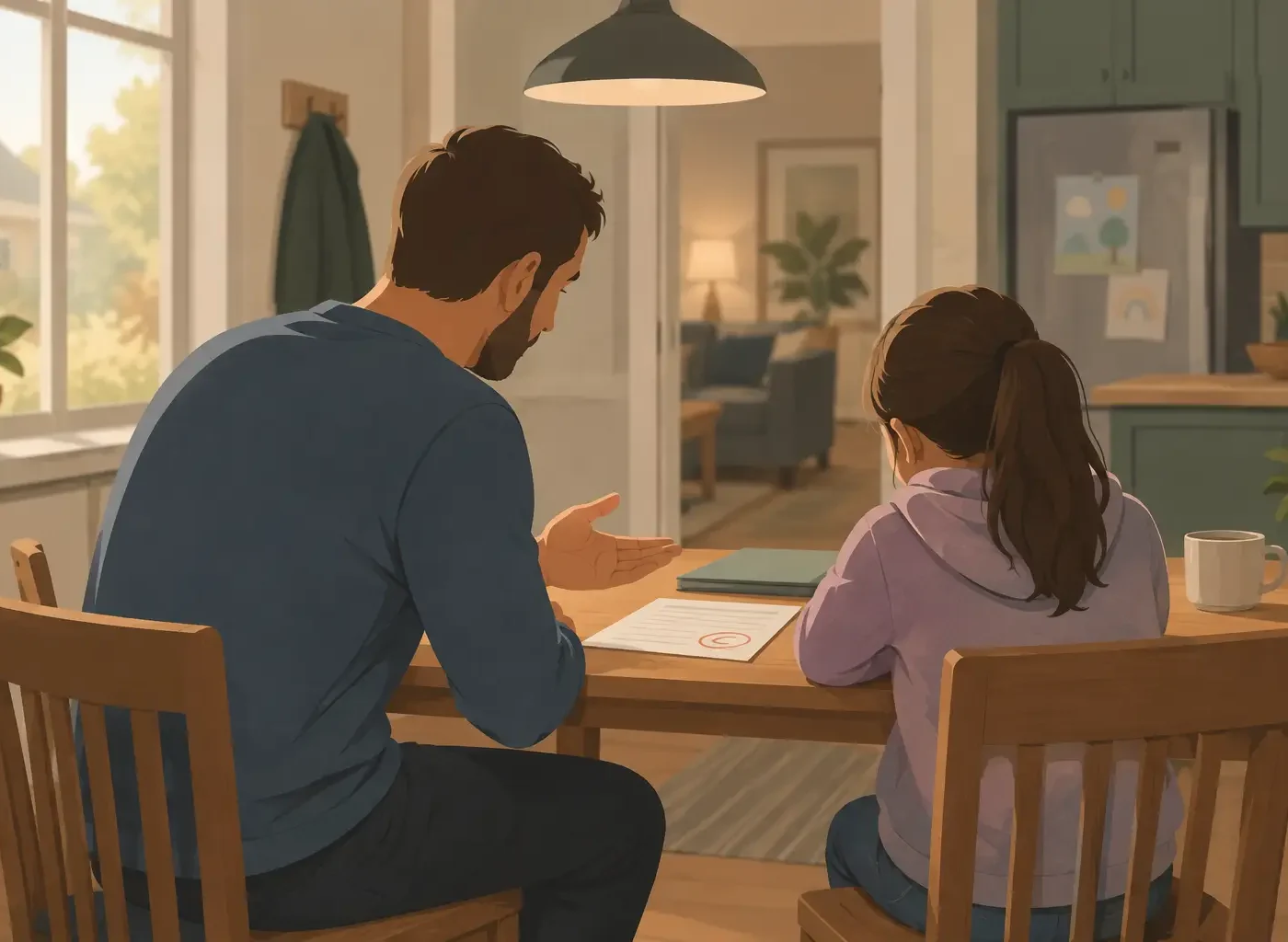
The envelope lands on the counter while dinner is half-made, someone needs a ride, and your child is watching your face before you have even read the grades. Learning how to talk about a bad report card in that moment is less about finding perfect words and more about not letting one hard page turn into a verdict on your child.
A disappointing report card can bring up fear fast. You may worry about missed skills, future opportunities, effort, or whether you should have noticed sooner. None of that makes you a bad parent, and it does not make your child lazy or careless. Start by giving both of you enough room to see the information clearly.
How to Talk About a Bad Report Card Without Making It Worse
The first conversation does not need to solve the school year. Its job is to keep your child from going straight into defense, shutdown, or tears.
A report card is feedback about a period of school, not a label for your child.
If you are upset, take a short pause before raising it. You might say, “I saw your report card. We are going to talk about it, but not while we are both rushed.” That pause is not avoiding the issue. It is choosing a better moment than the front seat of the car or ten minutes before bed.
When you do sit down, begin with what you see rather than what you assume. Try, “I noticed math and reading were harder this term. I want to understand what school has felt like for you.” Then stop talking long enough to hear the answer.
Your child may shrug, say “I don’t know,” blame the teacher, or insist they do not care. That can be frustrating, especially if you know they are capable of more. Still, pressing for a full explanation right away often makes the conversation smaller, not more honest. A simple “Okay. We can come back to this. I want us to figure it out together” leaves the door open.
Avoid opening with “Why didn’t you try harder?” or “You should be embarrassed.” Those words may get a quick promise to improve, but they can also teach a child to hide trouble next time. You need the truth more than you need a polished answer.
Start With Curiosity, Then Make a Small Plan
Once the first sting has passed, look at the report card together. Keep the focus narrow. A child who sees several low grades may already feel as if every part of school is going badly. Help them identify the one or two areas that need attention first.
Your child needs a path forward more than a lecture about what already happened.
Ask concrete questions that are easier to answer than “What is going on?” You could ask whether classwork feels confusing, whether assignments are getting lost, whether tests feel rushed, or whether they know what their teacher expects. You can also ask what part of the day feels hardest.
Listen for the practical problem underneath the grade. Sometimes a child understands the material but does not turn in work. Sometimes they are participating quietly and need help asking questions. Sometimes they have fallen behind after one difficult unit and now assume they cannot catch up. These situations call for different support.
One thing that worked for us was treating the first plan as an experiment, not a rule carved in stone. Pick one action your child can take and one action you can support. That might mean checking the school portal together twice a week, setting out a folder for unfinished work, or spending fifteen minutes reviewing one skill after dinner on two nights.
Keep the plan modest enough to happen on a regular Tuesday. A long nightly study schedule may sound serious, but it can fall apart quickly when work runs late, dinner is rushed, or your child is already tired. Consistency with a smaller step usually gives you better information about what is actually helping.
Use language that protects effort without lowering expectations
Gentle does not mean pretending the grades do not matter. You can be calm and clear at the same time. Say, “This grade tells us something needs to change. I believe you can work on it, and I am going to help you make a plan.”
That wording separates the expectation from the shame. Your child still knows schoolwork needs attention. They also know they are not facing the problem alone.
Be careful with rewards and restrictions in the first conversation. Losing every enjoyable thing for weeks can turn school into a power struggle, while a big reward for a higher grade can put pressure on something that may take time to improve. If you use a privilege, connect it to a specific routine you have already agreed on, such as completing a planned check-in or bringing home a missing assignment list. Keep it proportionate and predictable.
When to Contact the Teacher
A report card gives a broad picture. The teacher can often fill in the missing details, especially when the comments are brief or your child cannot explain what is hard.
Reaching out to the teacher is not taking over, it is getting a clearer view of the classroom.
A short, respectful message is enough: “We saw the report card and want to support our child well. Could you share the main skill or habit that would make the biggest difference over the next few weeks?” This asks for useful information without making the teacher defend the grade.
You may learn that your child needs extra practice with a specific concept. You may learn that the issue is incomplete work, trouble following multi-step directions, or a pattern of rushing. Ask what support is realistic at home and what can happen at school. A plan works better when it does not depend on you recreating the classroom at the kitchen table.
If you and your partner are both involved, agree on the message before talking with your child. They do not need one parent demanding a strict fix while the other tries to soften the moment. You can have different instincts and still offer a steady shared response: this matters, you are loved, and we will work on the next step.
Keep the Conversation Going Without Hovering
After the plan is in place, check in briefly rather than bringing up grades every day. A child can feel watched if each car ride becomes a school interrogation. Choose a predictable time once a week to ask how the plan is going and whether anything needs adjusting.
Progress is often easier to notice in habits before it shows up in grades.
Notice the smaller signs. Your child may start writing down assignments, ask for clarification, or sit down with less resistance. Name those changes plainly: “I saw you checked what was due before we started dinner. That is a useful habit.” Specific encouragement feels more believable than broad praise.
There may be a point when the first plan does not work. That does not mean your child is not trying or that you handled the report card badly. It may mean the task was too vague, the support was not matched to the problem, or school needs more information. Adjust one piece at a time so you can tell what changes.
A bad report card can make a child feel exposed, and it can make you feel like you should have had the answer sooner. The next conversation is where the real difference happens. Sit beside your child, keep your voice steady, and let them see that a hard school moment can be met with honesty, help, and another chance.