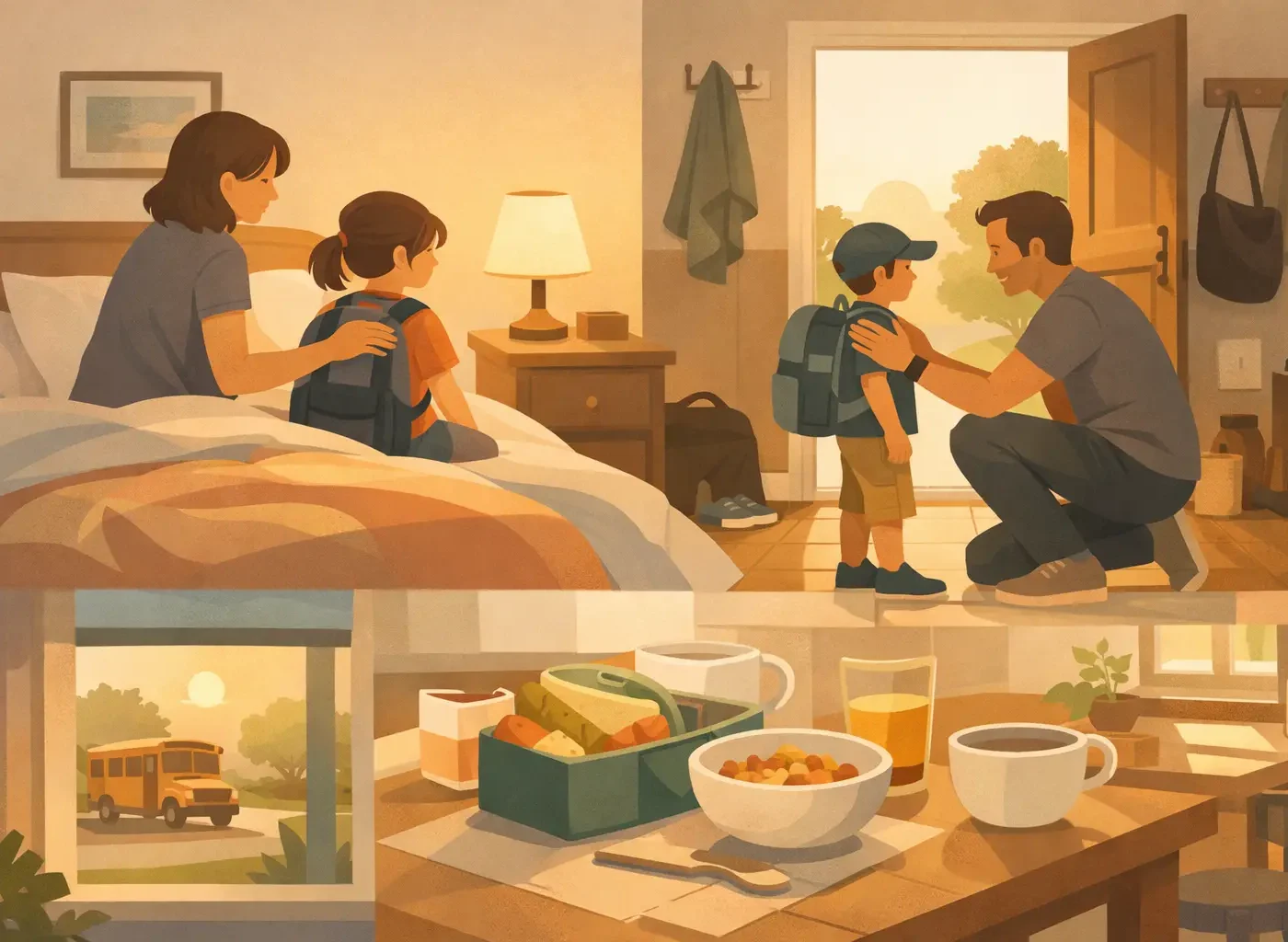
The backpack is ready, the shoes are on, and somehow your child is crying over the wrong color water bottle. First week of school anxiety rarely looks neat or reasonable from the outside. It can look like clinginess, anger, stomach complaints, sudden refusal, or a child who was excited all summer but cannot get through the front door.
You do not need to talk them out of every feeling before school starts. Your job is to make the day feel predictable enough that they can borrow some of your calm while they find their footing.
When first week of school anxiety starts before breakfast
A worried child often needs fewer words, not a long pep talk. They are already carrying a lot in their body: a new classroom, unfamiliar rules, louder hallways, a teacher they do not know well yet, and the hard work of separating from you.
Your calm structure can do more than a perfect explanation.
Keep the morning as ordinary as you can. Choose clothes and pack bags the night before when possible, but do not turn preparation into a major event. A simple plan helps: get dressed, eat something familiar, brush teeth, leave. If your child stalls, stay close and use short, steady language: “You wish you could stay home. School is still happening. I will help you get there.”
That sentence holds both truths. You are not pretending they are happy, and you are not opening a negotiation you cannot keep.
If they ask the same worried question repeatedly, answer it the same way. “Your teacher will show you where to go.” “I will be back after school.” Repetition is not manipulation. It is often a child checking whether the plan is still solid.
Try not to pile on incentives or warnings in the driveway. A big promised treat can accidentally tell your child that school is something frightening they must endure. Threats tend to make the moment hotter. Save your energy for getting through the next small step: shoes, car, building, classroom.
Make the school goodbye brief and believable
The goodbye is often the sharpest part of the day, especially for younger children or children entering a new school. It is painful to leave when your child is upset. Standing there longer can feel loving, but it can also make the separation harder if they begin to believe you might change the plan.
A short goodbye is not cold when it is warm and consistent.
Create a tiny ritual you can repeat for the first few days: a hug, a specific phrase, and a wave at the door. It might be, “One hug, two kisses, see you after school.” Keep it simple enough that your child can count on it even during a rushed morning.
Then let the teacher or staff member take over if they are ready to do so. Your child may cry after you leave and still settle into the school day. Both things can be true. The tears tell you separation is hard. They do not automatically mean the day will stay hard.
Be especially careful with promises about pickup. Say only what you can follow through on. Rather than naming a time your child cannot understand, connect pickup to part of their day: “I will come after your last class” or “I will be there after afternoon snack.” If plans change, tell the school and your child as clearly as you can.
One thing that worked for us was a small drawing in the lunchbox, not as a fix, but as a familiar little signal in the middle of a new day. For some children, that is comforting. For others, it makes them miss home more. You know your child best.
Give the afternoon less pressure than usual
The child who held it together at school may come home loud, tearful, silly, angry, or completely unwilling to discuss their day. They have spent hours following new expectations, reading unfamiliar social cues, and managing the effort of being apart from home.
After school is a landing spot, not a performance review.
Offer food, water, connection, and some breathing room before asking for details. You might say, “I am glad to see you,” then let them choose whether they want quiet, play, a snack beside you, or a few minutes alone nearby.
Questions like “Did you make friends?” or “What did you learn?” are well meant, but they can feel huge on day one. Try smaller openings later in the evening: “What was the loudest part of your day?” or “Tell me one thing your teacher said.” If they say nothing, let that be okay too.
This is also a good week to lower the household bar. Keep evenings plain. Delay optional errands. Choose an easy dinner. Protect the basics of the routine without trying to add a special family activity every night. New school days ask a lot from everyone, including the adult who is watching the clock, finding missing paperwork, and carrying the worry quietly.
If your partner is doing pickup while you handle dinner, or the other way around, make a quick handoff plan. A useful update is practical: “They cried at drop-off but walked in with the teacher,” or “They need ten quiet minutes before we talk.” It keeps both of you working from the same information instead of guessing.
Why the first days can feel bigger than expected
School transitions are not only about whether your child likes school. Even children who enjoy learning can find the first week demanding. The schedule changes. Bathrooms, lunches, seating, names, rules, and transitions may all be new. A child who seems capable at home may need time before they feel capable there.
Big feelings at a new start are a need for safety, not a sign that you have done something wrong.
Some children show their worry before school. Others hold it in until they get home. Some become extra chatty, while others seem irritated by every small request. Their behavior may not match the story you expected, and that can be unsettling.
It also depends on the child. A child starting kindergarten may be dealing with a long separation for the first time. An older child may be worried about a new building, tougher work, friendship groups, or getting lost between classes. Siblings can react differently to the same change, even when they have had the same preparation.
You do not need to make school sound perfect. Honest confidence lands better: “New things can feel strange at first. Your teacher will help you, and we will keep practicing the routine.” This gives your child a realistic message. Hard feelings can exist alongside their ability to cope.
When your child says they will not go
There may be a morning when your child plants themselves on the floor, refuses clothes, or says, “I am not going.” This can pull every adult in the room into panic. The hard version is that you may still need to get out the door for work, younger siblings, or the school schedule.
You can be kind without making attendance depend on a calm mood.
Start by reflecting the feeling once: “You really do not want to go today.” Then move to the next action. Offer limited choices that do not change the destination: “Do you want to put your shirt on here or in the bathroom?” “Do you want to walk to the car or hold my hand?”
Avoid asking, “Why do you not want to go?” in the peak of the standoff. Your child may not know, or they may grab the first answer that seems likely to keep you home longer. Listen for concerns later, when everyone is calmer. If they mention a specific problem at school, pass that information to the teacher or school office clearly and without asking your child to solve it alone.
If difficult drop-offs continue beyond the opening days, ask school staff for a simple arrival plan. A familiar adult meeting your child at the gate, a classroom job on arrival, or a predictable first activity can make the entry point less daunting. You are not asking for special treatment. You are helping the adults around your child use the same steady plan.
Let both adults carry part of the transition
The first week creates a lot of invisible work: forms, labels, pickup details, new bedtime pressure, lunch decisions, spirit days, and the emotional temperature of the house. When one parent is carrying all of it, school anxiety can start to feel bigger for the whole family.
A shared plan gives your child two steady places to lean.
Talk for five minutes after the kids are asleep. Decide who owns the morning bag check, who is watching school messages, and who handles the first response if the teacher contacts home. The goal is not a perfect division. It is fewer last-minute surprises and less silent guessing.
Fathers, your steady presence can be especially useful when school worry has become closely tied to mom. Take a turn with the backpack, the drive, or the goodbye ritual if that works for your family. Not because mom has caused the anxiety, but because a child benefits from learning that more than one adult can carry them through a hard transition.
The first week does not have to look graceful to be going well. Keep showing up with the same few messages: school is happening, your feelings are allowed, and home is still here when the day is done.