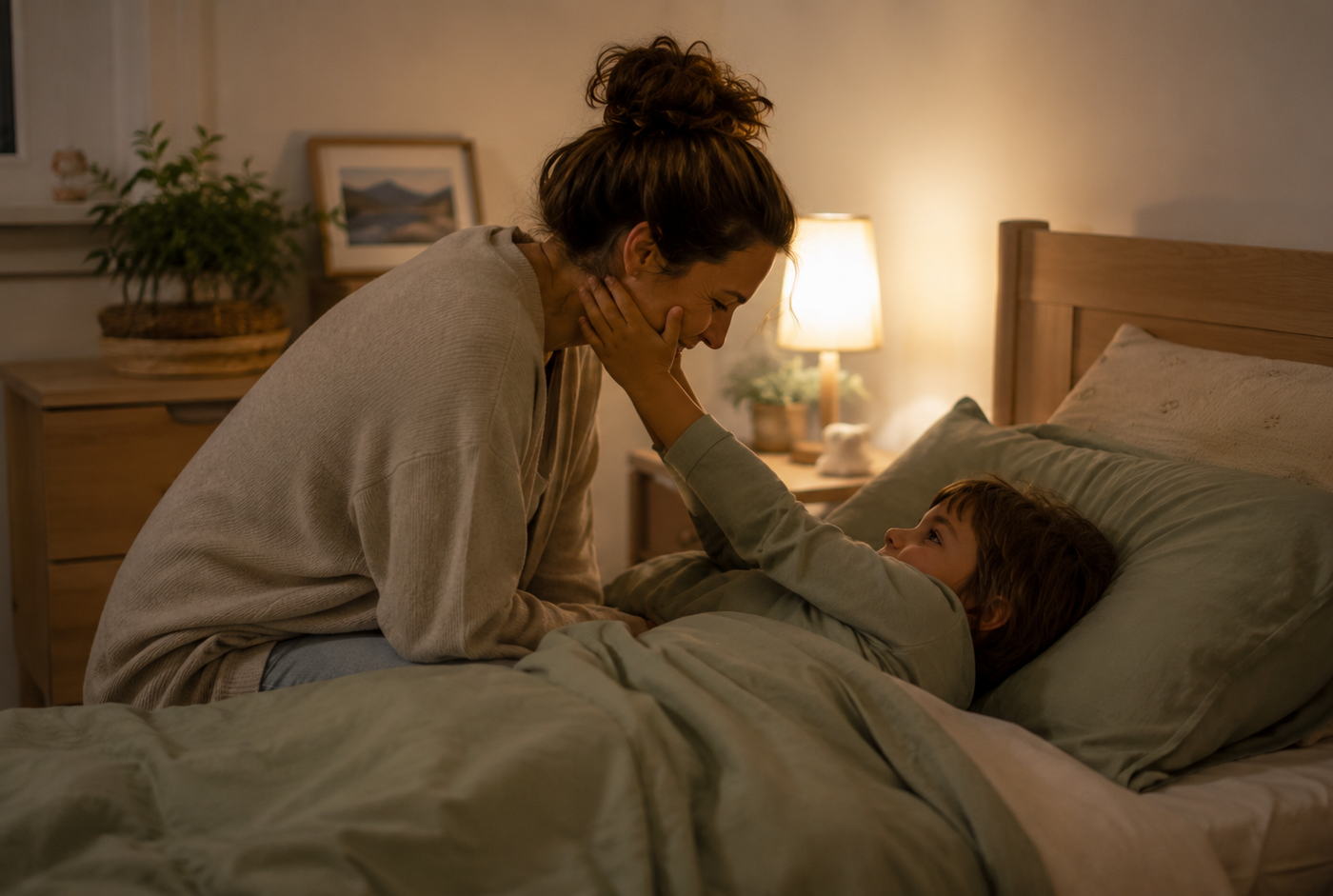
You’ve done the bath, the books, the song. You’ve said goodnight twice. You’ve tiptoed out. And then, within minutes, small footsteps pad down the hall and a little voice calls your name. If your child won’t sleep alone, you already know how exhausting this cycle gets. Not just at bedtime. The cumulative tired that settles in your bones after weeks or months of it.
You’re not failing. This is one of the most common struggles parents write to me about, and it cuts across ages, temperaments, and parenting styles. Some kids just need more reassurance at night than others. That doesn’t mean it has to stay this way forever.
In this article, I’m sharing the gentle steps that have worked for our family and for a lot of the parents in this community. Not overnight fixes. Real, gradual shifts that help kids feel safe enough to sleep alone, without anyone feeling abandoned in the process.
Table of Contents
Why Your Child Won’t Sleep Alone in the First Place
Before anything changes, it helps to understand what’s actually going on. When a child won’t sleep alone, it’s almost never about being manipulative or testing you. Kids are genuinely more alert to threat at night. The brain’s job is to keep them safe, and for a lot of children, being alone in the dark genuinely feels unsafe, especially between ages two and seven.
Toddler bedtime anxiety is real. It tends to peak around ages three to four, when imagination kicks in and fears feel very vivid. But older kids can struggle too, especially after a change in the family, a move, a new sibling, or anything that’s shaken their sense of security.
Separation is harder for some kids than others. That’s not a parenting failure. It’s temperament. Some children have a higher need for connection and closeness, and pushing them too fast tends to backfire, creating more anxiety rather than less.
Once you understand the why, the path forward gets clearer. You’re not trying to convince your child that fear is silly. You’re helping them build the confidence to sit with that fear and discover they’re okay.
Building a Bedtime Routine That Helps Kids Feel Safe
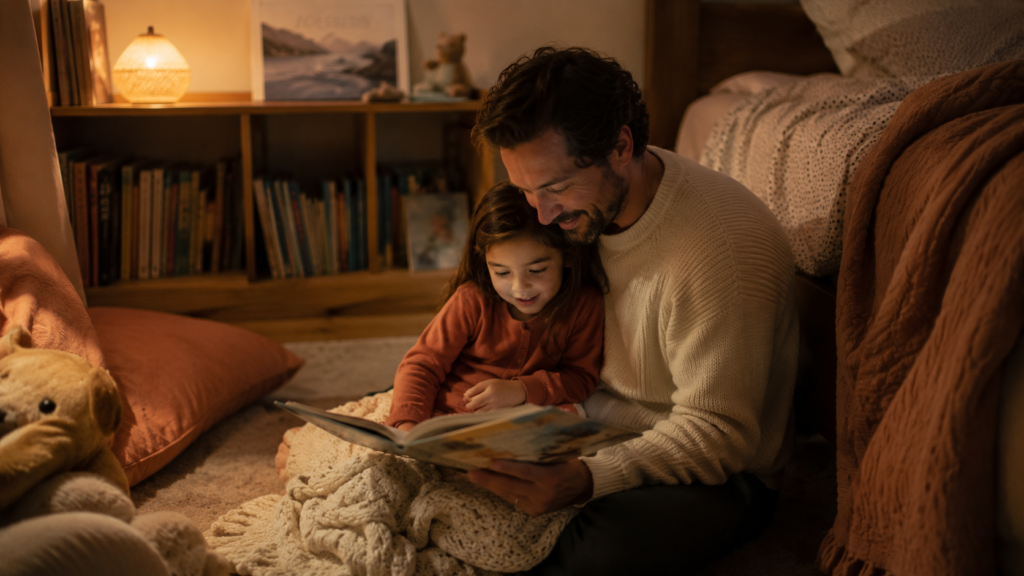
One of the most effective things you can do when a child won’t sleep alone is to make the time leading up to sleep feel predictable. A consistent bedtime routine for kids acts like a signal to the nervous system: this is safe, this is familiar, sleep is coming.
It doesn’t need to be elaborate. A simple sequence of bath, pajamas, one or two books, a short quiet chat, and a goodnight ritual is enough. What matters most is that it happens in the same order, at roughly the same time, most nights.
Predictability is calming at a neurological level. When kids know what comes next, they don’t have to stay alert. That alertness is often what keeps them awake and calling for you.
A few things that tend to help within the routine itself: dim the lights in the hour before bed, reduce screens, and keep your own voice and energy low and calm. Kids co-regulate with us, meaning they borrow our nervous system state. If we’re rushing and tense, they feel it.
If your evenings frequently end in meltdowns before you’ve even reached the bedroom, this guide to helping your child calm down without shame has some practical tools that work well in that pre-bed window.
The Gradual Retreat: A Gentle Sleep Training Approach
This is the approach I’d call the gentlest version of helping a child sleep independently, and it’s the one that worked for us with our youngest. Instead of leaving suddenly or all at once, you move out of the room gradually over days or weeks.
Here’s roughly how it works. Start where your child needs you to be. If that means sitting on the bed, sit on the bed. After a few nights when sleep is going well, move to a chair beside the bed. Then to the doorway. Then to the hallway. Then you’re out.
You’re not disappearing. You’re slowly expanding the distance.
The key is moving to the next step only when your child is settled and consistently falling asleep at the current stage. If you rush it, you’ll likely find yourself back at the beginning. Slower usually gets you there faster.
This approach fits under gentle sleep training in the sense that it respects your child’s need for reassurance while still moving toward the goal of independent sleep. Nobody has to cry it out. Nobody has to feel abandoned. Progress is just slower and more intentional.
Daytime Connection Pays Off at Night
This one surprises a lot of parents. When a child won’t sleep alone, it’s easy to focus entirely on the bedtime moment. But what happens during the day matters too.
Children who feel well-connected to their parents during the day tend to separate more easily at night. It sounds almost too simple, but it’s one of the most consistent things I’ve heard from other parents and experienced myself. When my kids had days where we’d been present and playful together, bedtime was noticeably smoother.
Connection during the day reduces the need to cling at night. Not always, and not immediately. But over time, it shifts the baseline.
This doesn’t mean you need to be constantly available or entertain them all day. Even ten minutes of fully present, phone-down, child-led play can top up a child’s connection tank in a way that lasts. For working parents especially, that deliberate reconnection after the school pickup or workday makes a real difference to bedtime ease. There’s a lot more on that in this piece on how working parents stay connected with their kids.
What to Do When Your Child Comes to Your Room at Night
Even once bedtime is going better, many kids still wake in the night and come to find you. This is its own stage to work through, and it needs a slightly different approach.
The most important thing is to have a clear, calm, and consistent response. Whatever you decide to do, do it the same way every time. Inconsistency is genuinely harder for kids than a firm but kind boundary, because inconsistency keeps them trying.
One thing that tends to help is a « stay in your room » reward system for younger kids, not as a punishment or bribe, but as a positive motivator. A simple sticker chart where your child earns a star for every night they stay in their bed until a set time can work well. Keep the bar low at first so they experience success early.
For older kids, you can have a straightforward conversation in the daytime about what the nighttime plan is. What happens if they wake up scared? What are they allowed to do? Do they have a plan to help themselves feel better? Giving kids a role in problem-solving tends to increase their buy-in.
Some families also find a « hall pass » approach useful: one free trip to the parent’s room per night, no questions asked. Once it’s used, it’s used. It gives the child some control while still containing the behavior.
Helping Kids Feel Brave at Bedtime
A big part of helping a child won’t sleep alone situation to shift is building your child’s sense of their own bravery. Not by dismissing their fears, but by acknowledging them and then helping your child find resources inside themselves.
Try language like: « I know it feels a bit scary in the dark. And I also know you’re safe. What’s one thing that might help you feel better? » That shift from you solving it to them solving it, with your support, is huge over time.
Some kids do well with a transitional object: a special stuffed animal that becomes the « sleep buddy, » something that holds the feeling of safety when you’re not there. Others respond to a soft nightlight or a white noise machine. Some older children like having a simple breathing exercise they can use if they wake up and feel anxious.
This connects to a broader goal of helping kids build emotional confidence. The aim isn’t to remove the feeling of fear. It’s to help them learn they can feel it and still be okay. That lesson carries into every part of life.
If you’re also finding your own patience running low after weeks of night wake-ups, I want you to know that’s completely normal. This article on staying patient when you’re burned out is one I come back to myself on the hard weeks.
Final Thoughts
When your child won’t sleep alone, it can feel like something is fundamentally broken. It isn’t. It’s usually a combination of temperament, developmental stage, and a very normal need for connection and reassurance. Most kids do get there, in their own time, with the right gentle support.
The steps above aren’t a rigid program. They’re a toolkit. Use what fits your child, your family, and your values. Move at a pace that feels manageable for everyone. Some weeks you’ll make progress and some weeks you’ll slide back, and both are part of the process.
Be patient with yourself too. Doing this gently takes longer than some other approaches, but it tends to create a more lasting shift and keeps the trust between you and your child intact. That’s worth something.
Why won’t my child sleep alone even after years of trying?
Many children have a genuinely higher need for closeness and connection, and that need doesn’t disappear just because time passes. What tends to help is shifting the focus from pushing independence to gradually building your child’s sense of safety at night, which takes consistent small steps rather than a single solution.
How do I get my toddler to sleep alone without crying it out?
A predictable bedtime routine for toddlers is one of the most effective gentle tools available, because it signals to the nervous system that sleep is safe and familiar. Many parents find that slowly increasing the distance between themselves and their child at bedtime, rather than leaving all at once, leads to much calmer nights over time.
What age should a child be able to sleep alone?
There is a wide range of normal, and toddler bedtime anxiety tends to peak around ages three to four before gradually easing for most kids. What tends to matter more than age is whether your child feels secure enough to stay in their room, which is something you can actively support through routine and reassurance.
Why does my child keep coming to my room in the middle of the night?
Children who won’t sleep alone often wake between sleep cycles and seek out a parent because being alone in the dark still feels genuinely unsafe to them, not because they are testing limits. Many parents find that addressing the underlying bedtime anxiety, rather than just the nighttime visits, is what creates lasting change.
How do I help my anxious child sleep in their own bed?
Helping an anxious child sleep alone works best when you focus on building their confidence gradually rather than expecting it to happen all at once. What tends to help most is combining a consistent bedtime routine with small, reassuring steps that let your child experience being okay on their own before moving further away each night.
Bedtime struggles are often just one piece of a bigger picture of connection between parents and kids. If you’re a dad who wants to show up more in those small, ordinary moments, from the bedtime ritual to the ten-minute conversations that actually matter, The Father Blueprint lays out a complete, practical framework for exactly that.
The Father Blueprint: become the dad they’ll always remember