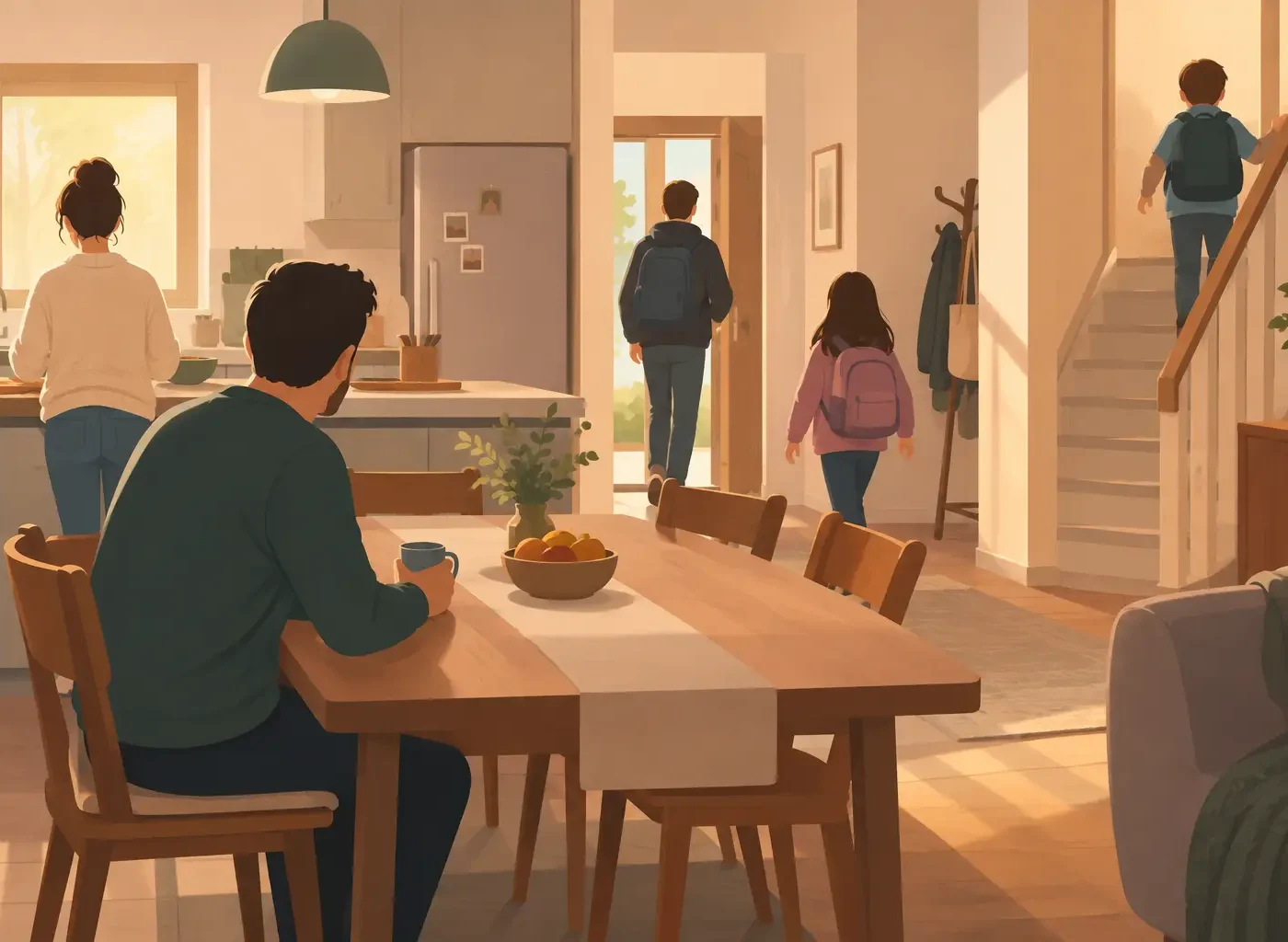
At 6:15, one child is leaving for practice, another is hungry now, your partner is still commuting, and dinner is halfway made. Family dinners when schedules never line up can make a simple meal feel like proof that everyone is too busy, too tired, or too scattered. It is not proof of any of those things. It is a scheduling problem, and it needs a plan that can bend.
Stop making one shared dinner the only goal
A family meal can count even when everyone is not at the table at the same time.
The traditional picture of dinner has everyone seated, food served once, and a long stretch of conversation before dishes. Some nights that happens. On many nights, especially with school, work, practices, appointments, and little kids who are hungry at wildly different times, it simply will not.
Instead, decide what “together” means for this season. It might mean everyone eats the same meal, even in two shifts. It might mean you sit with your child for ten minutes while they eat before you head out the door. It might mean a parent saves their own plate and joins the later group instead of eating alone while cooking.
This is not lowering the bar because you do not care. It is choosing a version your family can actually repeat.
If you have older children, tell them the plan plainly: “We will not all be here at six tonight, but we are making tacos. Eat when you get back, and we will check in before homework.” Clear expectations remove some of the disappointment that comes from everyone waiting for a dinner that was never realistic.
Make the meal easy to join, late or early
The best dinner plan is the one that does not punish the person who arrives last.
Meals that hold well take pressure off everyone. Think of foods that can sit covered for a bit, be warmed quickly, or be assembled as people come through the door. A pot of pasta, baked potatoes, rice bowls, soup, quesadillas, eggs, or a simple tray of roasted vegetables and chicken can work harder for you than a meal that has a two-minute window before it falls apart.
Keep the serving setup simple, too. Put the meal where children can see what is available, and make it easy for an older child to serve themselves with help nearby if needed. You are not creating a restaurant at home. You are reducing the number of times one adult has to stop eating, get up, reheat something, and answer, “What can I have?”
One thing that worked for us was treating certain weeknights as “build your own” nights. It was less about getting everyone excited about dinner and more about avoiding the scramble when somebody came in late and somebody else had already eaten. The food stayed usable, and so did our patience.
There is a trade-off here. Flexible meals can feel less polished than a sit-down dinner served all at once. But a meal that is slightly repetitive and genuinely manageable is usually kinder to the whole household than an ambitious dinner that leaves one parent tense by 5:30.
Give each child a small place in the plan
Children often handle an uneven schedule better when they know where they fit. A younger child may help put napkins on the table. An older child can set aside a portion for a sibling coming home later. A teen can be in charge of warming their meal after an activity.
Keep it matter-of-fact, not heavy. The goal is not to make children responsible for holding family life together. It is to show them that a family can adjust for each other without turning every change of plan into a crisis.
Create a short connection point around the meal
Connection comes from being noticed, not from making dinner last an hour.
When schedules are tight, conversation can become another task to complete. You ask about school, get “fine,” and then someone needs shoes, a water bottle, or a ride. That does not mean the meal failed.
Try one small, repeatable question while you are together: “What took the most energy today?” or “What are you looking forward to tomorrow?” It gives children something more specific than “How was your day?” and it gives you a quick window into what they are carrying.
If a child is too tired or distracted to talk, do not push. You can offer a small detail from your own day instead. “I got stuck in traffic and was glad to get home.” That kind of ordinary sharing tells a child they do not need a big story to have a place in the conversation.
For families with very young children, the connection point may be less about talking. Sitting nearby, handing them a fork, or commenting on something they are doing can be enough. They are learning that meals are a place where people pause and pay attention to each other.
Share the work before dinner starts
Dinner feels heavier when one person has to hold the clock, the food, and everyone else’s needs alone.
In many homes, the hardest part is not cooking. It is tracking who will be home when, what needs to be packed for later, whether there are clean containers, who has an activity, and when the kitchen has to be cleared for the next morning. A partner may not see all of that unless it is named clearly.
A useful conversation is specific: “On Tuesdays, can you handle checking the schedule and setting aside food for anyone who gets home late?” Or, “Can you take over cleanup while I help with the pickup?” This is easier to act on than a vague request for more help, especially at the end of a long day.
If you are the parent who usually walks in later, you can still take ownership of a piece of the dinner system. You might check what is needed before leaving work, put leftovers away when you get home, or take responsibility for one predictable night each week. The point is not perfect fairness every single evening. It is making sure the work does not disappear just because it is less visible.
Some weeks, work demands or a new baby or a child’s activity schedule will make an equal split impossible. Name that honestly, then choose the next best division for now. Resentment grows quickly when people feel their effort is assumed rather than seen.
Use a backup plan without apologizing for it
A backup dinner is a sign that you planned for real life, not that you gave up.
There will be evenings when practice runs late, the commute stretches on, someone spills the meal you had planned, or everyone is simply running on fumes. On those nights, switch to the easy option early rather than trying to rescue the original plan while everybody gets hungrier.
Your backup might be breakfast foods, a freezer meal you already trust, sandwiches with fruit, or leftovers turned into something simple. Keep the standard low and the tone calm. Children do not need an apology for a basic dinner. They need food, a little steadiness, and adults who are not treating a hard Tuesday like a personal failure.
It can also help to release the idea that every meal has to carry the full weight of family connection. A quick check-in in the car, a few minutes beside a child while they finish eating, or sharing a snack after an evening activity can matter just as much. The meal is a chance to connect, not a test you pass or fail.
When you miss each other completely
Missing one another at dinner is disappointing, but it does not erase your closeness.
Sometimes schedules really do leave no overlap. One child eats early, another gets home late, and two adults trade handoffs in the hallway. Trying to force a shared table on those nights may create more strain than warmth.
Use a small handoff instead. Leave a note by a plate. Send a short message about the game or project they missed. Ask your child to tell the later-arriving parent one thing before they head upstairs. These moments are modest, but they say, “You were part of this day, even when you were not here for dinner.”
The goal is not to recreate a picture-perfect family meal. It is to build a home where people expect to be fed, considered, and welcomed back to the table whenever they arrive.